

How to Conquer Lust and Pornography – Five Things

The Temptation of St. Thomas Aquinas Velázquez
1. Always Flee
The Spiritual writers tell us that every deadly sin can be faced and conquered. For every deadly sin, we can cultivate the contrary virtue even while facing circumstances which provoke these sins. For example, to conquer anger, we can seek out the person that annoys us and intentionally speak kindly to them.
This holds true for every deadly sin except lust. This sin, because it comes from the generative power in man, as Scupoli writes, must always been avoided at all costs (The Spiritual Combat
Do not presume on your own strength despite the fact that after many years spent in the world you have remained firm against the force of concupiscence. For lust often achieves in one instant what whole years could not effect. Sometimes it will make long preparations for the assault. Then the wound is more dangerous when it comes least expected and under a disguise (The Spiritual Combat
, ch. 19).
Therefore, immediately stop watching movies that have this suggestive content. Immediately turn away from all immodesty forced in front of you. Your spouse is the only one you should ever look upon–and even then, only with moderation. Always flee from this sin and be more willing to die than expose yourself to it. If you are forced by some necessity to be exposed, then keep your eyes down as much as possible and speak abruptly without forsaking charity. The spiritual writers are very clear on this: do not allow a false obligation to courtesy make you put down your guard with others.
2. Accountability and Frequent Confession
Once you have acknowledged that you are powerless against lust and must always flee, you have to get another man to be your accountability partner. This man’s job is to keep you accountable to your good resolutions to conquer lust. He is someone to challenge you to fight manfully against this sin, and also someone to call upon when you are being tempted.
It is important to note that your accountability partner should not be your woman. Your woman needs to be able to rely on you to be the rock and confessing your sins to her (especially those of the flesh) only causes her grief and fear. Confess your falls to your brother, not your woman. Your bother will strengthen you, but your woman will be harmed by this.
Then you must frequent Confession. Confession absolves your sin, but also gives grace to overcome future sins. Thus also you must remember to confess mortal sins against lust even if you have not committed them since your last confession. Provided you are not falling into scrupulosity (see below), confessing your past mortal sins gives grace to not fall into them in the future. This is a lesser known teaching about the Sacrament and some priests who are not well-formed will actually try to prevent this. But understand that this type of confession (called a “confession of devotion”) is a great help for growing in holiness and overcoming lust.
3. Take refuge with the Blessed Virgin Mary
Our Lady is the Mother of Purity. Run to her when you flee of this temptation. Consider her Immaculate Heart and her Perpetual Virginity. She is your Mother. St. John Cassian says to think about your sister or mother when encountering this sin (The Institutes
When we run to Our Lady we feel ashamed of our weak nature in feeling the attraction to impurity. But instead of rejecting us, she helps us with the tenderness of a mother and gives us protection. If we have been unfortunate to fall into this sin, she keeps us from falling into despair and helps us return to the Lord.
Moreover, Our Lady is the most powerful human to obtain the grace of chastity to overcome this demon. What our own prayer cannot obtain, she obtains by her prayers. It shows the Lord humility when we ask Our Lady for help, because we acknowledge our unworthiness before Him. This humility fights against the pride of presumption when can cause a fall if you do not flee.
Finally, pray the Rosary. Mental prayer is essential for holiness but in particular this sin uses images to cause men to fall. The Holy Rosary is the easiest and most effective way to practice mental prayer. Take refuge in the mysteries of our Lord and our Lady and entrust yourself to her care.
4. Reject all scrupulosity
Prummer defines scrupulosity as “a state of groundless fear rather than the judgment of a sound mind” (no. 144). He identifies the signs of scruples: an excessive anxiety about previous confessions, protracted accusations of irrelevant details, stubbornness which refuses to accept the decisions of the confessor. Scrupulosity is really rooted in pride and it is cunning trick of the Devil to use sin as an occasion for this greater sin of pride. One must always maintain peace of mind, even after a fall into sin. Recognize your utter dependence upon God’s grace to overcome this, and pray in the words of Scupoli:
WHEN YOU REALIZE that you have been wounded by sin, whether through weakness or malice, do not lose your courage or become panic-stricken. Turn to God with a great and humble confidence saying: “See, O Master, what I am able to do. When I rely on my own strength, I commit nothing but sins.”
Meditating on this, recognize the extent of your humiliation and express to our Lord your sorrow for the offense committed. With an unperturbed heart, indict your vicious passions, especially the one that has occasioned your fall, and confess: “O Lord, I would not have stopped at this had not Your goodness restrained me.”
Give thanks to God, and more than ever give to Him the complete love of your heart. What generosity on His part! You have offended Him and, despite this, He extends His hand to prevent another fall (Spiritual Combat, ch. 26).
The Enemy wishes to make you fall, and then by scrupulosity to increase your pride and blindness and reliance on your self. Reject his machinations. If you fall, use the occasion for a greater humility and greater dependence upon God. Maintain your peace and run to confession.
5. Pray the violent Psalms and fast
Most unfortunately, the reform of the Liturgy of the Hours removed much of the violent imagery from the Church’s prayer book, the Holy Psalter. Our fathers used these verses to combat the very violent passions–especially lust–with a greater spiritual violence. The passion of lust is, in one sense, the most powerful temptation because it is imbedded in our nature to procreate. Thus all unlawful desire must be cut off violently without a moment’s hesitation, or else we quickly run the risk of consenting and falling into sin. Hear the words of the Doctor of Moral Theology:
It is necessary to remark, that, when the thought which excites the delight is against chastity, we are, according to the common opinion of theologians, bound under pain of mortal sin to give a positive resistance to the delectation caused by the thought; because, if not resisted, the delight easily obtains the consent of the will. ”Unless a person repel delectations,” says St. Anselm, ”the delight passes to consent, and kills the soul” (S. Ans. Simil., c. xl.). Hence, though a person should not consent to the sin, if he delight in the obscene object, and do not endeavor to resist the delectation, he is guilty of a mortal sin, by exposing himself to the proximate danger of consent (St. Alphonsus, Sermon XVIII Sun. after Pentecost).
Therefore, let a man employ the weapons of prayer given by the Prophet:
In thy mercy thou wilt destroy my enemies. And thou wilt cut off all them that afflict my soul: for I am thy servant (Ps. cxlii. 12).
Let all my enemies be ashamed, and be very much troubled: let them be turned back, and be ashamed very speedily (Ps. vi. 11).
And I shall beat them as small as the dust before the wind; I shall bring them to nought, like the dirt in the streets (Ps. xvii. 43).
In the morning I put to death all the wicked of the land: that I might cut off all the workers of iniquity from the city of the Lord (Ps. c. 8).
For more, see the Seven Penitential Psalms.
With this, you must fast. This is because lust is in the concupiscible appetite, which is your faculty which desires bodily goods–both the marital debt and food. Thus when we abstain from food, we are subduing the same faculty that is tempted in lust. Therefore fasting is essential to acquire chastity over your concupiscible appetite. Chastity is vital whether you are married or not, so let every man rise to the fight and conquer this demon which grips our world today. Victory is possible, as all our Fathers attest. Do not lose hope and rise again and again to the battle until your enemy is crushed. All nations compassed me about; and in the name of the Lord I will destroy them (Ps. cxvii. 10).
Timothy S. Flanders
@meaningofcath
Reminder: Mary Requested the First Saturdays
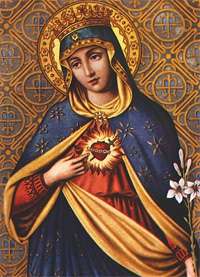
The Communion of Reparation on the First Saturdays
Catholic brethren: heed the requests of our Lady for our times. Do not neglect our Mother’s wishes. Mary does not ask much of us in this crisis. Do the little that she asks for God’s greater glory and the salvation of souls.
The requests are these: pray one third of the Holy Rosary every day (five decades) and make the following devotion on Five First Saturdays consecutively. Do this in reparation for the sins committed against the Immaculate Heart of Our Lady.
Every sin detracts from the glory of God. Reparation seeks to offer glory to God in penance for yourself and others. It also seeks to avert God’s wrath. Consider the prayer at the end of the Litany of the Saints:
O God, Who by sin art offended, and by penance appeased, mercifully regard the prayers of Thy people making supplication to Thee, and turn away the scourges of Thine anger, which we deserve for our sins.
Our Lady says that the Five First Saturdays are part of averting God’s wrath in our time.
2. Confession in the spirit of reparation
Remember your death. Consider the just judgment seat of Christ and confess before His tribunal.
Even if you cannot make it to confession on the First Saturday, at least your monthly confession can suffice.
3. Reparatory Communion
This is the central act of this devotion. Make your Holy Communion with proper preparation, fasting, and in a state of grace.
If you are prevented for a just cause, permission from a priest can dispense this to the Sunday Communion.
4. Recitation of one third of the Holy Rosary (Five decades)
Think about your death and make this the best Rosary before you die. Remember to offer it in a spirit of reparation.
5. 15-minutes of Mental Prayer
Mental prayer is the second level in the Nine Levels of Prayer. See the Resources for more information. This mental prayer must meditate on one or more of the mysteries of the Holy Rosary.
———
Consider, brethren, that this present crisis will soon be safely under the heel of our Lady. Only heed her requests so that God’s judgement will soon be accomplished. Then our children’s children’s children will tell the tale of how this crisis was averted by the Mother of God and many saints.
The Three Interpolations in the Latin Nicene Creed

When the Nicene Creed was translated into Latin, a total of three interpolations were inserted into the text.
- Deum de Deo. The Greek text has φῶς ἐκ φωτός, Θεὸν ἀληθινὸν ἐκ Θεοῦ ἀληθινοῦ “Light from Light, True God from True God.” But the Latin inserts the phrase “God from God” first: Deum de Deo, lumen de lúmine, Deum verum de Deo vero. It is unclear what the origin of this interpolation is.
- incarnátus est de Spíritu Sancto ex María Vírgine. The Greek text has one preposition in reference to both God the Holy Spirit and our Lady: σαρκωθέντα ἐκ Πνεύματος Ἁγίου καὶ Μαρίας τῆς Παρθένου. Thus the Greek says “incarnate from the Holy Spirit and the Virgin Mary,” whereas the Latin uses two different prepositions de (“from”) and ex (“out of”). This is seems to be in conformity with the more ancient Latin creed, the Apostles Creed, which uses the same prepositional phrase: conceptus est de Spiritu Sancto, natus ex Maria Virgine.
- qui ex Patre Filióque procédit. Again in conformity with Latin usage the Latin Nicene Creed inserts the infamous Filioque. Two other ancient Latin liturgical texts show this Latin phrase: the Quicumque Vult creed (“Athanasian”) and the Veni Sancte Spiritus hymn for Pentecost. The former is dated from the 5th or 6th centuries and includes this phrase: Spiritus Sanctus a Patre et Filio: non factus, nec creatus, nec genitus, sed procedens (“The Holy Spirit is from the Father and the Son; neither created, nor begotten, but proceeding”). The Hymn for Pentecost is of later origin, perhaps the 9th century, which includes a petition to the Holy Spirit as from both the Father and the Son.
When we consider that the Latin west had a total of three creeds which developed into their liturgy (Apostles, Nicene and Athanasian), we can perhaps begin to see how inoffensive it was to them to have these interpolations. Moreover, the larger political shift away from the Greek Roman Empire to the Frankish Roman Empire is the context which should not be ignored. It is vital for the Orthodox to understand that both the Latin and Greek traditions stand on their own and must be judged on their own terms. The Seven Ecumenical Councils were dominated by Greek concerns, and not all of their mentality (or even canons) were translated over to the Latins, who dealt with their own concerns in their own legitimate way. The Greek tradition must not be rejected for the Latin, nor the Latin for the Greek. However, because the Greek party which rejected the equality of the Latin tradition ultimately held power in the east, the schism was ultimately consummated. Orthodox Christians today state that they accept the equal authority of the Latin Fathers, yet they reject that the Latin Tradition as developed by the 9th century has equal authority with the Greek. On the other side, the Eastern Catholics have accepted an equal authority of Latin Fathers and Tradition as it was dogmatized at Florence in the Filioque decree.
The Nine Levels of Prayer

—Purgative Way—
1. Vocal Prayer
2. Mental Prayer
3. Affective Prayer
4. Acquired Recollection
Bridge: Dark Night of the Senses
—Illuminative Way—
5. Infused Contemplation
6. Prayer of Quiet
Bridge: Dark Night of the Soul
—Unitive Way—
7. Simple Union
8. Conforming Union
9. Transforming Union
For more information and details, see this post here. Notice the lowest form of prayer is Vocal Prayer, meaning using words either audibly or mentally, whereas mental prayer is primarily in the intellect, focusing on God or meditating on some mystery without words of any kind. The Holy Rosary combines the first two levels through vocal prayers while meditating on the mysteries of our Lord (Mental Prayer). The saints tell us that Mental Prayer is the gateway to all the higher forms of prayer, and the higher you ascend also corresponds to your progress in virtue. Our Lady of Fatima requested 15 minutes of mental prayer for the First Saturdays devotion. St. Alphonsus recommends making 15 minutes of mental prayer each day. See the resources page on prayer. The best book of meditations I have found is Fr. Ignatius’ School of Jesus Crucified (1866), available for free with this app.
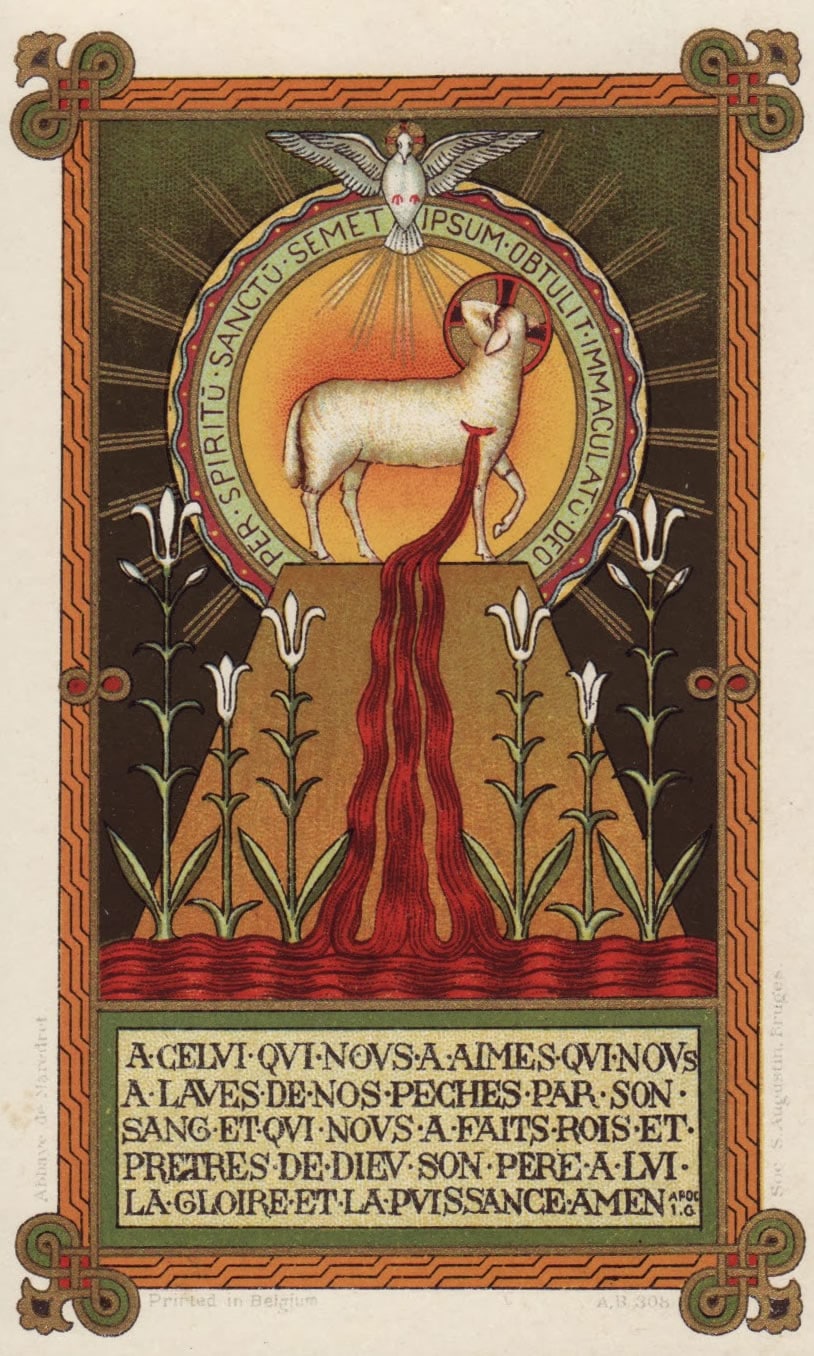
The Precious Blood of Jesus and the Terror of Demons

The Church celebrates the Feast of the Precious Blood of Jesus on July 1st and then dedicates the month to the same.[1] Let us reflect on the realities we face.
The demons are exposed. Stand up and fight
As the current crisis continues to unmask its hideous face, more evidence is emerging that the enemies of Holy Church have been servants of Satan directly via Satanism, Luciferianism, and other such dark arts. The witness who reduced the powerful Cardinal McCarrick to the lay state, James Grein, confirmed to Taylor Marshall that McCarrick was actively practicing Satanic rituals as a bishop (see these interviews here and here). In addition, credible evidence has now emerged that another powerful Cardinal—Bernadin of Chicago, now deceased —had been practicing violent Satanic rituals since at least 1957 (then a priest). Even further, the current working document for the upcoming Amazon Synod seems to leave the door open to such demonic influences present in paganism
The full depth of the corruption both financial, moral and spiritual is yet to be known and likely will never be fully known. But no thinking Catholic can stand idly by any more. Now is the time to stand and fight, lest any man receive the curse of Debbora: Curse [them], said the angel of the Lord…because they came not to the help of the Lord, to help his most valiant men (Jdg. v. 23). Rather, the Prophet now cries out: Who shall rise up for me against the evildoers? or who shall stand with me against the workers of iniquity? (Ps. xciii. 16). Let no man be left who has not taken up his arms and entered the battle. Let us offer our lives to die for Holy Mother Church, and God will give us the victory. Whatever activism you may be engaged in, mark this: the spiritual battle comes first. If you fail to fight this battle first, you will end up fighting for the enemy.
The enemy’s assault
Before we discuss weapons, we must understand the tactics of the enemy. He fights by exploiting our weaknesses. The effects of Original Sin include a disordered soul. This means that instead of your intellect ruling your soul by reason, your appetites rule you by creating attachments to created things. Thus a crucial step in the spiritual life is internalizing a love for suffering and detachment. If you love suffering and detachment, most of the enemy’s assaults will not harm you.
Second and related is understanding consolation and desolation. The soul that is striving in spiritual combat will experience both from God. When He gives us consolation, He is empowering us to fight harder. When he takes away consolation, He is calling us to detach ourselves from creatures, including spiritual consolations. Remember and practice this saying: in desolation, remember consolation. In consolation, prepare for desolation. For further wisdom on the spiritual battle, read the indispensable The Spiritual Combat by Lorenzo Scupoli
Weapons
Experienced and knowledgeable exorcists tell us that two things terrify the demons: the Holy Name of Jesus and the Precious Blood of Jesus. In particular the power of the latter against evil is shown in the Collect for the feast today:
Almighty eternal God, Who made thy only-begotten Son the Redeemer of the world, and willed to be reconciled by His Blood, grant us, we beseech thee, so to worship in this sacred rite the price of our salvation, and to be so protected by its power against the evils of the present life on earth, that we may enjoy its everlasting fruit in heaven.
Developing devotions to the Precious Blood and the Holy Name will assist with your striving. If you join the Auxilium Christianorum (see below), you will pray the Litany of the Precious Blood every day.
With these weapons, it is essential to call upon our Lady under the title Virgin Most Powerful (Virgo Potens). This is because, as St. Louis de Montfort says, the Devil hates our Lady in some sense even more than God. This is because of his pride, which is especially tormented by the power of our Lady, who is neither divine nor an angel. Marian devotion also assists us to not become prideful, since our Lady is essential to humility.
In addition, St. Joseph is also invoked under the title Terror of Demons. He is powerful because he was the one on earth to give our Lord the Holy Name of Jesus as well as to first shed the Precious Blood in the circumcision. Other than the Holy Family, other saints come to our aid, such as St. Anthony of Padua, St. Benedict, St. Anthony of the Desert, and others.
Our Lady of Fatima also gave us specific instructions for this crisis: pray one third of the Rosary (Five Decades) every day, and make the First Saturday devotions in reparation to her Immaculate Heart. It is clear our God has reserved Satan for special destruction from our Lady in this time, and it behooves us to follow her instructions for victory.
Sacramentals: their use and misuse
Lastly, we will discuss the use of sacramentals which can also be effective weapons. Unfortunately many seminarians are no longer intructed in their proper use, and Bugnini began removing such prayers from the liturgy beginning in 1955. So the faithful can either be ignorant of these spiritual helps or else descend into superstitious practices. Therefore let us be careful to have a clear understanding. A sacramental differs from a sacrament in the following ways:
| Sacraments | Sacramentals |
|---|---|
| Visible sign of an invisible grace | Visible sign of an invisible grace |
| Imparts sanctifying grace | Imparts actual grace |
| Instituted by Christ | Instituted by the Church |
| Works on its own with worthy reception | Depends on the merit of the user |
St. Thomas defines superstition as a vice opposed to the virtue of religion in that supserstituon “offers divine worship either to whom it ought not, or in a manner it ought not” (II-II q92 a1). The manner in which sacramentals can be abused is usually in thinking that they have power in themselves outside of the merits or prayers of the user or saints. One of the most common examples is the superstition of burying a St. Joseph statue upside down to sell a house. This is a superstation because it relies on the action of a ritual and an object in itself to obtain a favor. Instead, one should use a statue to give honor to God and the saints, and pray that God would grant your favor through their merits, not the thing in itself.
Another common superstition is in the misuse of our Lady’s scapular, which brings up the related sin of presumption. Presumption is defined as an immoderate hope, for example “hope to obtain pardon without repenting” (II-II q21 a1). When our Lady said “He who wears my scapular will not suffer eternal fire,” she did not mean that the thing in itself would obtain pardon. To live in sin and then trust in the scapular itself for pardon would be superstition and presumption and would merit eternal punishment.
Instead, a proper use of the sacramentals can indeed assist in guarding against the demonic. But this comes by trusting in the power of God through the blessed object while uniting with it prayer and good works. The Church in her wisdom has instituted various sacramentals to make use of: holy water, holy oil, blessed salt, blessed medals, candles, scapulars, etc. Use these properly to receive additional graces in the spiritual fight. On a final note: if a sacramental ever becomes damaged beyond repair, it must be disposed of reverently in one of three ways: eating it, burying it or burning it.
Most importantly in this struggle: do not lose hope, which is the sin of despair. Consider the fact that our God has sent the Virgin Mary multiple times to warn us of this crisis and to repent. From the view of heaven, these horrifying things are safely in the hand of Almighty God. Consider the words of the prophet:
Our God is our refuge and strength: a helper in troubles, which have found us exceedingly. Therefore we will not fear, when the earth shall be troubled; and the mountains shall be removed into the heart of the sea. Nations were troubled, and kingdoms were bowed down: he uttered his voice, the earth trembled. The Lord of armies is with us: the God of Jacob is our protector. Be still and see that I am God; I will be exalted among the nations, and I will be exalted in the earth. (Ps. xlv.)
——————————
Much of the information in this article comes from the foremost English exorcist of our time, Fr. Chad Ripperger. His website is sensustraditionis.com. Please consider joining the Auxilium Christianorum and see their website for more information about sacramentals and such things.
Timothy S. Flanders
@meaningofcath

[1]This feast was suppressed in the Novus Ordo and combined with Corpus Christi. Before this Corpus Christi and the Precious Blood were two separate feasts.

Sacred Heart of Jesus: Burning with Charity for the Salvation of Souls

In the twelfth chapter of the gospel of St. Luke our Lord says these words:
I am come to cast fire on the earth. And would that it were already kindled! (Lk. xii. 49)[1]
This verse is the Magnificat antiphon for First Vespers of the Feast. The following prayer interprets it as identifying the fire with the charity of God:
Lord, we beseech thee, let thy Holy Spirit kindle in our hearts that fire of charity which Our Lord Jesus Christ, thy Son, sent forth from His inmost Heart upon this earth, and willed that it should burn with vehemence. Who livest and reignest with thee, in the unity of the same Holy Spirit, God, forever and ever. Amen.
We also recall the words of the Holy Forerunner in the beginning of St. Matthew:
I indeed baptize you in water unto penance, but he that shall come after me, is mightier than I, whose shoes I am not worthy to bear: he shall baptize you in the Holy Ghost and fire. Whose fan is in his hand, and he will thoroughly cleanse his floor and gather his wheat into the barn; but the chaff he will burn with unquenchable fire. (Mt. iii. 11)
Thus we see that the fire of our Lord Jesus Christ is both charity and a judgment according to truth. The fire of charity wills the salvation of souls and the fire of truth cleanses us from sin. Thus let every Christian soul receive the fire of the Sacred Heart particularly in the Blessed Sacrament for his own soul’s sake and for the sake of his neighbor.
It is in the words and deeds with which we treat our neighbor that the need for truth and charity particularly becomes acute. St. Thomas calls truth and charity the form (foundation) of all good works.[2] In the month of June, dedicated to the Most Sacred Heart of Jesus, worldly men blasphemously celebrate the sin against nature. Yet even amidst this, we must work for the salvation of these souls. Many of these men and women are so deeply wounded and are in desperate need of the Sacred Heart, wounded for love of them. Consider the pleading of our father Abraham before the fire fell from heaven. Let us offer reparation and sacrifices that the souls of unhappy sinners may be among the just when the fire of Jesus Christ is kindled. And let us understand that truth and charity are really one fire from one Sacred Heart.
Most Sacred Heart of Jesus, have mercy on us.
Timothy S. Flanders
@meaningofcath
[1]Πῦρ ἦλθον βαλεῖν ἐπὶ τὴν γῆν, καὶ τί θέλω εἰ ἤδη ἀνήφθη.
[2]Commentary on Galatians.
Glossary of Philosophical Terms

Parts of the human body and soul
The Four Causes
Form and Matter
Substance and Accident
Objective and Subjective
Potency and Actuality
Parts of the Human Body and Soul
Intellect: faculty in the soul ordered to know the truth
Will: faculty in the soul ordered to do the good
Concupiscible appetite: pleasure emotions regarding good (love, desire, joy) and evil (hatred, aversion, sorrow)
Irascible appetite: pain emotions regarding good (hope, despair) and evil (courage, fear, anger)
The Four Causes
Example: what are the four causes of a wooden chair?
Material cause: that out of which something is made. Example: wood
Efficient cause: that by which something is made. Example: the carpenter
Formal cause: that into which something is made. Example: the shape of the chair. (Note: the formal cause is not always the shape)
Final cause: that for the sake of which something is made. Example: sitting.
Form and Matter
Matter: that stuff or matter out of which a thing takes its existence.
Form: the manner in which the stuff is arranged in order to make it exist.
Example: the matter of an apple is its sugar, carbon compounds and other stuff which makes up the apple. Its form is its “appleness,” or the way in which its matter is arranged to make it an apple. In other words, if all the matter of the apple were separated and piled into a heap, you would have the matter of an apple but not its form.
Example: a material heretic holds to the matter of heresy, which is an error against the faith. He may also be called an “erring theologian.” In other words, he has not been formally corrected. A formal heretic holds this error obstinately, so the manner in which he holds this error is the manner of a heretic. In other words, he has been formally corrected and obstinately persists in his error. Before the bull of excommunication, Fr. Martin Luther was only a material heretic. After he publicly burned the bull, he became a formal heretic.
Substance and Accident
Substance: that without which a thing cannot be what it is.
Accident: that without which a thing will remain what it is.
Example: an apple has its own “appleness,” which constitutes its matter according to the form of an apple – this forms its substance as an apple. However, between apples, there are differences of size, shape, or color which nevertheless do not change apples into something different. Thus these properties may be called accidents, since they are not a part of an apple’s substance. In other words, take away an apples color or change it, and you still have an apple. But take away an apple’s substance, and you no longer have an apple.
Example: after the consecration, the substance of the bread and wine become the substance of the Body and Blood of our Lord (transubstantiation). Therefore, since the substance of bread and wine is gone (while their accident remain), the Blessed Sacrament may properly receive worship (latria) from the faithful in the same manner as we worship God Himself.
Objective and Subjective
These terms are similar to their grammatical equivalents. The subject is one who acts upon an object. The boy (subject) kicks the ball (object). However, when we speak “objectively” about a man, we take him as our object and look at him from the outside.
Example: the Council of Florence states that no one who is not subjected to the Roman Pontiff can be saved. Or elsewhere it is said that baptism is necessary for salvation. These are both salvation considered from the objective aspect, with a man as the object.
On the other hand, St. Thomas teaches that a man can be saved without baptism, citing Augustine in reference to a martyred catechumen’s desire to be baptized (III q68 a2). Thus objectively, this man cannot be saved since he was not baptized. However, considered subjectively (from the man within himself), he can be saved by virtue of his desire to be baptized. Put another way, not all those who are objectively submitted to the Roman Pontiff will be saved, because subjectively they are apostates.
Potency and Actuality
Potency: having the potential or power to do a thing. Example: a fertile man has the potency to become a father.
Actuality: when potency is put into action to make a potential reality an actual reality. Example: when a man begets a child, he is no longer a father in potency, but in actuality.
Five Things to Prevent Slavery to Social Media

Social media is a tool which has great potential for both good and evil. Here are five things to avoid slavery and to use it properly.
1. Cut off your hand
Our Lord said vehemently: And if thy right hand scandalize thee, cut it off, and cast it from thee: for it is expedient for thee that one of thy members should perish, rather than that thy whole body go into hell (Mt. v. 30). Therefore if Social Media is an occasion of mortal sin for you (particularly sins against the Sixth Commandment), immediately stop using it. Shut down all your accounts and get a flip phone if you have to. This is the vehemence with which you must combat the occasion of mortal sin.
The Holy See has explicitly taught that penitents must be denied absolution if a man refuses to avoid unnecessary occasions of sin[1]. Let a man examine himself, call upon the Holy Spirit to enlighten him if social media is a near occasion of sin. If it is, let him cut off the hand and shut it down. If it is not, then he can proceed with caution.
2. Think before you speak
Again Our Lord said, Every idle word that men shall speak, they shall render an account for it on the day of judgment (Matt. xii. 36). One of the traps of social media is that it allows every man to say what he pleases without any immediate consequences. People say things on social media that they would never say in person, and for which they would certainly be speechless on the day of judgment.
Therefore, recognize this trap and cut it off. Examine yourself if you are falling into this trap. Consider again the Scripture: For we must all be manifested before the judgment seat of Christ, that every one may receive the proper things of the body, according as he hath done, whether it be good or evil (II Cor. v. 10). Practice the Presence of God and speak on social media only with the knowledge that He sees what you say. Then speak with charity and truth, always considering the impact your words have on other souls and how people interpret them.
3. Maintain your peace
As we have written in another place, it is essential to keep your peace undisturbed. Examine yourself: are you continually becoming angry, anxious or disturbed when using social media? Then cut it out, regain your peace, and only use social media if you can maintain your peace. Do not be carried away by the many idle words that men say on social media. Do not be overwhelmed with things you cannot control. Do not take responsibility for more than you can. Commend all things to God and know that His Providence is over all.
4. Commit to a Social Media Sabbath
Remember always to take time throughout the day or throughout the week when you can unplug. Even if you are maintaining a very balanced social media life, keeping a social media sabbath helps you sustain this for the long term. This may take the form of unplugging for the Lord’s Day every week, or perhaps keeping a discipline of only doing social media at certain times of the day. Above all, one should be aware of a proper respect given to those around you: do not use your phone when you are with other people in person, but only when you are alone. This gives full attention to your neighbor so that you can give him the charity that is due to him.
5. Practice detachment – reject all consolations
As its founders readily admit, social media is designed to manipulate human psychology to create an addiction. This is done by giving you emotional consolations through “likes” and such things, which science has shown to release pleasure chemicals in your brain which feed addiction. A Christian man must face this as he faces any consolation: with detachment. Pray the Litany of Humility before you post something: from the desire of being esteemed, deliver me, Jesus. Reject all desires for attention, likes, retweets, whatever. Desire only the Glory of God and the salvation of souls.
Rejoice when you are calumniated, mocked, attacked, “un-followed” on social media. Rejoice especially if you are mocked for being a Christian. Hunger for humiliations which give greater Glory to God. Root out all attachments to creatures.
This is the most difficult step, but this is demanded of any Christian who chooses to use social media. Consider the wisdom of St. John of Cross, the great Doctor of Detachment, who stated that even if we are forced by necessity to receive some consolation, we must at least say “I do not want this consolation.” Repeat this prayer and ask God for the grace to always keep your soul at peace with Him.
Then and only then can you use social media and not be used by it. Then it can be a tool for the salvation of souls.
[1]Prummer states this in no. 711, citing Innocent XI’s condemnation from 1679, stating that “such a penitent is considered to lack a sincere desire of avoiding sin.”
Timothy S. Flanders
@meaningofcath
St. John the Baptist: On Holy Humility

The saints tell us that the last enemy to be defeated is wicked pride:
Our eighth and last combat is against the spirit of pride, which evil, although it is the latest in our conflict with our faults and stands last on the list, yet in beginning and in the order of time is the first: an evil beast that is most savage and more dreadful than all the former ones, chiefly trying those who are perfect, and devouring with its dreadful bite those who have almost attained the consummation of virtue (St. John Cassian, Institutes, Book XII).
Pride tries the perfect man by tempting him to take credit for his great virtue, and thus causing him to fall from the height of sanctity to the depth of perdition.
The saints who have conquered this enemy have attained holy humility, and we celebrate the nativity of such a saint today. At Matins the Church sings:
Far as the wide world reacheth, born of woman,
Holier was there none than John the Baptist;
Meetly in water laving him who cleanseth
Man from pollution.
Consider the sanctity of this man whom our Lord confessed to be the greatest among those born of a woman! Yet we see his greatness in his humility. He rejoiced when his own followers left him to follow our Lord. He said: “He must increase: but I must decrease” (Jn. iii. 30). We too should rejoice when others give glory to God instead of ourselves. Not only that, we should pray for the grace to prefer that others receive praise according to the Litany of Humility:
That others may be loved more than I, Jesus, grant me the grace to desire it.
That others may be esteemed more than I, Jesus, grant me the grace to desire it.
That in the opinion of the world, others may increase and I may decrease, Jesus, grant me the grace to desire it.
That others may be chosen and I set aside, Jesus, grant me the grace to desire it.
That others may be praised and I unnoticed, Jesus, grant me the grace to desire it.
That others may be preferred to me in everything, Jesus, grant me the grace to desire it.
Humility is in confessing that God is all and we are nothing. When we know the greatness of God, we know the nothingness of fallen human nature.
St. Thomas says that humility means conformity with the truth (II-II q161). St. John confessed the truth, and died for it. He reached the heights of humility when he knew that every good within him is from God, and every evil is his own creation. This is why all the saints confessed that they were great sinners, despite their holiness.
On this great feast let every soul beseech the Holy Forerunner that he obtain for us from God the gift of holy humility. Holy John the Baptist, pray for us.
St. Alphonsus: On Holy Communion
 SERMON XXXI. SECOND SUNDAY AFTER PENTECOST. – ON HOLY COMMUNION.
“A certain man made a great supper.” LUKE xiv. 16.
IN the gospel of this day we read that a rich man prepared a great supper. He then ordered one of his servants to invite to it all those whom he should find in the highways, even though they were poor, blind, and lame, and to compel those who should refuse, to come to the supper. “Go out into the highways and hedges, and compel them to come in, that my house may be filled” (v. 20). And he added, that of all those who had been invited and had not come, not one should ever partake of his supper. “But I say unto you, that none of those men that were invited shall taste of my supper” (v. 24). This supper is the holy communion; it is a great supper, at which all the faithful are invited to eat the sacred flesh of Jesus Christ in the most holy sacrament of the altar. “Take ye and eat: this is my body.” (Matt. xxiv. 26.) Let us then consider today, in the first point, the great love which Jesus Christ has shown us in giving us himself in this sacrament; and, in the second point, how we ought to receive him in order to draw great fruit from the holy communion.
First Point. On the great love which Jesus Christ has shown us in giving us himself in this sacrament.
1. ”Jesus, knowing that his hour was come that he should pass out of this world to the Father, having loved his own that were in the world, he loved them unto the end. ”(John xiii. 1.) Knowing that the hour of his death had arrived, Jesus Christ wished, before his departure from this world, to leave us the greatest proof which he could give of his love, by leaving us himself in the holy eucharist. ”He loved them to the end.” That is, according to St. Chrysostom, ”with an extreme love.” St. Bernardino of Sienna says that the tokens of love which are given at death make a more lasting impression on the mind, and are more highly esteemed. ”Quæ in fine in signum amicitiæ celebrantur, firmius memoriæ imprimuntur et cariora tenentur.” But, whilst others leave a ring, or a piece of money, as a mark of their affection, Jesus has left us himself entirely in this sacrament of love.
2. And when did Jesus Christ institute this sacrament? He instituted it, as the Apostle has remarked, on the night before his passion . “The Lord Jesus, the same night on which he was betrayed, took bread, and giving thanks, broke and said: “Take ye and eat: this is my body.” (1 Cor. xi. 23, 24.) Thus, at the very time that men were preparing to put him to death, our loving Redeemer resolved to bestow upon us this gift. Jesus Christ, then, was not content with giving his life for us on a cross: he wished also, before his death, to pour out, as the Council of Trent says, all the riches of his love, by leaving himself for our food in the holy communion. “He, as it were, poured out the riches of his love towards man.” (Sess. 13, cap. ii.) If faith had not taught it, who could ever imagine that a God would become man, and afterwards become the food of his own creatures? When Jesus Christ revealed to his followers this sacrament which he intended to leave us, St. John says, that they could not bring themselves to believe it, and departed from him saying: ”How can this man give us his flesh to eat ?…This saying is hard, and who can hear it?” (St. John vi. 53, 61.) But what men could not imagine, the real love of Jesus Christ has invented and effected. ”Take ye and eat: this is my body.” These words he addressed to his apostles on the night before he suffered, and he now, after his death, addresses them to us.
3. “How highly honoured, ” says St. Francis de Sales, “would that man fed to whom the king sent from his table a portion of what he had on his own plate? But how should he feel if that portion were a part of the king‟s arm?” In the holy communion Jesus gives us, not a part of his arm, but his entire body in the sacrament of the altar. “He gave you all,” says St. Chrysostom, reproving our ingratitude, ”he left nothing for Himself. ” And St. Thomas teaches, that in the eucharist God has given us all that he is and all that he has. “Deus in eucharistia totum quod est et habet, dedit nobis.” (Opusc. 63, c. ii.) Justly then has the same saint called the eucharist”a sacrament of love; a pledge of love. ”“Sacramentum charitatis pignus charitatis.” It is a sacrament of love, because it was pure love that induced Jesus Christ to give us this gift and pledge of love: for he wished that, should a doubt of his having loved us ever enter into our minds, we should have in this sacrament a pledge of his love. St. Bernard calls this sacrament”love of loves.”“Amor amorum.” By his incarnation, the Lord has given himself to all men in general; but, in this sacrament, he has given, himself to each of us in particular, to make us understand the special love which he entertains for each of us.
4. Oh! how ardently does Jesus Christ desire to come to our souls in the holy communion! This vehement desire he expressed at the time of the institution of this sacrament, when he said to the apostles: ”With desire I have desired to eat this Pasch with you.” (Luke xxii. 15.) St. Laurence Justinian says that these words proceeded from the enamoured heart of Jesus Christ, who, by such tender expressions, wished to show us the ardent love with which he loved us. ”This is the voice of the most burning charity. ”Flagrantissimæ charitatis est vox hæc.” And, to induce us to receive him frequently in the holy communion, he promises eternal life that is, the kingdom of heaven to those who eat his flesh. ”He that eateth this bread shall live for ever.” (John vi. 59.) On the other hand, it threatens to deprive us of his grace and of Paradise, if we neglect communion. ”Except you eat the flesh of the Son of Man, and drink his blood, you shall not have life in you.” (John vi. 54.) These promises and these threats all sprung from a burning desire to come to us in this sacrament.
5. And why does Jesus Christ so vehemently desire that we receive him in the holy communion? It is because he takes delight in being united with each of us. By the communion, Jesus is really united to our soul and to our body, and we are united to Jesus. “He that eateth my flesh and drinketh my blood, abideth in me and I in him.” (John vi. 57.) Thus, after communion, we are, says St. Chrysostom, one body and one flesh with Jesus Christ. ”Huic nos unimur, et facti summus unum corpus ut una caro.” (Hom. lxviii. ad Pop. Ant.) Hence St. Laurence Justinian exclaims: “Oh! how wonderful is thy love, O Lord Jesus, who hast wished to incorporate us in such a manner with thy body, that we should have one heart and one soul inseparably united with thee.” Thus, to every soul that receives the eucharist, the Lord says what he once said to his beloved servant Margaret of Ipres”Behold, my daughter, the close union made between me and thee; love me, then, and let us remain for ever united in love: let us never more be separated.” This union between us and Jesus Christ is, according to St. Chrysostom, the effect of the love which Jesus Christ bears us. ”Semetipsum nobis immiscuit, ut unum quid simus ardentur enim amantium hoc est. ” (Hom. lxi.) But, Lord, such intimate union with man is not suited to thy divine majesty. But love seeks not reason; it goes not where it ought to go, but where it is drawn. ”Amor ratione caret, et vadit quo dicitur, non quo debeat.” (Serm. cxliii.) St. Bernardino of Sienna says that, in giving himself for our food, Jesus Christ loved us to the last degree; because he united himself entirely to us, as food is united to those who eat it. “Ultimus gradus amoris est, cum se dedit nobis in cibum quia dedit se nobis ad omnimodam unionem, sicut cibus et cibans, invicem uniuntur.” (Tom. 2, Serm. liv.) The same doctrine has been beautifully expressed by St. Francis de Sales. ”No action of the Saviour can be more loving or more tender than the institution of the holy eucharist, in which he, as it were, annihilates himself, and takes the form of food, to unite himself to the souls and bodies of his faithful servants.”
6. Hence, there is nothing from which we can draw so much fruit as from the holy communion. St. Denis teaches, that the most holy sacrament has greater efficacy to sanctify souls than all other spiritual means. ”Eucharistia maxim am vim habet perficiendæ sanctitatis.” St. Vincent Ferrer says, that a soul derives more profit from one communion than from fasting a week on bread and water. The eucharist is, according to the holy Council of Trent, a medicine which delivers us from venial, and preserves us from mortal sins. “Antidotum quo a culpis quotidianis liberemur, et a rnortalibus præservemur.” Jesus himself has said, that they who eat him, who is the fountain of life, shall receive permanently the life of grace. “He that eateth me, the same shall also live by me.” (John vi. 58.) Innocent the Third teaches, that by the passion Jesus Christ delivers us from the sins we have committed, and by the eucharist from the sins we may commit. According to St. Chrysostom, the holy communion inflames us with the fire of divine love, and makes us objects of terror to the devil. ”The eucharist is a fire which inflames us, that, like lions breathing fire, we may retire from the altar, being made terrible to the devil.” (Hom. lxi. ad Pop. Ant.) In explaining the words of the Spouse of the Canticles, “He brought me into the cellar of wine; lie set in order charity in me” (ii. 4.) St. Gregory says, that the communion is this cellar of wine, in which the soul is so inebriated with divine love, that she forgets and loses sight of all earthly things.
7. Some will say: ”I do not communicate often; because I am cold in divine love.” In answer to them Gerson asks, Will you then, because you feel cold, remove from the fire? When you are tepid you should more frequently approach this sacrament. St. Bonaventure says: ”Trusting in the mercy of God, though you feel tepid, approach: let him who thinks himself unworthy reflect, that the more infirm he feels himself the more he requires a physician” (de Prof. Rel., cap. lxxviii). And, in”The Devout Life,” chapter xx., St. Francis de Sales writes: ”Two sorts of persons ought to communicate often: the perfect, to preserve perfection; and the imperfect, to arrive at perfection.” It cannot be doubted, that he who wishes to communicate should prepare himself with great diligence, that he may communicate well. Let us pass to the second point.
Second Point. On the preparation we ought to make in order to derive great fruit from the holy communion.
8. Two things are necessary in order to draw great fruit from communion preparation for, and thanksgiving after communion. As to the preparation, it is certain that the saints derived great profit from their communions, only because they were careful to prepare themselves well for receiving the holy eucharist. It is easy then to understand why so many souls remain subject to the same imperfections, after all their communions. Cardinal Bona says, that the defect is not in the food, but in the want of preparation for it. ”Defectus non in bibo est, sed in edentis dispositione.” For frequent communion two principal dispositions are necessary. The first is detachment from creatures, and disengagement of the heart from everything that is not God. The more the heart is occupied with earthly concerns, the less room there is in it for divine love. Hence, to give full possession of the whole heart to God, it is necessary to purify it from worldly attachments. This is the preparation which Jesus himself recommends to St. Gertrude. ”I ask nothing more of thee,” said he to her, ”than that thou come to receive me with a heart divested of thyself.” Let us, then, withdraw our affections from creatures, and our hearts shall belong entirely to the Creator.
9. The second disposition necessary to draw great fruit from communion, is a desire of receiving Jesus Christ in order to advance in his love. ”He,” says St. Francis de Sales, ”who gives himself through pure love, ought to be received only through love.” Thus, the principal end of our communions must be to advance in the love of Jesus Christ. He once said to St. Matilda: “When you communicate, desire all the love that any soul has ever had for me, and I will accept your love in proportion to the fervour with which you wished for it.”
10. Thanksgiving after communion is also necessary. The prayer we make after communion is the most acceptable to God, and the most profitable to us. After communion the soul should be employed in affections and petitions. The affections ought to consist not only in acts of thanksgiving, but also in acts of humility, of love, and of oblation of ourselves to God. Let us then humble ourselves as much as possible at the sight of a God made our food after we had offended him. A learned author says that, for a soul after communion, the most appropriate sentiment is one of astonishment at the thought of receiving a God. She should exclaim: ”What! a God to me! a God to me!” Let us also make many acts of the love of Jesus Christ. He has come into our souls in order to be loved. Hence, he is greatly pleased with those who, after communion, say to him: “My Jesus, I love thee; I desire nothing but thee.” Let us also offer ourselves and all that we have to Jesus Christ, that he may dispose of all as he pleases: and let us frequently say: ”My Jesus, thou art all mine; thou hast given thyself entirely to me; I give myself entirely to thee.
11. After communion; we should not only make these affections, but we ought also to present to God with great confidence many petitions for his graces. The time after communion is a time in which we can gain treasures of divine graces. St. Teresa says, that at that time Jesus Christ remains in the soul as on a throne, saying to her what he said to the blind man: ”What wilt thou that I should do to thee ?” (Mark x. 51.) As if he said: ”But me you have not always.” (John xii. 8.) Now that you possess me within you, ask me for graces: I have come down from heaven on purpose to dispense them to you; ask whatever you wish, and you shall obtain it. Oh! what great graces are lost by those who spend but little time in prayer after communion. Let us also turn to the Eternal Father, and, bearing in mind the promise of Jesus Christ “Amen, amen, I say to you, if you ask the Father anything in my name, he will give it you” (John xvi. 23) let us say to him: My God, for the love of this thy Son, whom I have within my heart, give me thy love; make me all thine. And if we offer this prayer with confidence, the Lord will certainly hear us. He who acts thus may become a saint by a single communion.