

What to Do If You Are Deprived of the Sacraments

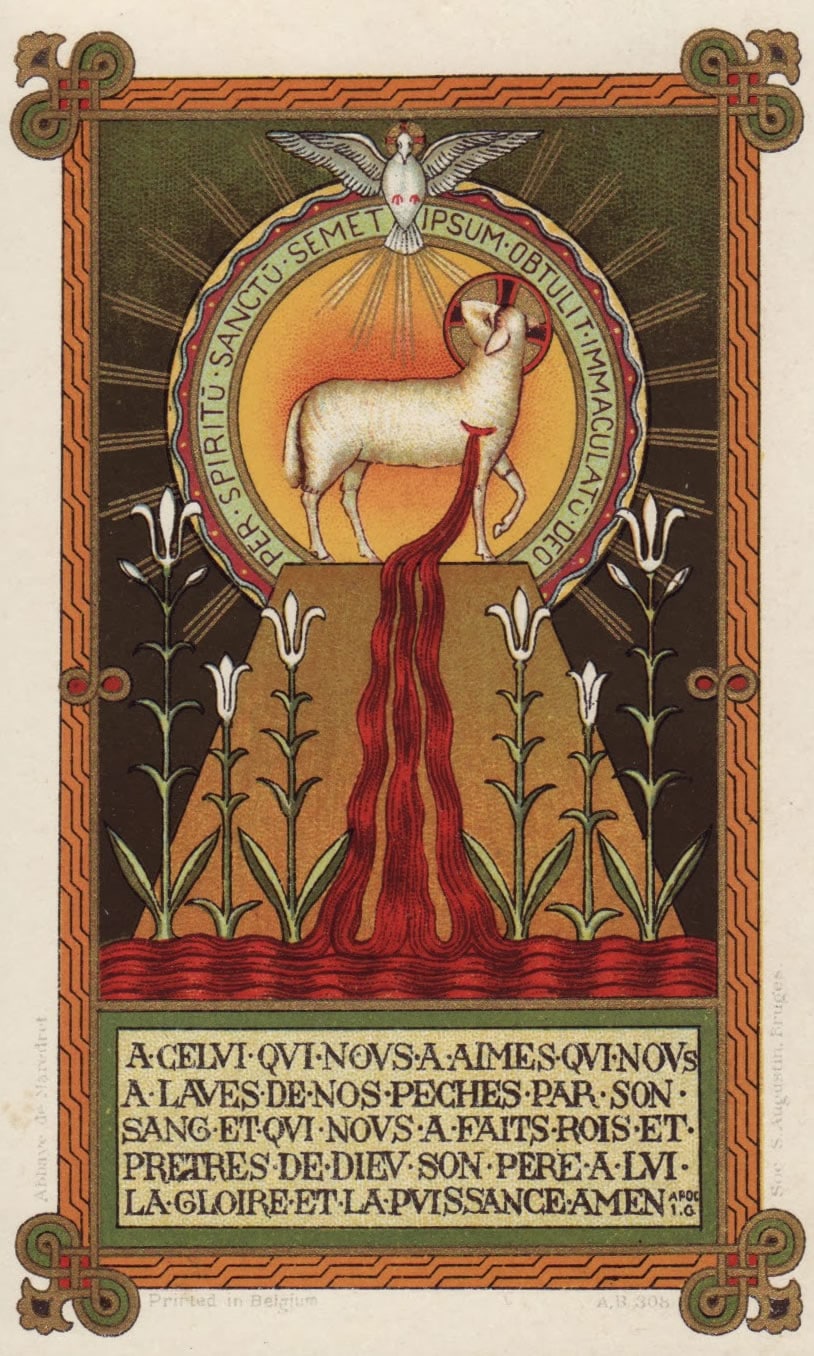
Tragically, the public celebration of the Holy Sacrifice has been suspended by many bishops due to fears about the outbreak. If you are deprived of the Sacraments during this time, remember that God has not abandoned you. Holy Mother Church has already provided for this necessity as well, in the Spiritual Communion and Act of Perfect Contrition. I refer you to this fine article from Rev. Dcn. Nick Donnelly to explain these traditional practices. See also his guide here (other languages available linked at the bottom of this article. A Chinese translation is also coming soon. Contact Dcn. Nick for more translations). This article also helps explain the divine precept of keeping the Lord’s Day in relation to this.
If you have any questions, please let me know.
Timothy S. Flanders
@meaningofcath


Podcast: Chris Plance on Christ the King and Tradition
I had the pleasure to speak with Chris Plance about Christ the King as the essence of the Gospel. This concept was very powerful and Chris has a lot of great things to say about it. We also discussed the controversy surrounding my article at One Peter Five about the collapse of moral theology.
Download the podcast here or watch below. Podcast is also found on iTunes.

Cinq moyens d’avancer en pleine crise de l’Eglise Catholique

By Timothy S. Flanders
Translated by Marguerite-Marie LeFranc
Vous avez peut-être du mal avec cette crise. Vous pouvez être scandalisé par les mauvais prêtres ou par le Saint-Père lui-même. Vous vous posez peut-être simplement la question : que faut-il faire ? (Actes ii. 37). Voici cinq moyens de s’en sortir.
I. Prenez votre croix avec virilité, comme un saint.
Ce n’est pas la première crise que traverse l’Église. Nous avons traversé de nombreuses guerres, des effusions de sang, des fléaux, eu de mauvais papes, de mauvais prêtres, vu des armées catholiques en guerre contre d’autres armées catholiques, l’invasion mahométane, des invasions vikings, des campagnes d’extermination romaines, britanniques, nazies, communistes pour ne citer que ceci mais dans toutes ces choses nous sommes plus que vainqueurs par celui qui nous a aimés (Rom. viii. 37). Saint-Paul a écrit ces mots alors que notre foi n’avait pratiquement aucun adhérent, mais il a virilement pris sa croix pour l’amour du Christ-Roi afin de supporter les coups, les naufrages, les fléaux, la lapidation, le péril constant, la nudité, le froid et la faim (II Cor. xi. 25-27). Pourquoi ? Parce qu’il savait que le Christ-Roi avait vaincu et vaincrait. Donc la première démarche est intérieure : prenez votre croix avec virilité comme tous nos pères l’ont fait avant nous. Qu’est-ce que ça veut dire ? Cela veut dire prendre la résolution inébranlable de vivre et mourir dans cette foi. Accepter et aimer cette souffrance, l’unir à la Passion de notre Seigneur et l’offrir à Dieu Tout- Puissant. Le faire dans l’espérance, sachant que même si vous mourez avant de voir “la Liberté et l’Exaltation de notre Sainte Mère l’Église”, cela viendra pourtant.
Le Prophète déclare : Espère en l’Éternel ! Fortifie-toi et que ton coeur s’affermisse ! Espère en l’Éternel ! (Ps. Xxvii. 14). Et ailleurs, le Bienheureux Apôtre s’écrie : Veillez, demeurez fermes dans la foi, soyez des hommes, fortifiez-vous. Que tout ce que vous faites se fasse avec charité. (I Cor. Xvi. 13-14). À travers tous les siècles, lors de chaque crise de l’Église, nos pères ont pris leurs croix avec virilité et ont surmonté les épreuves. Et beaucoup d’entre eux sont morts avant la victoire. Cette crise, comme toutes les autres crises de l’histoire, n’est rien pour Dieu Tout-Puissant qui est un feu dévorant, qui donne la vie aux morts, et qui appelle les choses qui ne sont point comme si elles étaient (Héb. xii. 29 ; Rom. iv. 17). Pour lui, les nations sont comme une goutte d’un seau. Elles sont comme la poussière sur une balance ; Voici, les îles sont comme une fine poussière (Is. Xl. 15). Nous parlerons de cette histoire plus en détail à l’avenir.
Saint Thomas définit l’efféminement comme une réticence à souffrir en raison d’un attachement au plaisir (ST II-II q138 a1). Le fait que notre époque ai été, en grande partie, dominée par des hommes efféminés a été une cause majeure de la crise. Alors arrêtez d’être efféminé. Renoncez à tous les plaisirs et prenez votre croix avec virilité. Imprégnez-vous des mots de L’Imitation de Jésus-Christ :
“Cette parole semble dure à plusieurs : Renoncez à vous-mêmes, prenez votre Croix, et suivez Jésus (Lc 9, 23). Mais il sera bien plus dur, au dernier jour, d’entendre cette parole : Retirez-vous de Moi, maudits, allez au feu éternel ! (Mt. 25, 41) Ceux qui écoutent maintenant volontiers la parole qui commande de porter la Croix, et qui y obéissent, ne craindront point alors d’entendre l’arrêt d’une éternelle condamnation. “(Imitation Bk. II, Ch. Xii).
Ainsi, nous devons voir et considérer non seulement le triomphe terrestre du Christ-Roi, mais aussi notre propre mort, le compte que nous devons rendre à Jésus-Christ. Que répondrez-vous au Juste Juge ? Passons au deuxième point.
II. Lisez L’Imitation de Jésus-Christ et mettez en pratique ses enseignements.
On dit que ce livre est le livre le plus vendu de tous les temps en dehors de la Bible – et pour cause. Ce livre distille la vie spirituelle mieux que n’importe quel livre. Si un livre pouvait résumer toute la spiritualité occidentale, c’est bien celui-là. Vous y apprendrez, de manière détaillée, comment “prendre votre croix intérieure”. Mais attention, ce livre vous bottera les fesses et n’aura aucune pitié envers vous. Considèrez ceci :
“Jésus-Christ Lui-même, Notre-Seigneur, n’a pas été une seule heure dans toute Sa vie sans éprouver quelque souffrance : Il fallait, dit-Il, que le Christ souffrît, et qu’Il ressuscitât d’entre les morts, et qu’Il entrât ainsi dans Sa gloire (Lc 24, 26 et 46). Comment donc cherchez-vous une autre voie que la voie royale de la sainte Croix ? Toute la vie de Jésus-Christ n’a été qu’une croix et un long martyre, et vous cherchez le repos et la joie ! Vous vous trompez, n’en doutez pas ; vous vous trompez lamentablement, si vous cherchez autre chose que les afflictions à souffrir ; car toute cette vie mortelle est pleine de misères et environnée de croix. Et plus un homme aura fait de progrès dans les voies spirituelles, plus ses croix souvent seront pesantes, parce que l’amour lui rend son exil plus douloureux. Cependant celui que Dieu éprouve par tant de peines n’est pas sans consolations qui les adoucissent, parce qu’il sent s’accroître les fruits de sa patience à porter sa croix”. (Bk II, Ch. Xii).
et aussi :
“Appliquez-vous à supporter patiemment les défauts et les infirmités des autres, quelles qu’elles soient, parce qu’il y a aussi bien des choses en vous que les autres ont à supporter. Si vous ne pouvez vous rendre tel que vous voudriez, comment pourrez-vous faire que les autres soient selon votre gré ?” (Bk. I, Ch. Xvi).
Le livre traite d’avertissements spirituels, puis de disciplines intérieures et de consolations, se terminant par de longues méditations et prières sur le Saint-Sacrement. La plupart des chapitres peuvent être lus en 5 à 10 minutes chaque jour. Cette oeuvre vous permettra de garder les pieds sur terre et vous mettra au défi quotidiennement, comme il l’a fait pour nos pères avant nous. Maîtrisez votre vie spirituelle avant de prétendre aider quelqu’un d’autre. Mais comme le déclare L’Imitation de Jésus-Christ, “les discours sublimes ne font pas l’homme juste et saint, mais une vie vertueuse le rend cher à Dieu” (Bk. I, Ch. I). Passons donc au point suivant :
III. Priez quotidiennement le Saint Rosaire
Au centre de ces cinq points, nous en arrivons au Saint Rosaire. La liste des saints, des docteurs et des papes ayant promu cette dévotion serait trop longue pour être citée ici. Le sujet recevra toute l’attention qu’il mérite, mais je résumerai brièvement ici.
Le Saint Rosaire est primordial car il comprend les deux formes essentielles de prière : mentale et vocale, comme l’observe saint Louis-Marie Grignon de Montfort [1]. La prière vocale sans la prière mentale n’est qu’une vie spirituelle stagnante, tandis que la prière mentale sans voix est une imagination désarticulée (voir cette introduction aux Neuf Niveaux de la prière). Le Saint Rosaire concentre parfaitement les deux formes de prière dans une méditation quotidienne et puissante sur la vie et les vertus de notre Seigneur et de Notre-Dame. Comme le dit saint Augustin, il n’y a pas d’exercice spirituel plus fécond ou plus utile à notre salut que de tourner continuellement nos pensées vers les souffrances de notre Sauveur. [2]
Comme le Bienheureux Apôtre le déclare : que tout ce qui est vrai, tout ce qui est honorable, tout ce qui est juste, tout ce qui est pur, tout ce qui est aimable, tout ce qui mérite l’approbation, ce qui est vertueux et digne de louange, soit l’objet de vos pensées. (Ph. Iv. 8) . Si nous pensons à ces choses, nous deviendrons saints, sur la base de ce principe : “le bien connu par l’intelligence met en mouvement la volonté” (ST I q82 a3).
Lorsque nos pensées sont concentrées sur la vie et les vertus de notre Seigneur, nous nous désintéressons du péché et notre volonté est purifiée. Mais pour y parvenir, comme le souligne saint Louis-Marie Grignon de Monfort, nous ne devons pas rechercher une dévotion sensible ou une consolation spirituelle, sinon notre prière sera désordonnée [3].
Saint Louis-Marie Grignon de Montfort enseigne que nous devrions tous prier chaque jour un chapelet complet (quinze dizaines) et les trois groupes de mystères. Il s’agit en fait du premier chapelet officiel promu par le pape saint Pie V en 1569, puiqu’il est pieusement admit que c’est ce que voulait dire Notre-Dame quand elle a donné cette dévotion à saint Dominique en lui disant “Mon Psautier” (c’est-à-dire 150 aves)[4]. Cependant, Notre-Dame de Fatima a dit de prier au moins “Un tiers du Rosaire” (soit un chapelet) chaque jour. Conseil important : n’essayez pas un Rosaire complet quotidiennement jusqu’à ce que votre habitude de prier déjà un chapelet soit bien ancrée. Mieux vaut pratiquer votre discipline spirituelle le matin, comme le dit saint François de Sales, mais installer cette routine est la partie la plus importante. En ce qui me concerne, j’ai commencé à prier un chapelet sur mon trajet domicile-travail chaque matin. Ainsi j’étais certain de toujours dire mon chapelet puisque qu’il s’agissait d’un trajet récurrent. Trouvez un créneau où vous pourrez toujours prier votre chapelet et tenez-vous-y.
IV. Jeûnez et faites pénitence pour tous les clercs et pour le Saint-Père.
Une réponse appropriée face à tout pécheur est de faire pénitence pour lui. Afin d’offrir réparation de l’offense faite à la gloire de Dieu, et chercher également à mériter les grâces nécessaires à la conversion de cette âme. Comme il est écrit, Il a intercédé pour les coupables (Is. Liii. 12).
Lorsque nous voyons des dirigeants de l’Église ou d’autres personnes tomber dans le péché et l’erreur, il est facile de se mettre en colère. Mais la colère doit être modérée par la raison, sinon elle peut être désordonnée et pécamineuse (II-II q158 a1). Faire pénitence pour ceux qui ont péché est un acte de miséricorde qui aide également votre propre âme à modérer la colère.
Cependant, Saint Thomas observe également qu’une absence de colère peut parfois être un péché, lorsqu’il y a une raison de se mettre en colère. Ainsi, la colère doit découler d’un raisonnement ordonné et devenir “colère par zéle” afin de grandir en vertu (loc. Cit.). La pénitence est donc aussi une violence spirituelle avec laquelle nous combattons et mettons à mort le vice et le péché par notre juste colère, chez notre frère et en nous-mêmes. Comme il est écrit, si par l’Esprit vous mettez à mort les oeuvres de la chair, vous vivrez (Rom. Viii. 13) et encore : Le royaume des cieux est forcé, et ce sont les violents qui s’en emparent (Mt. xi. 12). Le jeûne, en outre, modère les excès de l’appétit concupiscible (plaisir), freinant l’efféminement. Terminons par le dernier point.
V. Connaissez la foi et transmettez-la
Nous vivons une période sombre. A saeculum obscuram. Nous vivons à une époque où le sens de ce qui est Catholique est obscurci. Notre tâche est de combattre le bon combat de la foi (I Tim. Vi. 12) de rester fermes et de maintenir les traditions (II Thes. Ii. 14) afin que nous puissions transmettre la foi à nos enfants après nous. Nos pères ont résisté à d’innombrables terreurs en leur temps, et notre foi est la preuve de leur victoire en Christ.
À l’époque où nous vivons, nous ne pouvons malheureusement pas compter sur beaucoup d’évêques. Trop d’entre eux ont été mal formés dans la foi ou ont délibérément travaillé contre la foi pour la renverser. Comme l’a récemment écrit le pape émérite Benoît, au cours des cinquante dernières années, “Certains évêques […] ont rejeté la tradition catholique dans son ensemble, visant dans leurs diocèses à développer une sorte de “catholicité” nouvelle et moderne..”[5]
Heureusement, il n’y a pas de mauvaise foi qui puisse réécrire les œuvres des saints et des docteurs. Il n’y a pas de version expurgée de Denzinger (même si le Nouveau Lectionnaire et le Psautier le sont). Combien de controverses actuelles sur la foi et la morale ont déjà été réglées par l’autorité de l’Église ? Ainsi, pour tenir la ligne contre les ennemis de la Sainte Église, en particulier le modernisme et le “progressisme”, nous devons simplement nous prévaloir de ces ressources. Nous parlerons en détail à l’avenir des livres dont vous avez besoin.
La plupart d’entre nous ont peu d’influence sur le Vatican ou les évêques (bien que ce soit un sujet que nous aborderons à l’avenir), mais nous pouvons confesser la foi et la transmettre à nos enfants. Ceci, pour beaucoup d’entre nous, constitue notre devoir principal. Nous savons que nos enfants ou nos petits-enfants (ou leurs enfants) finiront par voir la liberté et l’exaltation de Notre Sainte Mère l’Église. Ainsi, dans nos défunts, voyons la victoire à venir et faisons notre part pour que nos enfants aient la force de résister au mal.
Notre-Dame des Victoires, priez pour nous.
***
[1]St. Louis de Montfort, The Secret of the Rosary (TAN: 1993), 17
[4]Consueverunt Romani Pontifices (1569). Pope St. John Paul II later promoted also the Luminous Mysteries written by St. George Preca.
[5]Pope Emeritus Beneidct, “The Church and the Scandal of Sexual Abuse,” translated by Anian Christoph Wimmer (2019). Emphasis mine.
Reply to Dave Armstrong 1: Public Rebuke and the State of Emergency
Editor’s note: this post is part 1 of a dialogue with Catholic author and blogger Dave Armstrong concerning the crisis in the Church following the Second Vatican Council. Our hope is to pursue charity and truth on these difficult issues, without avoiding the necessary debate among brothers. Dave Armstrong is one of the few Catholic voices who critique the traditionalist view point in print (the other being, to my knowledge, the Likoudis book The Pope, The Mass, and the Council). The mission of Meaning of Catholic is to unite Catholics against the enemies of Holy Church. This includes forming alliances with every Catholic who sincerely adheres to the faith, even when, in times of crisis, we come to different conclusions in certain areas. As I have written elsewhere, even the saints disagreed during times like these. Therefore we pursue this dialogue with Mr. Armstrong in an attempt to fulfill that mission. May this be for the greater glory of God and the salvation of souls. –T. S. Flanders
See Mr. Armstrong’s Introduction here.
***
Dear Dave,
I was pleased to read your post entitled “Definitions: Radical Catholic Reactionaries vs. Mainstream “Traditionalists”, and especially pleased that you used the word “transmogrified” ;). As we discussed privately, you and I both agree on the Meaning of Catholic confession of faith, except in regards to my post about submitting to Pope Francis with caution. I’m sure we will get into that topic eventually. I’m going to write these responses to you as a letter which appears to me to be the easiest way to progress toward a productive dialogue between us. As I also said, my wife is about to give birth so I make no promises in regards to my own frequency of posting.
As regards dialogue, I normally proceed by asking a lot of questions in order to understand what my interlocutor is saying. Instead of posting short questions I’m going to restate what you said and you can clarify if I have misunderstood in some way.
First and foremost again, you stated firmly this definition of a Catholic:
Those who accept all the dogmas and doctrines that the Catholic Church teaches are Catholics: period!
I wholeheartedly agree with this. As I said you and I both agree on the aforementioned Confession of Faith. Taking this definition as a starting point, we can add another labeled group to the three you identify in your post, namely, the Modernists. I agree with you that “modernism is the greatest crisis in the history of the Church.” I would identify a Modernist as any Catholic who seeks to overturn any note of doctrine above Sententia Communis and seeks to transform it into something of a different substance. In other words, they do not accept all the dogmas and doctrines but refuse some or all, and then promote heresies or errors against the faith, to their own eternal peril and that of others.
Rightly understood, I would identify the Modernists as the primary “enemies of Holy Church” within the Church itself. Catholics (including bishops) have become Modernists and are promoting Modernism—the synthesis of all heresies—within the Catholic Church. This essentially sums up the crisis in the Catholic Church. Would you agree with this summation?
Coming to your general point in the post, I respect and agree with your effort to distinguish between “Catholic” (in the broad sense defined above) and “traditionalist” as opposed to “radical reactionary.” It would seem that what distinguishes the latter group is first a lack of charity for their brethren and piety for the hierarchy (“continually, vociferously, and vitriolically…bashes and trashes popes, Vatican II, the New Mass, and ecumenism”).[1]
If I understand you correctly, I agree, but with qualifications (which I will return to below). From my view as I have stated elsewhere, traditionalists do suffer from these vices (turning them into the radical reactionaries) and it is on full display on the internet. One of the most prominent traditionalist priests, Fr. Chad Ripperger, often condemns this lack of virtue as harmful to souls and undermining the cause of Tradition.
The second characteristic that you identify is a disordered reliance on private judgment. You compare this to the type of thing that passes for authority among Protestants. You provide a quote from St. John Henry Newman describing the Ecclesia Discens as sharply distinguished from the Ecclesia Docens.
There was no room [in the early Church] for private tastes and fancies, no room for private judgment. . . . In the Apostles’ days the peculiarity of faith was submission to a living authority; this is what made it so distinctive; this is what made it an act of submission at all; this is what destroyed private judgment in matters of religion. If you will not look out for a living authority, and will bargain for private judgment, then say at once that you have not Apostolic faith.
Again, I certainly agree with the basic distinction. Taking the first characteristic with the second, it seems that you do allow for a degree of respectful critique for the “big four” (popes, Vatican II, the New Mass, and ecumenism) which presupposes some degree of private judgment. You state that traditionalists accept the validity of the big four but with certain reservations. For my part, I do not identify as a traditionalist as I see the movement having certain issues, but I do generally agree with their critique of the big four.
The question then becomes, to what degree are reservations or critiques of the big four permissible to remain Catholic, and at what point do they become radical reactionary? Taking Newman again as a common authority here, he wrote concerning the Arian crisis that the Church experienced a “temporary suspense of the functions of the teaching church.”[2] Despite the indefectibility of the Church, Newman observed that during this crisis the Magisterium was in some way obscured as the majority of bishops (and arguably even the pope) failed to fulfill their duty as the Ecclesia Docens. As a result the Ecclesia Discens was forced to defend the faith and rebuke the bishops in order that the crisis could be overcome.
Against the rabid impiety of the radical reactionaries, a rebuke of a superior by an inferior can only be undertaken as an act of charity in the manner and circumstances outlined by St. Thomas:
It must be observed, however, that if the faith were endangered, a subject ought to rebuke his prelate even publicly. Hence Paul, who was Peter’s subject, rebuked him in public, on account of the imminent danger of scandal concerning faith, and, as the gloss of Augustine says on Galatians 2:11, “Peter gave an example to superiors, that if at any time they should happen to stray from the straight path, they should not disdain to be reproved by their subjects.” (II-II q33 a4).
St. Thomas stresses that piety must be observed for superiors, and thus normally a private rebuke is preferred. But in a state of emergency (“if the faith were endangered”) even a public rebuke is necessary because of the “imminent danger of scandal concerning the faith.” Elsewhere Thomas defines scandal as the words or actions which are the occasion of your brother’s spiritual ruin (II-II q43 a1). Thus we may define such a state of emergency as when a Catholic (particularly a cleric) is doing or saying things which become the cause of other Catholics believing heresies in faith or morals, to their own spiritual ruin. In such a case a Catholic “ought to rebuke his prelate even publicly” as an act of charity.
In this case the possibility for scandal regarding piety—by a subject rebuking a prelate—is subordinated to a greater scandal regarding the faith. In other words, even though a subject ought not rebuke a prelate in order to avoid leading others into impiety and irreverence for clerics, it is more necessary that the faith be preserved, and so the risk of the lesser scandal is necessary in this case. We might draw an analogy to the Church’s Just War Theory, wherein there is great risk for individual soldiers committing mortal sin, but the overall cause is just because it seeks to avoid a greater evil.
From my view, Newman’s “temporary suspense of the functions of the teaching church” is precisely the case of Thomas’ “imminent danger of scandal concerning the faith.”
So my questions for you are the following:
-
Do you agree with St. Thomas that a subject ought to rebuke his prelate publicly in a case of imminent scandal to the faith?
-
Do you agree with St. Newman that in the Arian crisis the Ecclesia Docens was temporarily suspended, and thus this is possible without the Church defecting?
-
Do you agree that the “suspension of the Ecclesia Docens” is the “imminent danger of scandal concerning the faith,” thus necessitating extraordinary action on the part of the Ecclesia Discens?
At its best, the traditionalist movement asserts that such a state of emergency exists. The Magisterium is in some way in suspense regarding the Modernist crisis, necessitating a public rebuke from the laity in order that, like the Arian crisis, the bishops and the pope may eventually set the Church back on track. Then the laity can get back to their lives as Ecclesia Discens and the bishops as Ecclesia Docens. But before we discuss these concrete assertions I think it best that we see if we agree on the three questions above in the abstract.
In Jesus and Mary,
Timothy
[1] Editor’s note: Piety here is used in the sense defined by Thomas, as the virtue by which we pay due honor to superiors like parents and clerics.
[2] St. John Henry Newman, The Arians of the Fourth Century, (Wipf and Stock Publishers: 1996), 254ff

Prayers Before and After the Divine Office

Before the Divine Office
O Lord open my lips to bless Thy Holy Name, and cleanse my mind from all vain and evil and wondering thoughts. Enlighten my understanding and kindle my affections, that I may fittingly recite this office unto Thee with attention and devotion, so that it may be meet to be heard before the presence of Thy divine majesty. Through Christ our Lord, amen.
O Lord in union with that divine intention wherewith Thou Thyself didst offer Thy prayers to God while upon this earth, I now recite this office unto Thee.
After the Divine Office
To the Holy and Undivided Trinity
To the crucified humanity of our Lord Jesus Christ
To the fruitful vrignity of the Blessed and Glorious Ever Virgin Mary
And to the whole company of saints
Be everlasting praise, honor, power, and glory from every creature. And unto us the remission of all of our sins forever, world without end, amen.
V. Blessed is the womb of the Virgin Mary, which gave birth to the Son of the Father eternal.
R. And blessed are the paps which gave suck to Christ the Lord.

Unity Does Not Mean Uniformity
Augustine disputing with the Donatist schismatics.
By Kennedy Hall
Unity is an important part of the Christian life. We are part of the Mystical Body of Christ, thus unity between members is paramount when we consider the optimal functioning of the Church. There is a true spiritual reality between Christ and His Church, and the Body to which we belong is not simply a metaphor. However, the imagery of the Body is helpful in understanding what we might call the Christian Organism.
And if thy right eye scandalize thee, pluck it out and cast it from thee. For it is expedient for thee that one of thy members should perish, rather than that thy whole body be cast into hell. And if thy right hand scandalize thee, cut it off, and cast it from thee: for it is expedient for thee that one of thy members should perish, rather than that thy whole body be cast into hell (Mt. v. 29-30).
Christ in this passage teaches us that we must avoid the near occasion of sin, and that we should flee or avoid these occasions when they appear. Arbitrary self-mutilation is of course sinful, but if we see sin for the disease that it is, then we must metaphorically sever the diseased tissue or limb. By no means do we as laymen have the authority to anathematize anyone, and we should not pass public judgement on a person as if we were in charge of their standing in the Church. However, we must recognize the truth above all, and unity must ultimately be with Him Who is Truth, even if a superficial unity with persons or organizations might be strained.
In The Charitable Anathema, esteemed philosopher Dietrich von Hildebrand puts forth the following statement about the lamentable state of affairs in the post Vatican II world:
The valuing of unity over truth plays a central role in the crisis of the Church; for the Church of Christ—the Holy, Roman, Catholic, Apostolic Church—is based on this fundamental principle: the absolute primacy of divine truth, which is the very primacy of God.
The eminent Catholic scholar means to say that the so-called Ecumenism that comes forth from the Spirit of Vatican II is often misguided. While it is a good thing to seek organizational unity within the Church and with non-catholic Christians, this unity can only come from a true unity with Christ. Unfortunately, many have reduced the dogmatic demands for true unity with Christ, and therefore have carelessly eschewed the essential truth that unity with the Roman Catholic Church is unity with Jesus Christ.
Pope Pius XII dealt with this error in Humani Generis:
Some say they are not bound by the doctrine, explained in Our Encyclical Letter of a few years ago, and based on the Sources of Revelation, which teaches that the Mystical Body of Christ and the Roman Catholic Church are one and the same thing. Some reduce to a meaningless formula the necessity of belonging to the true Church in order to gain eternal salvation (27).
Pope Pius XII, of holy memory, condemns the separation of the Mystical Body of Christ from the Catholic Church. Furthermore, there can be no contradiction between the Mystical Body and the Lord Jesus Christ. For instance, one cannot remain part of the Mystical Body of Christ in the truest sense while denying infallible doctrine. To deny infallible doctrine, i.e. the Teaching Authority of the Church, would be like rejecting the Mystical Body, which is a problem to say the least.
Pope Pius XII deals with this reality in the aforementioned document:
In theology some want to reduce to a minimum the meaning of dogmas; and to free dogma itself from terminology long established in the Church and from philosophical concepts held by Catholic teachers, to bring about a return in the explanation of Catholic doctrine to the way of speaking used in Holy Scripture and by the Fathers of the Church. They cherish the hope that when dogma is stripped of the elements which they hold to be extrinsic to divine revelation, it will compare advantageously with the dogmatic opinions of those who are separated from the unity of the Church and that in this way they will gradually arrive at a mutual assimilation of Catholic dogma with the tenets of the dissidents (14, Emphasis mine).
In essence the Pope is explaining that unity is truly predicated on unity of dogma, and not a mere superficial unity of association. Again, a layman is not in a position to decide whether a person shares true unity with the Church, however, we must be as wise as serpents when assessing theological propositions or organizations that claim Catholic identity, yet seem out of step with orthodoxy.
Often, we look for unity in a superficial manner. We assume that if the word Catholic is present, then there must be a unity of purpose. Unfortunately, the word Catholic can be attached to very anti-Catholic realities, as when a pro-abortion politician appeals to his Catholicity to gain voters. In addition, we confuse unity with uniformity. True unity requires an unyielding loyalty to Jesus Christ and the Deposit of Faith, among other things. At times we may confront the very real possibility that appeasing uniformity with groups or individuals, may strain our unity with Truth. For example, Saint Athanasius was forced to operate in an extra juridical sense, by the letter of the law that is; yet, in unity with the true spirit of the law, he acted justly in continuing his priestly ministry in a time of great crisis.
We must be careful, as unity is highly important, but it is unity with the Truth Who is a Person which must hold primacy. Many a prideful man has erroneously set himself up as a personal magisterium, which has led to disaster. However, this happens when a man claims something in opposition to the Tradition. To resist uniformity with abstract novelty is not to resist true unity with the Church.
In these difficult and confusing times for Catholics, be prudent about where your unity lies.
Not every one that saith to me, Lord, Lord, shall enter into the kingdom of heaven: but he that doth the will of my Father who is in heaven, he shall enter into the kingdom of heaven. Many will say to me in that day: Lord, Lord, have not we prophesied in thy name, and cast out devils in thy name, and done many miracles in thy name? And then will I profess unto them, I never knew you: depart from me, you that work iniquity (Mt. vii. 22-23).
***
 Kennedy Hall is a Catholic High School teacher, rugby coach, and part time writer on Catholic topics. He has written for the Kolbe Center for the Study of Creation, Serviam Ministries and the Fatima Center. He teaches Catholic Religion courses to French Immersion students and also speaks Spanish and Italian. Kennedy has spoken at various youth events, as well as on the topic of true Catholic masculinity. He has a passion for the Traditional Latin Mass and the restoration of traditional piety. A prodigal son, he was brought back into the Church with the help of Our Lady of Guadalupe, and prays for the day that all men depend on the Blessed Mother. He lives with his wife and 4 children in Stratford, Ontario. Follow him @kennedyhall.
The Four Last Things

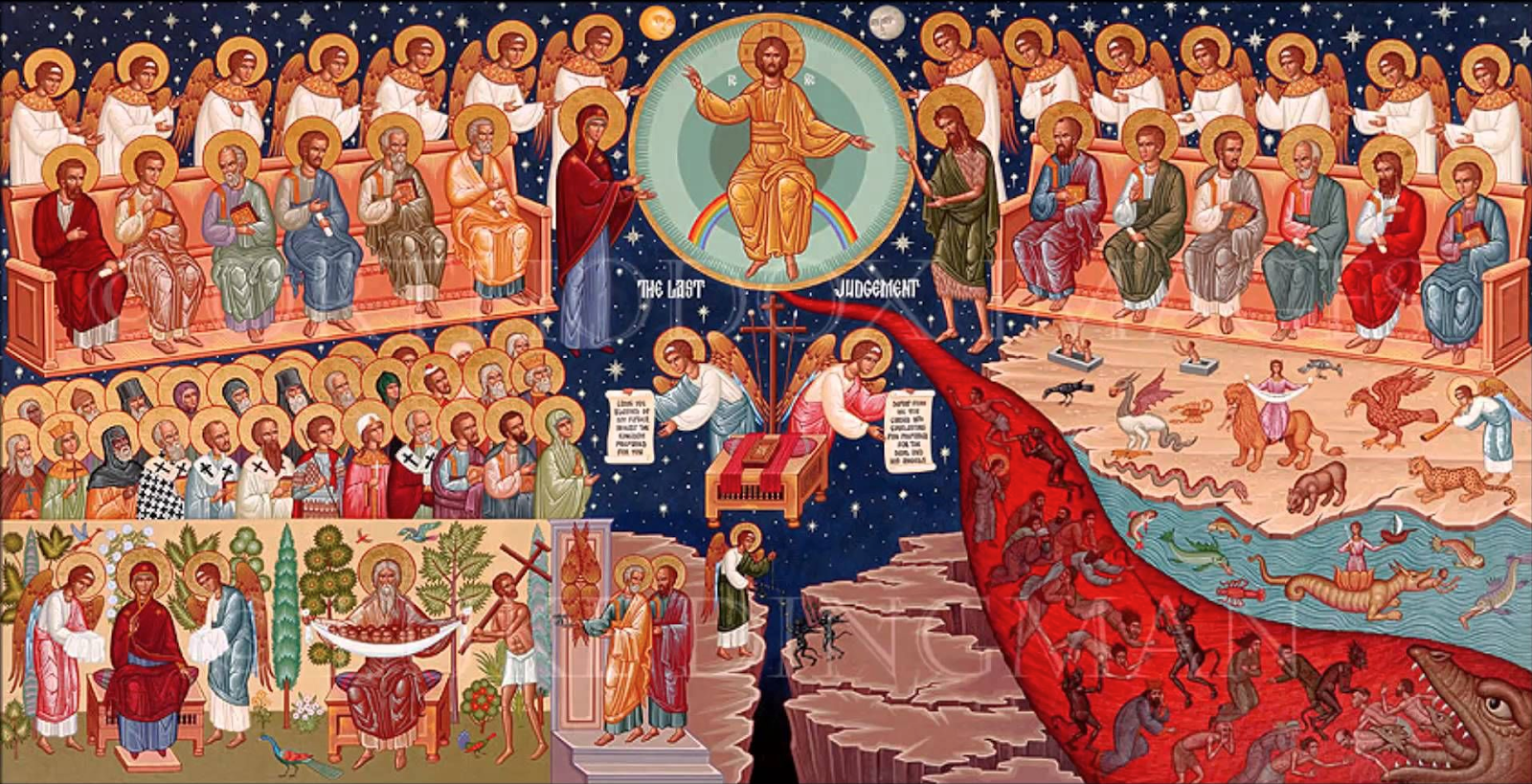
St. Benedict sums up the spiritual necessity of the Four Last Things in his chapter “What Are the Instruments of Good Works”:
To have wholesome fear of the day of judgment.
With fear to shrink from hell.
To long for eternal life with all spiritual desire.
To have the expectation of death daily before one’s eyes.
Kennedy Hall
Nathaniel Richards
That Which Abides: The End of All Things and That Which Lasts
Jeremiah Bannister
To Live (And Die) Beneath the Waves
Timothy S. Flanders
The World Fears Death, But Catholics Must Remember It
Fear of Judgment is the Way of the Saints
Even Hell Points to God’s Mercy
A Reflection on the Glory of Paradise
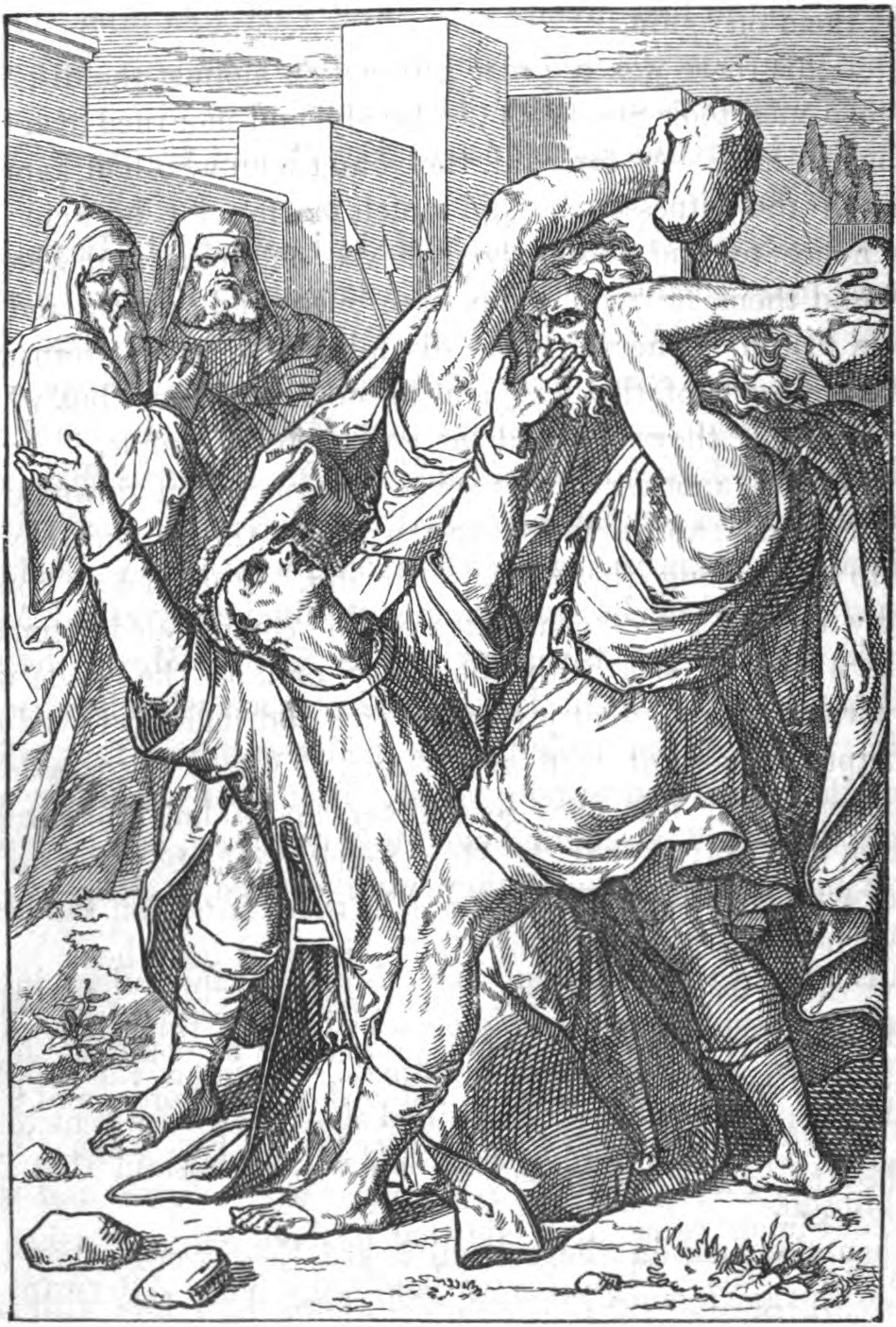
Sermon for St. Stephen’s Day by St. Fulgentius
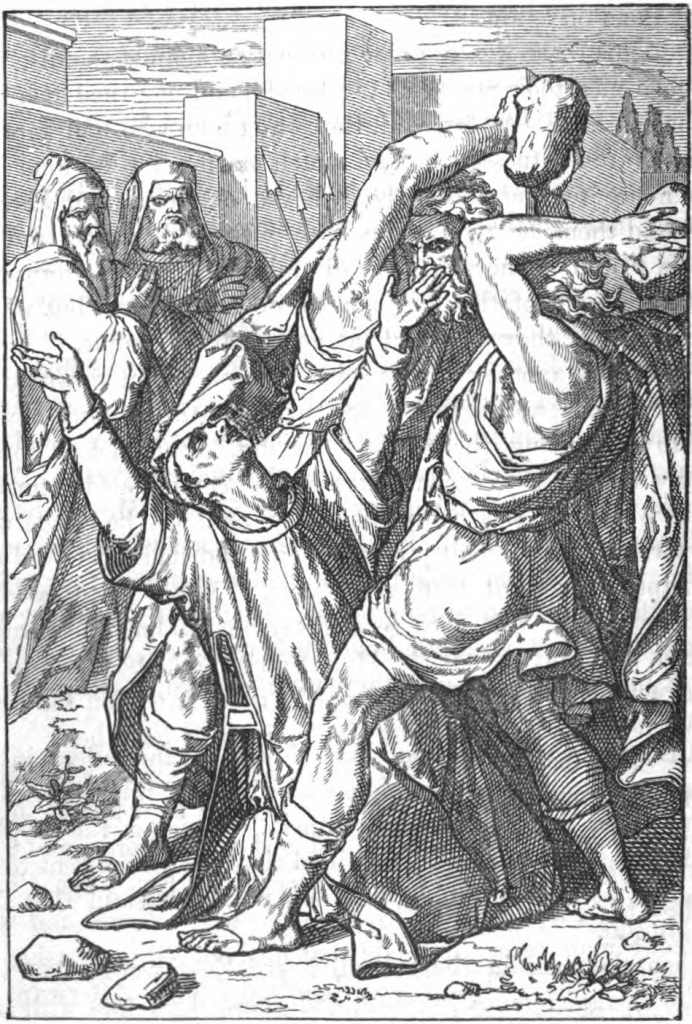
Sermon of St. Fulgentius, Bishop
Yesterday we were celebrating the birth in time of our Eternal King; to-day we celebrate the victory, through suffering, of one of His soldiers. Yesterday our King was pleased to come forth from His royal palace of the Virgin’s womb, clothed in a robe of flesh, to visit the world; to-day His soldier, laying aside the tabernacle of the body, entereth in triumph into the heavenly palaces. The One, preserving unchanged that glory of the Godhead which He had before the world was, girded Himself with the form of a servant, and entered the arena of this world to fight sin; the other taketh off the garments of this corruptible body, and entereth into the heavenly mansions, where he will reign for ever. The One cometh down, veiled in flesh; the other goeth up, clothed in a robe of glory, red with blood.
The One cometh down amid the jubilation of angels; the other goeth up amid the stoning of the Jews. Yesterday the holy angels were singing, Glory to God in the highest; to-day there is joy among them, for they receive Stephen into their company. Yesterday the Lord came forth from the Virgin’s womb; to-day His soldier is delivered from the prison of the body. Y’esterday Christ was for our sakes wrapped in swaddling bands; to – day He girdeth Stephen with a robe of immortality. Yesterday the new-born Christ lay in a narrow manger; to-day Stephen entereth victorious into the boundless heavens. The Lord came down alone that He might raise many up; our King humbled Himself that He might set His soldiers in high places.
Why brethren, it behoveth us to consider with what arms Stephen was able, amid all the cruelty of the Jews, to remain more than conqueror, and worthily to attain to so blessed a triumph. Stephen, in that struggle which brought him to the crown whereof his name is a prophecy, had for armour the love of God and man, and by it he remained victorious on all hands. The love of God strengthened him against the cruelty of the Jews; and the love of his neighbour made him pray even for his murderers. Through love he rebuked the wandering, that they might be corrected; through love he prayed for them that stoned him, that they might not be punished. By the might of his love he overcame Saul his cruel persecutor; and earned for a comrade in heaven, the very man who had done him to death upon earth.
From the Office of Matins according to the Benedictine Use

Too Great for the Sky: A Chestertonian Christmas Reflection

By Nathaniel Richards
There has fallen on earth for a token
A god too great for the sky.
He has burst out of all things and broken
The bounds of eternity:
Into time and the terminal land
He has strayed like a thief or a lover,
For the wine of the world brims over,
Its splendour is split on the sand.
So begins the first stanza of G.K. Chesterton’s poem, Gloria in Profundis. If there is something to be gleaned immediately from these lines, it is this: the world’s state requires divine intervention, and the world cannot truly contain the divine. Indeed, He who is too great for the sky “has burst out of all things and broken / The bounds of eternity.” The Image of the Invisible God has confounded our every natural idea how to solve a problem (Col. 1:15). The main problem in life is mankind’s sinful state, which needs to be rectified through some sort of reconciliation. As Catholics we believe something truly special happened in the Incarnation. Starting at the Annunciation and culminating in the First Nativity, God became man. This making visible the invisible has changed all things. The first Christmas so long ago in Bethlehem shows us that God—who cannot truly be contained—has a face and is thus contained for us in flesh so we might know the Saviour who Created us. Our problem of sin met a solution in Him who offers absolution.
Chesterton goes on in the next stanza:
Who is proud when the heavens are humble,
Who mounts if the mountains fall,
If the fixed stars topple and tumble
And a deluge of love drowns all-
Who rears up his head for a crown,
Who holds up his will for a warrant,
Who strives with the starry torrent,
When all that is good goes down?
Becoming small is a great struggle for our race. Humility doesn’t come naturally. A good deal of our wrongdoing is rooted in refusing to stoop to things we think are below us. We need Grace to show us what is required to become low. Conversely, we cannot climb great heights in the spiritual life solo. We must imitate One who is greater than we are, showing us that the “heavens are humble” by ascending on a cross. We need Grace to show us how to likewise become crucified if we are ever to reach the heights of Heaven. No soul may compete with or outdo God. His Grace is sufficient for us (II Cor. 12:9). A “deluge of love drowns all.”
For in dread of such falling and failing
The fallen angels fell
Inverted in insolence, scaling
The hanging mountain of hell:
But unmeasured of plummet and rod
Too deep for their sight to scan,
Outrushing the fall of man
Is the height of the fall of God.
The war cry of St. Michael the archangel was the meaning of his name: Who is like unto God? And thus in his zeal, the angel warred against Satan and those dreading the plan of God’s Eternal Word that would save man. The refusal of this test of the Incarnation made demons; the acceptance and fidelity to this test made holy angels. This Christmas, the angelic cry ought also be ours. Who is like unto God? Who else has wrought our salvation? Who else has delivered us from our sins and the Enemy? “If it had not been that the Lord was with us, …Perhaps they had swallowed us up alive” (Ps. 123:2-3). As Catholics, God is for us and we are His children—who truly can be against us? (Rom. 8:31) Who dares go against Him who made all things? Who goes against the God who “became poor” for our sakes “that through his poverty we might be made rich?” (II Cor. 8:9) Again, God cannot be outdone. The felix culpa of Adam, in which the Church rejoices at the Easter Vigil is shared at Christmas. For “Outrushing the fall of man / Is the height of the fall of God.” In the quiet cave in Bethlehem, the sleeping babe in the manger outdoes our recklessness and folly as the New Adam—perfect in every way in his infantile simplicity.
Chesterton thus concludes his poem:
Glory to God in the Lowest
The spout of the stars in spate-
Where thunderbolt thinks to be slowest
And the lightning fears to be late:
As men dive for sunken gem
Pursuing, we hunt and hound it,
The fallen star has found it
In the cavern of Bethlehem.
The heavenly host sing to shepherds on Christmas Gloria in excelsis because they know of the God whose song of Himself is Gloria in profundis. The majesty of Heaven, the gist of it all, the “spout of the stars in spate” is in the birth of a helpless child. Christ Himself calls to us today, His Birthday, to give us Himself. The “cavern of Bethlehem” contains the Light of the World, which we fallen stars seek. When we lay eyes on the Christ child, we are renewed and rekindled with that awesome power that only God gives—and only then will our “light shine among men” to glorify our Father in Heaven. The high must become low, and the low must become high, but Our Lord gave us the perfect example and began the work of saving our souls by becoming low. Let the God who dwells in the lowest and in the manger dwell in your hearts this Christmas season. Rejoice and with Chesterton, repeat some of the words of the first stanza again:
There has fallen on earth for a token
A god too great for the sky.
He has burst out of all things and broken
The bounds of eternity
Deo gratias.
***
 Nathaniel Richards is a Catholic husband and father who lives in the Ozarks. He enjoys collecting Catholic books and promises that one day he will read most of them—eventually, maybe. Starting a Catholic bookstore that sells books rather than gifts is a dream of his. He converted from Oneness Pentecostalism to Anglicanism and eventually made his way to Catholicism in 2015.

Advent Reflections on the Four Last Things: Hell

Editor’s note: this is the fourth in a series. Read the first three parts on death, judgement, and heaven.
By Kennedy Hall
They asked him: Say then, Scibboleth, which is interpreted, An ear of corn. But he answered, Sibboleth, not being able to express an ear of corn by the same letter. Then presently they took him and killed him in the very passage of the Jordan. And there fell at that time of Ephraim two and forty thousand (Jdg. xii. 6).
In the Book of Judges, the word “Scibboleth” (also spelled shibboleth) is used as an identifier to distinguish between the allies of Jepthe and the Ephraimites. The way the word is pronounced (and it is a regional pronunciation) is evidence of where a man’s allegiance lies. One lesson from this Bible passage is that there can be enemies who are almost indistinguishable from an ally. Their beliefs, habits, customs and traditions may seem exactly the same, but there is always a “shibboleth” that illuminates the truth of who a man is and what he believes.
This term is helpful in these times of Modernism and infiltration in the Church. So often we are duped by personalities, laity and clerical, who appear perfect allies in the quest for orthodoxy and tradition. But, at a certain point we encounter a “shibboleth” in their work, and from there we are able to see just how deep the modernism has weaved its way. It is not to say that every theologian or cleric must agree on reasonably disputable matters, but there are certain non-negotiables that show the heart of what a man believes.
In my opinion, Evolutionary Theory is a shibboleth. I understand that there is room for mystery in how we understand certain things about the Origin Story in Genesis. However, there are a whole host of binding teachings, like the special creation of Adam and Eve, that render evolutionary ideas absurd. Whenever I am recommended a bible scholar or a book to read, I immediately research what that scholar or school of thought has to say on Genesis and Evolution. If I find approval of any sort of Theistic Evolution, I immediately dispense with any notion of giving the resource a second thought. This might seem strange to some, but without exception, I have always found that an unholy alliance with Darwin leads to weak theology in a host of important areas. Original Sin is dealt with sheepishly, and biblical inerrancy is relegated to only “religious” things. It isn’t that writers who ascent to evolution cannot be sound in other areas. In truth, many evolution-friendly theologians are solid on morals and even some areas of doctrine. Nevertheless, when push comes to shove, the theology of a man who explains away the beginning of the Bible, will not withstand the flood of those who seek to explain away the rest. It is like a house built on sand.
Another “shibboleth” is the reality of Hell. What someone believes about Hell will affect the rest of their faith. It will affect how they read the Bible, and how they see the Catholic Church. In the end we will end up in Heaven or Hell. There is a philosophical principle wherein the completed nature of a thing is the first thing intended. For example, Michelangelo saw the completed David in his mind before he began to work. The completed statue existed in his mind before it existed physically. As he worked away at the marble, he had the finished masterpiece has his end goal.
How does this apply to Hell? Well, Hell is a potential end for each one of us, as is Heaven. Thus, what we believe about our end and what we hold in our minds as a finished product, will greatly affect how we operate currently. Even if we keep Heaven in mind, but eschew any true sense of Hell, we will find our understanding of Heaven perverted as well. What is Heaven if not a refuge? From what are we saved if the threat of damnation is not ever present? We love to speak of Christ as our “Lord and Saviour,” which is true. But, why must we be saved?
If our understanding of Hell is weak, then our relationship with Christ will also be feeble. In the past I have asked Catholics who are squeamish about the topic of Hell to explain how they present Christ to others. What is their motivation to share the Gospel? Inevitably, I get a response that alludes to the comfort and friendship they find in knowing Christ as their motivation to evangelize. This is of course true, but if our desire to know and share Christ is based on a need for consolation, then our faith is ultimately egocentric.
Jesus Christ is not just our Friend and Healer, He is also our Deliverer. He delivers us from the bondage of Satan, to whom we all belong until Baptism. He is the God Who comforts the afflicted, but He is also the Exorcist who violently casts out devils. He did not come to bring peace, but a sword. His Crucifixion was not merely a sentimental act of love: it was a requisite self-sacrifice needed to save us. How wretched must we be if Sacred Blood must be shed for our salvation?
When Christ is born in the coming days, innocent blood will be shed. Herod will order the Slaughter of the Holy Innocents. The first martyrs of the Catholic Church will be made. It makes you think of what sort of world the Messiah was born into. Are we any different today? Hardly. Our world still hates Christ. Our world still hates innocence and infants. We still sacrifice to the pagan gods of prosperity. We are all destined for Hell if not for Jesus Christ. And, just because we have met the Lord, does not mean He will say to us in the end, “Well done my good and faithful servant.” Not all those who even perform miracles in His name will be saved. If we do not take the reality of damnation as seriously as a heart attack, we may hear those fateful words, “Depart from me, for I never knew you.”
This Christmas, do not approach the Manger as a man who deserves to be there. Instead, like the Magi, come from the depths of your superstition and worldly philosophy to see the God Man. Witness the triumph over Hell that is the Nativity of Our Lord. Listen to the Choirs of Angels as they sing hymns of joy over the suffering of Satan. Stand with the Holy Family, understanding that underfoot lies a pit, with a dwelling place the Devil has prepared for you. Prostrate yourself in front of the resting place of Christ, and put your ear to the ground. As you lie there in the Cave of the Coming of Christ, listen for the footsteps of Herod’s Death Riders as they search for the newly born Logos. The Demons of Hell still prowl around the world seeking the ruin of your soul.
You will not save yourself, and you have no defense against the onslaught of Hell apart from Christ. You are not guaranteed Heaven, as you do not have the keys to open the Gate. This Christmas, remember what world you were born into, and under whose dominion you belonged.
Our only refuge is in Bethlehem, huddled around the Fire of Divine Charity. Dare we hope to be among the few who stay with Christ along the bloody journey from the City of David to the City of God.
***
Kennedy Hall is a Catholic High School teacher, rugby coach, and part time writer on Catholic topics. He has written for the Kolbe Center for the Study of Creation, Serviam Ministries and the Fatima Center. He teaches Catholic Religion courses to French Immersion students and also speaks Spanish and Italian. Kennedy has spoken at various youth events, as well as on the topic of true Catholic masculinity. He has a passion for the Traditional Latin Mass and the restoration of traditional piety. A prodigal son, he was brought back into the Church with the help of Our Lady of Guadalupe, and prays for the day that all men depend on the Blessed Mother. He lives with his wife and 4 children in Stratford, Ontario. Follow him @kennedyhall.