


First Fridays Against P*chamama
The P*chamama controversy has shown the blindness and excesses of ultramontanism. At first, Catholic men from both left and right attempted to tell us the idols of P*chamama were our Lady and St. Elizabeth. Then, when the Vatican press said it was not our Lady but a symbol of fertility, Mother Earth, whatever you like, then the ultramontanists insisted it was a legitimate enculturation (or else still insisted it was our Lady). Then when the Pontiff himself called them “statues of the P*chamama” the ultramontanists zeroed in on the fact that Pope Francis said that their use was “without idolatrous intent.” Are we to believe that a Catholic can lawfully set up idols of known demons and pagan deities and show them bodily and ritual honor…without idolatrous intent? Now it is revealed that the Italian bishops were publishing prayers to the demon P*chamama and prayer vigils were being held to pray to this demon in Italian churches. Without idolatrous intent?
Thankfully, even moderate Catholics are not buying it. This is part of a neo-pagan Feminist takeover of the Church that has been a long time coming, since Teilhard de Chardin denied Original Sin and was not suppressed, St. John Paul II caused demons to be worshiped inside a Church, and venerated the demonic Qur’an. Fr. Dwight Longenecker (no traditionalist himself) has exposed the combined efforts of this feminist neo-paganism here. Longenecker as well as Taylor Marshall—-both former Anglicans—have seen the same machinations in the Church to “ordain” women as they witnessed among the Anglican heretics.
Brethren, let us offer with all zeal and charity to Almighty God our reparation. On the First Fridays, P*chamama is worshiped. In reparation and petition let us offer instead Reparation to the Sacred Heart of Jesus Christ our Lord and God.
How to Make the First Fridays
When our Lord revealed His desires to St. Margaret Mary, he made certain promises to those who would fulfill the devotion. In particular, He promised abundant graces for a good death. To receive these promised graces, a soul must simply Communicate on nine consecutive First Fridays of every month. It is praiseworthy to offer these in reparation to our Lord’s Sacred Heart, wounded by our sins of impurity, lack of charity, and idolatry.
Another important devotion to the Sacred Heart is the enthronement of the Sacred Heart in the Home. This dedicates the family to the rule of Jesus Christ and provides the necessary foundation of the Christian home.
Above all, do not lose hope but press on, brethren, fighting under the banner of Christ the King. Let us raise our children to fight for him and fight for the faith. Remember the words of our Lord: he that shall persevere to the end, he shall be saved (Mt. xxiv. 13).
Timothy S. Flanders
@meaningofcath

Launching YouTube Channel and Rosary Meditations
We have just launched our YouTube channel. See below. Please help us get the word out and share. This video addresses how St. Thomas can help us deal with the Amazon Synod.
Also of note is a piece of mine at One Peter Five. This is a guide for how to pray the Rosary at Mass. This devotion has been a great help to me and I hope it will to others.

Spiritual Error in the Liturgical Reforms

St. John XXIII not celebrating the reforms of Ven. Pius XII
Mental Prayer is Objectively Superior to Vocal
The most important critique of the liturgical reforms under Ven. Pius XII and St. Paul VI is rarely heard: the reformers denied that mental prayer is objectively superior to vocal prayer. Before the New Mass, each faithful soul participated in the Holy Sacrifice in different ways—some prayed vocally, others assisted in the choir or at the altar, but many others prayed mentally. The creators of the New Mass believed that by forcing everyone’s mental prayer into one large, vocal prayer assembly, they would be “liberating” the faithful from being “passive spectators” to enter into some superior form of spirituality. This is the so-called “active participation,” a term which has a long, multifaceted history. This is shown from Sacrosanctum Concilium at Vatican II, the only draft document (written by Bugnini) not thrown out of the Council by the reformers:
In the restoration and promotion of the sacred liturgy, this full and active participation by all the people is the aim to be considered before all else; for it is the primary and indispensable source from which the faithful are to derive the true Christian spirit (14).
Thus it was supposed by the reformers that our fathers, who bled and died for the faith, were deprived of the “true Christian spirit” because they were (mostly) silent before a nebulous, Latin liturgy. But this preference for active and public vocal prayer over private mental prayer is a spiritual error. Would the reformers have taken issue with St. Teresa of Avila in ecstasy at Holy Mass since she wasn’t singing with the congregation?
On the contrary, the spiritual writers say that mental prayer is objectively superior to vocal prayer. The Roman Catechism declares in the section on Mental Prayer:
This spiritual manner of praying does not exclude the use of vocal prayer. Nevertheless, that prayer which is the vehement outpouring of the soul, deservedly holds the first place; and although not uttered with the lips, it is heard by God to whom the secrets of hearts are open (Part 4 Introduction).
After discussing Vocal prayer, Garrigou-Lagrange writes
But we feel the need of a more intimate prayer, in which our soul, more profoundly recollected, comes into contact with the Blessed Trinity dwelling in us [which] can make us penetrate deeply and taste the mysteries of salvation: those of the redeeming Incarnation, of the Sacrifice of the Mass, of eternal life toward which we are traveling…This more intimate prayer is mental prayer.[1]
Since prayer is defined as the lifting of the mind and heart to God, mental prayer is on an objective level above vocal prayer because it more closely approximates the Beatific Vision. Mental prayer is the second level in the nine levels of prayer.
The Subjective Nature of Private Devotion
But while it is true that mental prayer is superior on the objective level, it may not always be superior on the subjective level. Vocal prayer, moreover, helps keep our wondering minds attentive. Commenting on public and private prayer, Garrigou-Lagrange writes
From mental prayer the Office receives the habit of recollection and the spirit of prayer. On the other hand, mental prayer finds in liturgical prayer an abundant source of contemplation and an objective rule against individual illusions.[2]
This means that each individual soul must use whatever means he needs at Holy Mass in order to hear Mass devoutly. Again Garrigou-Lagrange:
We may use different ways to assist well at Mass, with faith, confidence, true piety, and love. We can be attentive to the liturgical prayers, which are generally beautiful and full of unction, elevation, and simplicity. We can also recall the passion and death of the Savior, of which the Mass is the memorial, and think of ourselves as standing at the foot of the cross with Mary, John, and the holy women. Again, we can apply ourselves to rendering to God, in union with Christ, the four duties that are the ends of the sacrifice: adoration, reparation, petition, and thanksgiving. Provided we pray, even while piously saying the Rosary, we assist fruitfully at Mass. We may, like St. Jane de Chantal and many saints, with great profit continue our mental prayer during the Mass, especially if we are inclined to a pure and intense love, somewhat like St. John resting on the breast of Jesus at the Last Supper [3]
Thus the Holy Mass is indeed the moment for the “people of God” to offer the sacrifice of Holy Mass together to Almighty God. And yet, it is a mistake of the reformers to think that everyone must participate externally in the same way or to denigrate the pious practices of many faithful. These errors of the reformers were opposed by Ven. Pius XII when he declared in 1947:
So varied and diverse are men’s talents and characters that it is impossible for all to be moved and attracted to the same extent by community prayers, hymns and liturgical services. Moreover, the needs and inclinations of all are not the same, nor are they always constant in the same individual. Who, then, would say, on account of such a prejudice, that all these Christians cannot participate in the Mass nor share its fruits? On the contrary, they can adopt some other method which proves easier for certain people; for instance, they can lovingly meditate on the mysteries of Jesus Christ or perform other exercises of piety or recite prayers which, though they differ from the sacred rites, are still essentially in harmony with them (Mediator Dei, 108)
Unfortunately, only a few years later, Pius XII would approve his radical change to Holy Week, which allowed such errors (later promoted by Bugnini) to take their first shots against the cherished devotions of the faithful. This reform reoriented the liturgy to disallow or suppress the various practices to which that the faithful were accustomed (for example, the 40 hours devotion). The reformers called the Pius Holy Week reform the “first battering ram that pierced through a hitherto static liturgy.” In their mind, they were liberating the faithful from their own prayers into the higher form of “active participation.” In reality, they were introducing a spiritual error which would eventually erupt in the later 60s and 70s with the promulgation of the New Mass. In one of the many contradictions of the conciliar revolution, the reformers forced everyone to abandon their prayers and pray in a way they never asked for, all in the name of being “pastoral.”
Timothy S. Flanders
@meaningofcath
[1] Three Ages of the Interior Life, Part I, chapter 35. See also Jordan Aumann Spiritual Theology, pp. 316ff
[2] Ibid., Ch. 34

Refute Protestants in Five Minutes Pt. 2: Scripture
St. Edmund Campion gave his life to save Protestant souls
Read Part 1 here.
In this series we intend to show Catholics how to refute Protestants succinctly with Holy Scripture. Before all else, it is necessary to have charity for the souls of Protestants and desire that they may be saved by converting to the true faith of Jesus Christ: Roman Catholicism.
In the first part we made the claim that if a Protestant reads the entire Scripture in context, he will become a Roman Catholic. We further discussed how the Word of God says that the Church is the pillar and foundation of truth. We then asked how can the Church be the pillar of truth without the 66 book Bible?
The Church predates the New Testament, but not the Old. Let’s review the context:
1. ~250-150 BC: Septuagint Old Testament is translated and used by Jews across the Roman Empire
2. 33 AD: The Church is founded. Uses the Septuagint as its Scripture and Apostles as authority (Acts xv)
3. ~33-100 AD: Church writes New Testament, quoting Septuagint as Scripture
4. ~90 AD: Pharisees and Rabbis who rejected our Lord Jesus create Rabbinic Judaism, start the Masoretic Old Testament (later Protestant Scripture)
Refutation #2: The Scripture
Most Protestants think like Muhammadans: they think that Christians are a “people of the book.” For a Muhammadan, their “scripture” is claimed to have fallen from the heavens into the mouth of their “prophet” and was written immediately. Protestants don’t generally realize that their 66 book Bible didn’t exist until about the 16th century. How could Christianity exist for so long without its foundation?
Let’s look at one of the common verses they cite in support of their man-made tradition, Sola Scriptura (“The Bible is the Only Authority”). This is their foundational doctrine. In their minds, the Holy Bible is the only authority from which we can take doctrine. As we saw in part one, the Sacred Scriptures themselves declare that the Church is the “pillar and foundation of truth.” But Protestants will usually cite this verse to support their man-made tradition:
All scripture, inspired of God, is profitable to teach, to reprove, to correct, to instruct in justice: That the man of God may be perfect, furnished to every good work (II Tim. iii. 16).
Omnis Scriptura divinitus inspirata utilis est ad docendum, ad arguendum, ad corripiendum, et erudiendum in justitia: ut perfectus sit homo Dei, ad omne opus bonum instructus.
πᾶσα γραφὴ θεόπνευστος καὶ ὠφέλιμος πρὸς διδασκαλίαν, πρὸς ἐλεγμόν, πρὸς ἐπανόρθωσιν, πρὸς παιδείαν τὴν ἐν δικαιοσύνῃ, ἵνα ἄρτιος ᾖ ὁ τοῦ θεοῦ ἄνθρωπος, πρὸς πᾶν ἔργον ἀγαθὸν ἐξηρτισμένος.
Out of context, this verse appears to support the Protestant tradition that the Bible is the only authority. But consider the context: as in our first part, St. Paul is writing to St. Timothy in the first century. When he speaks of “Scripture,” he cannot be referring to his own letter, or the New Testament—which did not exist at that time. What was considered the Scripture at that time? The Greek Septuagint.
Why is the Septuagint the Christian Scripture?
The word “Septuagint” is given to a Greek translation of the Old Testament completed by Jews in Alexandria starting around 250 BC. It was translated from Hebrew manuscripts that are now lost. The word “Septuagint” is the Greek word “Seventy” (hence it is sometimes referred to as “LXX”). This refers to the story that seventy different Jews went to seventy different rooms and translated the text separately. When they came out and compared their translations, they found that they had all translated the Scriptures exactly the same, word for word.
Whether or not this is true, it illustrates the reception of this text by Jews before the time of our Lord: they revered this text as Scripture. Greek was the common language across the Roman Empire, and Jews used this text as Scripture which was then received by the Church. This Scripture includes the so-called Deutero-Canonical books (Maccabees, etc.) that were later removed by Protestants. The original Christian Scripture at the time of St. Paul’s writing to St. Timothy is the Septuagint. Moreover, the New Testament quotes the Septuagint as Scripture.
Numerous Protestant scholars are willing to admit this. Mogens Müller, a Danish Lutheran theologian, writes in his The First Bible of the Church: A Plea for the Septuagint (1996), concerning the Septuagint Greek used by the early Church and the Masoretic Hebrew used by non-Christian Jews:
It is unreasonable to say that the “true” text actually differs from what the early church believed it to be. …The quotation from Isa. 7.14 in Mt. 1.23 makes this absolutely clear. Matthew says “virgin” in accordance with the Greek translation, whereas the Hebrew text uses the word “young woman.” It would be pointless to rebuke the evangelist for using the “wrong” text. On the contrary, the “wrong” text gains a significance of its own by being used.[1]
Again the Protestant biblical scholar Brevard Childs writes:
Why should the Christian Church be committed in any way to the authority of the Masoretic text when its development extended long after the inception of the Church and was carried on within a rabbinic tradition?[2]
Another excellent scholar, this time a Methodist, comes to the same conclusion: William J. Abraham in Canon and Criterion in Christian Theology (Oxford, 1998).
In Context, This Text Argues Against Sola Scriptura
It is abundantly clear that the Greek Septuagint was the normal Christian Scripture at the time when St. Paul wrote the words above. St. Timothy was half Greek from Asia Minor where the common language was Greek, and St. Paul’s letter was written in Greek. He says to Timothy in the verse before this you have been taught the Scriptures from your youth. This would have been the Greek Septuagint. St. Paul might as well have said All the Septuagint, inspired of God, is profitable to teach, to reprove, to correct, to instruct in justice. It is completely out of context to use this text to support Sola Scriptura, since the 66 book Protestant Bible did not exist for another 1500 years. The Hebrew manuscript tradition had not even been started at this time. So how did this discrepancy come about?

Destruction of the Second Temple
After the destruction of the Second Temple by the Romans in 70 AD. (on the same calendar day when the First Temple was destroyed, Tisha B’Av), the Jewish community was shattered. The Saduccees, whose power base was the Roman alliance and the temple, were scattered. The Zealots were defeated by the Romans. The Essenes were self-exiled. Who was left to lead the Jews? The Pharisees.
The Pharisees took over the Jewish community and reinterpreted the Torah in a new way, creating a new religion: Rabbinic Judaism. This Judaism was radically different from the Judaism of Moses, David, and the Apostles. This Judaism had no priesthood, no temple, and no sacrifice. Instead, the Pharisees said that their own man-made traditions were authoritative. These were eventually written down in the Talmudic texts. It was these Pharisees who started the Hebrew manuscript Tradition. Centuries later in the 16th century, the Protestant Reformers arbitrarily stopped using the Christian Old Testament in favor of the Pharisees’ Hebrew Scriptures. This is when the 66 book Protestant Bible was born.
The Pharisees’ Old Testament still holds great value however (being the original tongue, albeit transmitted by the Jews). Thus St. Jerome utilized such Hebrew manuscripts (now lost) with the Septuagint in the 4th century when he made the Latin Vulgate translation. But the oldest Masoretic manuscripts we have now date to the 10th or 11th centuries AD. Whereas the Greek Septuagint manuscripts date from the 4th century AD. The Dead Sea Scrolls, moreover, vindicate the Septuagint in places against the Masoretic (the Dead Sea Scrolls were transmitted by a group of schismatic Jews).[3]
In addition, when one digs deeper into the manuscript traditions, not only in Greek and Hebrew and Latin, but Coptic and Syriac and other languages, one finds that there really is no definitive, whole original text of the Holy Bible. Certain verses continue to remain obscure. Even the oldest Septuagint is a copy of prior copies, which itself is a translation of ancient Hebrew manuscripts now lost. This is why Christians are not a “people of the book.”
Even though St. Paul referred to the Greek Septuagint when he wrote to St. Timothy, there was also another source of revelation and authority which was tied in with the Septuagint. And unlike the Pharisees who did not even claim that a prophet gave them the authority to create Rabbinic Judaism, the authority that St. Paul writes about was of divine authority. This was the authority that founded the Church and guided her before the New Testament was written. This authority will be the subject of the next installment. Stay tuned.
For further reading on this subject, I recommend the classic text The Catholic Controversy
Timothy S. Flanders
@meaningofcath
[1]Mogens Müller, The First Bible of the Church: A Plea for the Septuagint (Sheffield Academic Press, 1996), p. 23. I am indebted to Dom Benedict Anderson for his excellent article which includes some of these references: “Fulfilled is All that David Told: Recovering the Christian Psalter,” Sacred Music Winter 2017 Vol. 144 No. 4. This article is recorded in a lecture here.
[2]Brevard S. Childs, Introduction to the Old Testament as Scripture (Philadelphia: Fortress, 1979), p. 89.
[3] Raymond Brown, D.W. Johnson and Kevin O’Connell: “Texts and Versions” (in Brown et al. The New Jerome Biblical Commentary (London: Geoffrey Chapman, 1986) pp 1083-1112. In the Qumran Manuscripts “many alternative readings and expansions for which medieval Hebrew manuscripts in the [Masoretic tradition] have no counterpart, but which were often already known Greek or Samaritan sources, are here found” (1086). This insight comes from the Essay “The Vulgate and Gallican Psalter” by Una Voce
The Modern Catholic Liberal Disaster: Why Conservatives and Trads Must Unite, Part II
Read Part I here.
Chapter 1: The Bloodshed Increases
November, 1799. Winter is beginning to overshadow Europe. The New Iconoclasts have won their first victories in overthrowing the governments which once paid allegiance to Jesus Christ as King. They have massacred Catholics throughout France. Napoleon and his French armies have begun to conquer and ravage Europe. Rome is under French republican rule. The body of Pius VI lays dead and unburied in France. The Iconoclasts are boasting that the ancient Catholic Church cannot withstand the new republican fervor. The Catholic Church is a thing of the past. Its ancient rituals have no place in the modern world.
Against all the triumph of the New Iconoclasts, the Catholic Cardinals managed to make it out of Rome and escape to Venice and start a papal conclave.
The Holy Roman Emperor (of Austria), still recognizing his ancient role as protector of the pope, paid for the conclave to proceed. The conclave faced a grave difficulty: how were they to respond to the New Icoclasm? Pius VI had condemned the French republicans, the Synod of Pistoia, and suffered abduction and death. Should the conclave elect a Strict Iconodule to oppose the New Iconoclasm, or a Moderate who would be willing to work with the republicans?
After several months of struggle, they finally elected a Moderate, the Benedictine abbot, Barnaba Chiaramonti. There was no papal tiara, so the Venetian women created a paper mache tiara and adorned it with their own jewels. While the republicans were mocking the Church, the new pope took the make shift tiara on his head and boldly took the name Pius VII. This was the man who would win the first battle against the New Iconoclasm.
Servant of God Pius VII

Tomb of Servant of God Pius VII
A few short months after the papal election in March of 1800, Napoléon unexpectedly changed his policy toward the Catholics in France. During the Revolution they were massacred. Now Napoleon told Pius VII he wished to restore the pope’s jurisdiction to France. The Papal States were returned to the pope’s rule.
It appears that Napoléon recognized the futility of the revolution to suppress Catholicism in the mass of the population, and thought it best to unify the country under his rule by using Catholicism. In order to do that, he needed the pope’s support.
Before becoming pope, Pius VII was remembered as urging his flock to submit to the republic invaders, since republicanism as such did not conflict with the faith. As pope, he carried this moderation into his dealings with Napoléon.
Pius VII the Moderate signed a Concordat with Napoléon in 1801, and his predecessor Pius VI was finally brought to Rome and given a full Catholic burial in 1802. Pius VII believed that a moderate approach would win over Napoléon, and he even traveled to Paris to celebrate Holy Mass at Napoleon’s coronation in 1804 (where Napoléon snatched the crown and placed it on his own head).
But Napoleon’s ambition was manifested when he immediately disobeyed the Concordat and sought complete control of the Catholic Church. He again sought to conquer Europe in 1806. Napoleon naively believed the pope who crowned him would support him. Pius VII refused, infuriating Bonaparte. With full knowledge of the emperor’s military might, the Pope wrote to him and boldly proclaimed he would never support any nation in war: “We shall endure with resignation, faithful to the gospel and accept every kind of calamity as coming from God.” Napoleon responded in kind and marched on Rome, annexed the Papal States, and imposed a French Republic on the Italians.
Pius VII was a Moderate because he was willing to work with the French Republic. But at this moment he showed his holiness and excommunicated Napoleon and all who helped annex the Papal States. The time of moderation and dialogue had now ended. Enraged, Napoleon seized the pope and locked him away at Savona, north of Rome. Pius VII was then in prison with little food and few to support him for another five years. But for the holy Benedictine monk, it was like returning to the peace of his cell. He steadfastly refused Napoleon’s efforts to dominate the Church.
Meanwhile, as Napoleon continued to make war on Europe, the combined forces of England, Russia, Prussia, Austria and others began to unite in opposing him. Napoleon began to lose his battles, retreating from Russia in 1812 and defeated at Leipzig in 1813. During all this time, Servant of God Pius VII resisted Napoleon, and the emperor was finally forced to give him up to the Austrians as his enemies closed in.
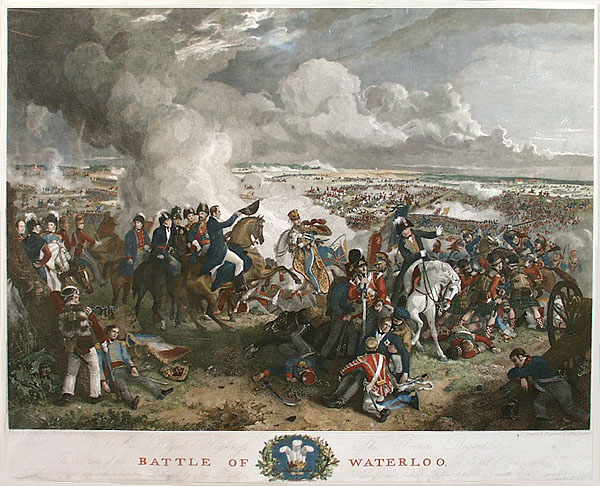
Pius VII triumphantly returned to Rome in 1814, while all of Europe hailed him as a hero who stood up to Europe’s tyrant. This was the real beginning of the celebrity status of the papacy. The next year, Europe dealt the final blow to Napoleon at Waterloo in 1815. He was exiled from Europe to the island of St. Helena, off the southwest coast of Africa (due west from Modern Angolia), where he was a prisoner of the English.
Napoleon showed signs of repentance, and Pius VII petitioned Protestant England to send a Catholic priest to the remote island. Napoleon said concerning Servant of God Pius VII “Alexander the great declared himself the son of Jupiter. And in my time I find a priest who is more powerful than I am.” Napoleon made his confession, received Holy Communion and Extreme Unction and died a Catholic in 1821. After many sufferings and bloodshed, the Catholic Church had won this battle. Pius VII had shown himself to be both a Moderate and Strict, and thus perfectly typified the Tridentine alliance, defeating the power of Napoleon by humble faith. But the war with republican revolutionaries was only beginning, and the one-time French Empire was only a shadow of the horror that would engulf the whole world.
Read Chapter 2 here.
Timothy S. Flanders
@meaningofcath

The Greek Schism is the result of rejecting the Latin Fathers pt. 2
St. Augustine of Hippo
The following theses are an elaboration on our first theses on this subject, attempting to explain, from a history of doctrine perspective, the reason for the Greek schism.
1. Every tradition of doctrine within Sacred Tradition has its Fathers. The Assyrians have the council of Seleucia-Ctesiphon. The Miaphysites have St. Kryillos. The Greek Chalcedonians have the Three Holy Hierarchs. The Latin Tradition was built on St. Augustine as its greatest Father. Augustine is the Latins’ sine qua non.
2. Thus Augustine forms truly the substance of the Latin Patristic Tradition such that one cannot have the Latin tradition without Augustine any more than one can have the Greek Chalcedonian tradition without the Three Holy Hierarchs.
3. The doctrine of the Holy Spirit at Lyons and Florence are faithful to the Latin Tradition via Augustine. They are of the same substance as Augustine’s doctrine.[1]
4. The Greek Chalcedonians (insofar as they are of the party of Photios), wish to accept the Latin Fathers and Augustine but not the place that Augustine has held to built the west. In other words, they refuse to accept the Latin tradition even as it existed since Augustine, who died centuries before the schism can be dated.
5. In this they are schismatic because they demand that Divine Providence work some other thing than the Latin tradition as it was held and developed with Augustine at the center. The west cannot give up Augustine any more than the Greeks can give up the Three Holy Heriarchs.
6. In order to reject Lyons and Florence, the Greeks must assert one of the following:
6.1. Divine Providence failed to guide the west and their heavy reliance on Augustine is a corruption of their own tradition. Thus Lyons and Florence are faithful to Augustine but unfaithful to the other Latin Fathers. Augustine must not be given the place that the Three Holy Hierarchs hold among the Greeks. Thus the Latin tradition was corrupted from the start and was not guided by the Holy Spirit like the Greek Chalcedonians were.
6.2. Divine Providence did guide the west in their use of Augustine but Lyons and Florence are not faithful to Augustine and the Latin Fathers. Thus when Maximos defends the Latin Filioque he refers to an earlier, orthodox Filioque which is of a different substance than the Lyons-Florence doctrine.
7. Since 6.1 is untenable, the Greeks must assert that Maximos spoke of a non-Augustinian Orthodox Filioque in the west. However, since Maximos lived near Augustine’s birth place in the seventh century and knew Latin, the Greeks must prove one of the following:
7.1 God did guide the west in their use of Augustine, but Augustine was a Trinitarian heretic. However, he made these errors innocently (like other Fathers) and so has achieved sanctity. When Maximos refers to the “unanimous documentary evidence of the Latin fathers” he excludes Augustine.
7.2 Augustine was absolutely orthodox, and thus Maximos does refer to Augustine’s doctrine. But the Florentine-Lyons dogma is of a different substance than Augustine and the Latin Fathers.
It is historically untenable to state that Maximos refers to a non-Augustinian west. Therefore the Greeks must prove that Florence and Lyons are of a different substance than Augustine. But these assertions are a mess of contradictions from a history of dogma perspective. If Maximos is correct, then Augustine’s Filioque is orthodox. But if Florence and Lyons are faithful to Augustine, then the Filioque is orthodox.
Greek Attempts to Prove the Filioque is a Heresy
Some point out that Maximos was rejected at Florence, and ask rightly, how can Maximos then support the Florentine view? The reason is that Maximos was writing so that Greeks could understand. Florence was making a dogma so that both sides could understand. Gill observes that the Latins rejected Maximos’ words because taken in themselves, they exclude all eternal causality from the Son whatsoever, which would not be faithful to the Fathers. Objective Orthodox can admit that such a doctrine would indeed be unfaithful to the Fathers.
However the Latins had already confessed the monarchy of the Father at Lyons. As Augustine himself says, the Holy Spirit proceeds “principally” from the Father. Thus the mode of generation from the Father and the Son is different for the All Holy Spirit. Nevertheless it is as from one source, since they are not opposed and there is only one source in the Godhead.
Some assert that the Thomistic method of distinguishing persons is different than that given by Damascene. Yet (Eastern Orthodox) Gilbert points out that the Fathers themselves across the Tradition (even among the Greeks) had different methods of distinction for divine Persons. This cuts along the Cappadocian, Antiochian, and Alexandrian traditions of Trinitarian language (manifested later in the Greek, Assyrian, and Miaphysites schisms respectively).
Damascene says that “the mode of generation from the Father is what distinguishes the Son from the Spirit.” Some then state that Thomas, by distinguishing by number of generations, contradicts this. However, in order for this to be a contradiction, one must prove that number is not a species of mode. In other words, if the mode of generation is ineffable, can we not allow number to be a mode of generation?
Orthodox who are objective are willing to admit that “the Holy Spirit eternally proceeds from the Father through the Son” or “eternally manifests from the Son.” They draw a distinction, however, because they claim the hypostatic property of the Father cannot be communicated to the Son. However, this an attempt to over-extend the Chalcedonian tradition of hypostatic distinctiveness over the whole Tradition. As we said, the Fathers used different ways to come to the same doctrine of the Blessed Trinity. This is what is happening between Augustine and the Chalcedonians (as well as the Alexandrian and Antiochian schools of thought). As the modern dialogue between the Chalcedonians and Miaphysites has shown, many of these disagreements can be resolved by allowing a legitimate diversity of exprsssion within the one orthodox faith.
8. Since the Greeks are unable to universally agree on how the Filioque is heresy, and what is the Orthodox doctrine of the Filioque, they sin against charity and choose schism. In this way the division is properly called the “Greek schism.” This is above all seen in their disunity in accepting or not accepting filioquist baptisms. Some Orthodox accept them, others do not.
9. No man can be blamed for holding to and passing on the Tradition of his fathers. This is the virtue of piety. He can only be blamed if he lacks charity and humility toward his brothers, and piety toward other Christian Fathers. The Assyrians held to the teachings of the Council of Seleucia-Ctesiphon, yet did so to the exclusion of the Ecumenical Councils, and thus became heretics and schismatics. The Miaphysites held to their father St. Kyrillos, but did so to the exclusion of Chalcedon, and thus became heretics and schismatics. The Chalcedonian Greeks held to their fathers the Three Holy Hierarchs, yet did so to the exclusion of their Latin brothers, and thus became heretics and schismatics at Lyons and Florence. The Latins held to their father Augustine, yet not to the exclusion of their brethren and their fathers. The Roman Church alone has held charity with the Assyrian, Miaphysite and Chalcedonian Fathers. She has only required that they confess the one orthodox faith. She has not required them to abandon a patristic, traditional, and legitimate diversity of expression.
Timothy S. Flanders
@meaningofcath
[1] “It must be admitted that the Father and the Son are a Beginning (principium, Eng. Principle) of the Holy Spirit, not two Beginnings (principia); but as the Father and Son are one God, and one Creator, and one Lord relatively to the creature, so are they one Beginning relative to the Holy Spirit. But the Father, the Son, and the Holy Spirit is one Beginning in respect to the creature, as also one Creator and one God.” (De Trinitate Book V, Ch. 13-14) “From Him, certainly, from whom the Son had his Divine nature, for He is God of God, He has also, that from Him too proceeds the Holy Spirit; and hence the Holy Spirit has from the Father Himself, that He should proceed from the Son also, as He proceeds from the Father. Here, too, in some way may this also be understood, so far as it can be understood by such as we are, why the Holy Spirit is not said to be born, but rather to proceed; since if He, too, was called a Son, He would certainly be called the Son of both, which is most absurd, since no one is son of two, save of father and mother. But far be it from us to surmise any such thing as this between God the Father and God the Son. Because not even the sons of men proceeds at the same time from both father and mother; but when he proceeds from the father into the mother, he does not at that time proceed from the mother; and when he proceeds from the mother into this present light, he does not at that time proceed from the father. But the Holy Spirit does not proceed from the Father into the Son, and from the Son proceed to sanctify the creature, but proceeds at once from both; although the Father has given this to the Son, that He should proceed, as from Himself, so also from Him. For we cannot say that the Holy Spirit is not life, while the Father is life, and the Son is life: and hence as the Father, while He has life in Himself, has given also to the Son to have life in Himself; so has He given also to Him that life should proceed from Him, as it also proceeds from Himself. I have transferred this from that sermon into this book, but I was speaking to believers, not to unbelievers…. Lift up your eyes to the light itself, and fix them upon it if you can. For so you will see how the birth of the Word of God differs from the procession of the Gift of God, on account of which the only-begotten Son did not say that the Holy Spirit is begotten of the Father, otherwise He would be His brother, but that He proceeds from Him. Whence, since the Spirit of both is a kind of consubstantial communion of Father and Son” (De Trinitate, Book 15, Ch. 27)
Aftermath of Vatican II
We discussed taking a proper approach to Vatican II and its aftermath last night on RT. Important points are the sympathetic interpretation of the Moderates’ best intentions, while facing the real evil that resulted from the Council. We also discuss the question: what good did the Council do?
The Modern Catholic Liberal Disaster: Why Conservatives and Trads Must Unite Pt. I

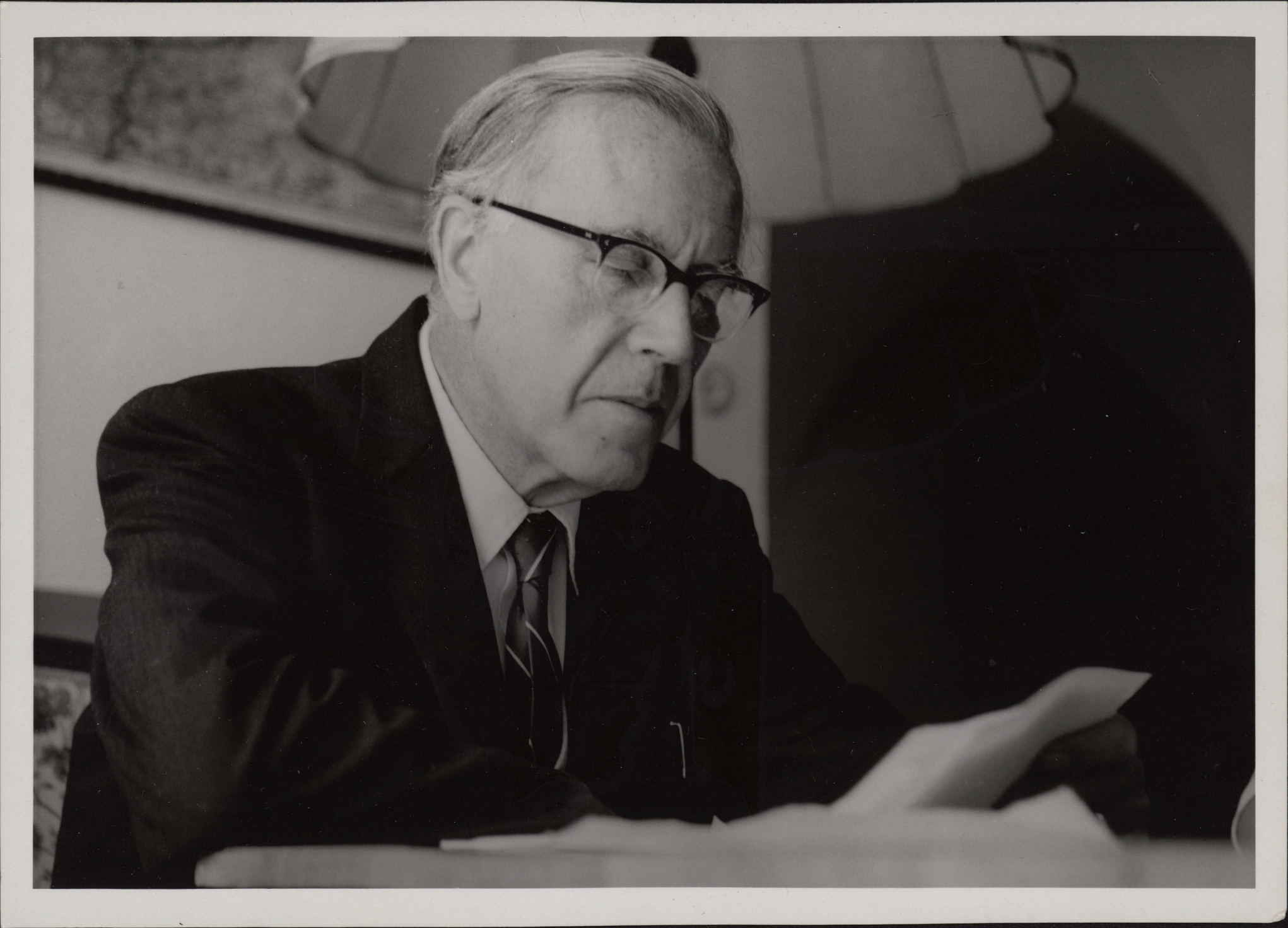
Dietrich von Hildebrand, Hammer of the Nazis. Respected by Conservatives and Trads alike
Modern Catholicism is currently destroying itself with ever increasing speed. Vast numbers have left the priesthood and the monastic life, and innumerable Christians have left the Sacraments.
For Catholics, this is a bewildering disaster. How could things get so bad? How did we get to this point? Answers are often shallow, emotional, and unsatisfactory.
For non-Catholics who call upon the Holy Name of Jesus, this self-inflicted abasement of the Catholic Church may appear tragic and strange. Others may scoff with indifference at the destination of their brethren. In either case it must be admitted: the self-destruction of the Catholic Church affects every Christian.
This essay is meant to provide a historical framework in which Catholics and non-Catholics can understand this crisis. We will discuss the origins of this crisis from a dogmatic and historical perspective in part I. Then in part II we will trace the growth of these currents leading to the World Wars and the Second Vatican Council. In Part III we will discuss the post-conciliar triumph of the enemies of Holy Church, and why Conservatives and Trads must unite to overcome them.
The New Iconoclasm
There are many different factors at work in the present crisis. From a dogmatic point of view, one aspect will be highlighted here: the present crisis is the third crisis of Iconoclasm in the Church’s history. The first being that of the east, spanning about a century between the 8th and 9th centuries. The dogmatic victory over the first Iconoclasm was the Seventh Ecumenical Council in 787. The definitive victory (owing to the support of the state) was the Triumph of Orthodoxy in 843.
The second Iconoclasm was the Protestant revolt in the west, whose dogmatic victory came at the Council of Trent but, due to the pride of kings (particularly in England and Germany), no definitive victory obtained.
The current crisis is the New Iconoclasm. In some ways it is a continuation of the protracted fight against the second.
What is Iconoclasm?
Now Iconoclasm may be defined in several ways. In one sense it represents the Church’s struggle to overcome Muhammadanism internally as it struggles to overcome it from without. In a practical sense, it simply means destroying the monuments of our fathers. From a dogmatic sense, Iconoclasm hinges on this anathema from the Seventh Ecumenical Council:
Whoever rejects an ecclesiastical Tradition, let him be anathema.
We will take this anathema as the central principle to help us understand the current Iconoclasm. Nota bene: of necessity, this explanation will require making generalizations which always carry with them particular exceptions. Let us first introduce the different warring parties in this current crisis and then provide a historical context below to trace how these parties came to be in our day.
The Iconoclasts
Otherwise known as: Liberals, Modernists.
These men are leading the New Iconoclasm and seek to reject any and all Tradition as such. As Pope Emeritus Benedict wrote recently “individual bishops rejected the Tradition as a whole and sought to bring about a new modern Catholicism.” This party gained the papacy with Francis I.
Their best intelligentsia: Tyrell, Loisy and de Chardin with Rahner, Schillebeeckx, and Kung.
Their influential bishops: Cardinals Martini, Daneels, Kasper and American Cardinals Dearden, Bernadin, McCarrick, with Cupich, Wuerl, and Bishop Wilton Gregory.
Other notables: James Martin, S.J.
Publications: National Catholic Reporter
The Moderate Iconodules
Otherwise known as: Conservatives.
These men anathematize Iconoclasm in principle, yet believe (more or less) that the Iconoclasts should be tolerated or even promoted in the Church[1]. The Moderates seek to change various traditions which they hold to be theologoumena or else changeable tradition and not Tradition as such. At best, this is an attempt to properly develop doctrine. At worst, it is an attempt to change Tradition. Examples of such things are: the re-definition of marriage, the overhaul change in the Roman rite, and the use of post-Christian philosophy such as existentialism. This party has held the papacy from Pius XII until Benedict XVI (but had an important precursor in Leo XIII).
Their best intelligentsia: von Hildebrand, Ratzinger (Benedict XVI), Wojtyla (John Paul II), as well as Congar, Balthasar, and de Lu Bac.
Influential bishops: Roncolli (John XXIII), Montini (Paul VI) and Cardinals Pell, Ouellet and bishop Chaput, Fulton Sheen.
Other notables: Bishop Robert Barron, Fr. Dwight Longenecker, E. Michael Jones, and Aidan Nichols.
Publications: National Catholic Register, LifeSite News, EWTN, Ignatius Press, Church Militant
Most bishops today generally tend toward one of these two parties. There is a significant minority, however, in a third party.
The Strict Iconodules
Otherwise known as: Traditionalists.
These men anathematize Iconoclasm very strictly, yet do not condemn change as such. They hold that on various points even the Moderates’ changes were at least unwise and have led to strengthening the New Iconoclasm. They seek to directly attack New Iconoclasm and have repeatedly called upon the Pope to suppress the Iconoclasts entirely—but in vain. At best, they are preserving Tradition against all error. At worst, they are opposing all change in itself to the point of denying charity and causing souls to be lost from the Church. This party generally held the papacy from Pius VI (d. 1799) until Pius X (d. 1914). We will discuss this further below.
Their best intelligentsia: Garigou-Lagrange
Influential bishops: Lefebvre and de Castro Meyer as well as Cardinal Burke, Archbishop Viganò, Bishops Schneider and Gracida.
Other notables: Fr. Chad Ripperger, Christopher Ferrera, and Taylor Marshall
Publications: The Remnant, Catholic Family News, One Peter Five, TAN Press, Baronius Press, Preserving Christian Publications
These three groups form the parties in the present crisis. But how did these parties come to be? We must begin a necessary historical sketch which will eventually bring us to these three parties of today. Let us begin at the beginning.
Historical Alliances
In one sense the Iconoclasts and the Moderates form one party based on the principle of change. In another sense the Moderates and the Strict form one party based on the principle of guarding Tradition. The dividing line is always in the definition of what is Tradition and what is theologoumena.
Every Ecumenical Council can be seen as a compromise between the Moderates and the Strict in order to condemn the Iconoclasts (in the dogmatic sense). For example at Nicea, the Strict advocated that the creed should not include the homoousios, since it came from Greek philosophy instead of the Apostolic Tradition. The Moderates, however, successfully made the Nicene Creed a necessary compromise to condemn the Arians.
It is this normal cooperation between the Moderates and the Strict that makes the proper development of doctrine at every council: a formal change but not a material change (in other words, new canons and words but the faith doesn’t change). It was this cooperation that was shattered with the current crisis to exacerbate the New Iconoclasm as we shall see.
Social Changes Strain Alliances, but Trent brings Unity
The three movements of Iconoclasm were all proceeded by a massive societal change. In the First, Muhammadan armies conquered most of the eastern Christian Empire. In the Second and the New, an intellectual movement was present at a time of social change.
Prior to the Second, there was a general movement of Renaissance humanism (helped by Greeks themselves) which was a resourcement effort especially in regards to the Greek language. In addition, due to new technology, the Holy Scriptures could now be mass produced in book form.
When the Protestant revolt broke out, many Catholics were revealed as Iconoclasts, who destroyed images of the saints and broke from the dogmatic anathema mentioned above. They attempted to use Renaissance humanism against the faith. Thus the dividing line between the Moderates and the Strict was over how to deal with the Renaissance.

Martyr St. Thomas More was a Moderate in his day
The Strict, seeing the bad fruit of the Protestant Iconoclasts, were skeptical of humanism and the new technology. Erasmus and St. Thomas More represent the Moderate party who were in favor of using Humanism to help the faith, but also accepted the anathema in principle.
The Moderates and the Strict were able to work together at the Council of Trent to clearly condemn the Iconoclast Protestants. Trent thus represented the dogmatic alliance of the two parties.
However, since that time there has existed Catholics who have been of the Iconoclast party. These Catholics sometimes acted in good faith, such as Descartes. However others openly defied Tradition and advocated changing the faith itself.
At the same time, since Trent closed in the 16th century and the Protestant Iconoclasts were not suppressed by kings, gradually the results of this Iconoclasm showed themselves. New ideas about politics and economics were emerging which worsened the tensions between all parties. All of this continued amid wars and bloodshed, sharpening the existing animosities.
Meanwhile, the Papacy continued to uphold and apply the alliance of Trent against the Iconoclasts. But as the colonial empires rose, political tensions began a steady increase that would eventually lead to complete, worldwide disaster.
Republican Revolutionaries Change Everything
At the end of the 18th century, a political movement began which would sweep Euro-America and the world. It would irrevocably change everything, leading to our present crisis. This movement became the most significant social change that would divide the Moderates and the Strict and tip the balance in favor of the Iconoclasts, ending the Tridentine alliance. This movement was the violent overthrow of divine-right Monarchy and the establishment of secular Republics.
In general, the Strict, with their adherence to the past, favored Monarchy and opposed the republican revolutionaries. They held that the political order could never be truly legitimate unless it acknowledged the origin of all authority in heaven and on earth—Christ the King. These political views were easily transferable to the Church, whose monarchical structure seemed to fit in well with the old order.
The Moderates were mixed in their views toward republicanism. They ranged from a toleration of secular republics for the sake of peace, to a positive support for the movement. But from the 18th century, Moderates who supported republicanism began to grow in number and influence.
The Iconoclasts, of course, favored violent revolution to overthrow all things of the past. The Protestant Iconoclasts had already done this. The Iconoclasts within the Catholic Church wanted to do the same thing to the Catholic Church. They wished to overthrow the political Monarchy and the ecclesiastical Monarchy. The old order put up a stiff resistance, but the Iconoclasts were resilient.
It should be noted here clearly that republicanism as such—that is, a broadly representative form of government in which rulers are elected—is not at odds with the faith. Catholic republics have existed in the history of the Church with no controversy. The crucial difference that occurs in this time period is the establishment of secular republics. For the first time they define their authority based on the will of the people and not in reference to Christ the King or His Holy Church. In other words, these republics begin to create a moral system wherein a political policy is good or bad not on the basis of objective good or evil, but on the basis of whether the people voted for it or not.
The American “Semi-Secular” Republic
First came the American revolution in 1776. This revolution was made up of powerful elites (Patriots) who sought to oppose the taxation of their business interests by the British Crown. They used rhetoric like “liberty” and “freedom” to help convince about a third of the colonists to join their cause, while another third were loyal to the Crown (the final third did not fight). Thus a civil war ensued with many third parties (like Indians and Africans) joining both sides.
Catholics also joined both sides. The Patriots had a small Catholic minority, being dominated by Protestant Englishmen. But the American revolutionaries also used anti-Catholic rhetoric to gain support for their revolution among the Protestant colonists (following the Quebec Act 1774), which provoked other Catholics. Their main goal, however, was to tear down the Protestant Monarchy, which had been killing Catholics for centuries. In addition, Catholic France also entered the war on the side of the revolutionaries.
Thus Catholics were divided on the American Republic. The American Catholics led by John Carroll (later the first American Bishop) favored the revolution, while the French Canadian bishop Jean-Olivier Briand excommunicated Carroll for supporting the revolution (during the revolution Canada was at war with the revolutionaries).
The American revolutionaries won the war and set up a secular Republic which went into effect in March of 1789 (after a failed limited government under the Articles of Confederation). Unlike their parent English government, the American government did not recognize divine authority in their national Constitution. Still, the majority of their state constitutions had a state-funded (Protestant) Church. Thus the American government was secular in its federal government, yet semi-religious in its state governments. The revolutionaries had also been willing make Catholic allies—as long as they supported the revolution.
But because America had so few Catholics, it was still considered Mission Territory for the Papacy, and very little attention was paid to America. But this far away, seemingly insignificant country would eventually provide a final push to change the balance of power in favor of the Iconoclasts more than a century later.
The French Revolution Humbles the Papacy
A few months after the Americans put their secular Constitution into effect, another republican revolution broke out, this time in Catholic France. The revolutionaries did not distinguish between the Catholic Church and the Monarchy, but targeted all religion. The Catholic Divine authority of the government was abolished. With the help of American Thomas Jefferson, the French revolutionaries drew up a new republican creed like the Americans, acknowledging only a “Supreme Being” (l’Être suprême).
The French revolutionaries forced all Catholics to swear allegiance to their secular ideas or be put to death. The Iconoclasts swore allegiance, and the Moderates and Strict were put to death.
Thus whereas the American revolution divided the Strict and Moderates, the French Revolution united them in blood. Even as the French Revolution was raging in 1789, Pope Pius VI appointed John Carroll as the first American Bishop (he had to travel to England for consecration due to his local excommunication). But Pius VI completely condemned the French Revolution, which murdered hundreds of Catholics.
When it was clear that the faith was being suppressed, French Catholics of the Vendee region launched a counter-revolution. In response, the republicans initiated a policy of Vendee genocide—men, women, and children (even infants)—-in order to “secure liberty.” Whole towns of Catholics were massacred.
It was during the French Revolution that ordinary men from all social classes were drafted to be soldiers. This was the first mass conscription in history, foreshadowing the crescendo of bloodshed to come.

The French murder their king.
In 1793, the French executed their king by guillotine, whom the pope hailed as a martyr. The following year Pius VI condemned the Italian local synod of Pistoia (held between the American and French revolutions) which was an effort to apply republican ideas to the ecclesiastical monarchy of the Church.
But the tensions between the French republicans and the Papacy exploded when Napoleon invaded Italy in 1796. After efforts at peace failed, the pope himself was taken prisoner and carried from Rome in 1798, powerless to stop the progress of the revolutionaries. The French Kingdom was strewn with the dead bodies of whole Catholic families.
In the same year, another Catholic country, Ireland, supported by France, launched another republican revolution. As Napoleon’s forces continued to make war on Europe, Pius VI was moved through northern Italian states until he finally arrived in southeastern France. Six weeks after he arrived at his new prison, he died. It was August, 1799.
That fall, the body of the pope of Rome, the head of the Roman Catholic Church lay unburied in the kingdom of France. That December, the Catholic faithful throughout the world celebrated Christmas with no pope. Many of the French Catholics had no priests to celebrate Christmas at all. The Iconoclasts celebrated the bloodshed. The revolutionary forces had won. Napoleon’s wars continued. They had cut off the head of the King of France. Now the head of the Catholic Church was dead. In just a few short years of violence, the New Iconoclasm had begun.
In the next section we will discuss how the Tridentine alliance collapsed in the 19th century and led to the triumph of the New Iconoclasts in the 20th century. Part II, Chapter 1 here.
For further reading on many of these topics, I suggest the following sources:
Catholic Republic: Why America Will Perish Without Rome by Timothy Gordon (Moderate)
Liberty, The God that Failed: Policing the Sacred and Creating the Myths of the Secular State from Locke to Obama by Christopher Ferrera (Strict)
The Framework of a Christian State by Rev. E. Cahill, SJ (Strict, published 1932)
The Catholic Enlightenment: The Forgotten History of a Global Movement by Ulrich L. Lehner (Iconoclast)
Vatican I: The Council and the Making of the Ultramontane Church by John O’Malley (Iconoclast/Moderate)
Timothy S. Flanders
@meaningofcath
[1] Of the Iconoclast cardinals mentioned, all except Cupich was promoted by one of the Moderate Iconodule popes.

When the Gates of Hell Prevail over the Church

The pit of corpses at Caesarea Phillipi
“The Gates of Hell Will Not Prevail”
Many Catholics today utter this phrase to justify their opinions about the crisis. Conservatives say that since the gates of Hell cannot prevail against the Church, an infiltration cannot possibly have happened. Sedevacantists say that since an infiltration has happened, and the gates of Hell cannot prevail, then the official Church must be a façade. The true Church is their underground sect. Still other Catholics, finally exhausted with the cognitive dissonance necessary to be an ultramontanist, become convinced that the gates of Hell have prevailed over the Papacy. They are then taken in by lies from the Greek schismatics and give themselves over to the imaginary unity of the Greek schism.
But in each of these cases a soul considers the phrase of the promise and relies on his own private judgment to determine what it means. As we shall see, the Church has only ascribed general meanings to this promise, not specific circumstances.
In times past, our fathers have thought things were so bad in their day that the end of the world was imminent. The early Christians were hunted down across the world and butchered. During the Black Death, thousands perished, and three popes fractured Christendom. Or the Protestants revolted and a small fleet of Catholics made a desperate attempt to meet the Muhammadan armada at Lepanto. Or again, the French Revolution massacred Christians and then captured Pope Pius VI. He died in France and the Church suffered with no pope for six months. It is hard for us to imagine the feeling of facing the type of widespread bloodshed that our fathers’ faced. Some lost hope, others perservered.
If we say that in those times the gates of Hell did not prevail, at what point would we say that they have prevailed? How bad does it really have to get? How can we trust in a promise whose object is unclear? Let us consider the Sacred Scripture and the Holy Fathers and, with God’s help, attempt to answer these questions. Every Catholic must face the fact that at least in one sense, the gates of Hell indeed have and will prevail over the Church. But how then can His promise hold true? We must contemplate deeply this mystery. Let us consider first the Word of God.
Holy Scripture
Our Lord has just multiplied loaves and miraculously fed four thousand on a mountain near the sea of Galilea. He comes to a nearby coastal town and is confronted by the Pharisees and Sadducees. They demand from him a sign from heaven. He rebukes them and promises no sign but the sign of Jonas. He then sails with his disciples and warns them against the doctrine of the Pharisees and Saduccees. They disembark and walk north together many miles. They reach the northern border town of Caesarea Philippi, near the ancient territory of the lost idolatrous tribe of Dan, where the pagans have dedicated the surrounding rocks and grottos to their many gods. It is here that our Lord demands and receives the confession of the Incarnation from St. Peter: “Thou art Christ, the Son of the living God.” Our Lord responds by calling him the Blessed Son of Jonas, the One Who Listens (Simon) to the revelation from “My Father in Heaven.” He then speaks of his person and his confession and utters these words over him:
I say to thee: That thou art Peter; and upon this rock I will build my church, and the gates of hell shall not prevail against it.
Ego dico tibi, quia tu es Petrus, et super hanc petram ædificabo Ecclesiam meam, et portæ inferi non prævalebunt adversus eam.
κἀγὼ δέ σοι λέγω ὅτι σὺ εἶ Πέτρος, καὶ ἐπὶ ταύτῃ τῇ πέτρᾳ οἰκοδομήσω μου τὴν ἐκκλησίαν, καὶ πύλαι ᾅδου οὐ κατισχύσουσιν αὐτῆς.
Here in the context of Caesarea Phillipi, we may observe a few things about these words. First, the immediate context is the grotto at Caesarea Phillipi, where a the rocky crags held the idols of many gods. The men who were killed and sacrificed to these demon gods were thrown into a pit in the rock known as the “gates of Hades.”[1] In addition, the city itself was the site of large construction projects by the late king Herod Philip and the current king, Herod Agrippa II. All of these things would be immediately apparent.
The words also bring to mind the foundation rock of the Second Temple at Jersusalem (eben shetiyyah) which sealed off a long shaft in the earth leading to sheol (Hades). His words about building also recall the great kings of Israel, David and Solomon (in contrast to the false builder kings Herod). David laid the preparations and Solomon did the construction to the First Temple.
Thus in the context of many rocks, gates of Hell and construction, our Lord tells of his own chosen rock and building. The gates (πύλαι) refer to the defensive structure seen at the entrance to any city, thus invoking the expansion of the City of God against the defenses of the City of Man of the Evil one. The verb overcome (κατισχύσουσιν) thus implies the failure of a siege to penetrate the gates of a city.
Moreover, our Lord calls Peter the “stone” (Πέτρος), which in Greek had a connotation of a weapon, such as was used in Homer and by King David to slay Goliath, thus connecting with the defensive imagery of the gates. And given the above context he refers to St. Peter’s confession as a “rock” (πέτρᾳ) which was the feminine form of the Greek “stone,” making its meaning refer to the rock foundation of a building. By using the same word in two forms, he also integrates the foundational person with the foundational confession.
Finally, the word used for build (οἰκοδομήσω μου τὴν ἐκκλησίαν) holds the meaning of constructing a building from a foundation, utilizing the same words used in reference to Solomon (I Para. xxii. 10). But the word also has the prefix οἰκο- which refers to the forming of a household. Thus the whole phrase brings together the persons (both the foundational person named Rock and the Church), the confession (foundation rock) and the institution to be built, all in opposition to the rival power of Hell whose defenses will not be able to withstand the expansion of the Church.
Immediately following this, our Lord tells of His coming death and resurrection, prompting the aforementioned Rock to rebuke Jesus Himself. Our Lord then calls St. Peter a different name: “Get behind me, Satan.” Herein is a mystery tied closely to our text on the gates of Hell. When Simon hears and confesses the foundation rock (the Incarnation), he is his own name: the Rock against the gates of Hell. When he denies the corollary of the Incarnation (the Cross of suffering), he becomes Satan. Yet his name was changed to Rock, not Satan. And although he can become Satan, his name and his person do not change. This is a great mystery to which we will return below.
When the Gates of Hell Prevailed
Among the many meanings of the gates of Hell, the most obvious and immediate is simply natural death. Thus the name for the pit of corpses at Caesarea Philippi. Jews and Greeks both believed that after a man died his soul passed through the gates of Hell (or “Hades”) and was left there indefinitely. There was no hope of getting out of this place.
When our Lord was crucified, the gates of Hell prevailed over the Church, the Body of Christ. Jesus Christ was dead. His soul went to Hell and his body was laid in the tomb.[2]
Let us pause for a moment and consider the reality that the disciples faced here. They had left their families. They had left their homes and livelihoods to follow Jesus Christ because they believed and hoped in Him. And now He was dead. We hoped that it was he that should have redeemed Israel (Lk. xxiv. 21). Their hope was completely lost, and now they feared for their own lives also. What dark despair was theirs at this moment! Truly Hell had prevailed. No man could deny it. Everything visible showed clearly that the gates of Hell had prevailed.
The only person who would deny this would be our Lady, who should have seemed to the disciples drawn away into a mother’s excess. But it is the disciples that the Lord would rebuke: O foolish and slow of heart to believe in all things, Which the prophets have spoken (Lk. xxiv. 25).
Our Lady kept faith on Holy Saturday, and we celebrate her on Saturdays ever since. For the triumph of Hell was only for those seeing with the eyes of the flesh, not with the eyes of faith. On the contrary, our Lord descended into hell in order to destroy her gates. As it is said:
In the grave with the body, but in Hades with the soul; in Paradise with the thief and on the throne with the Father and the Spirit, wast Thou, O Christ, filling all things, Thyself uncircumscribed.[3]
It is here that we know what is meant in the creed, “He descended into hell,” and in the phrase from St. Peter: In which also coming he preached to those spirits that were in prison: Which had been some time incredulous, when they waited for the patience of God in the days of Noe (I Pt. iii. 19).
But in the Body of Christ was contained all the Body of the faithful to come—the whole Church militant, triumphant and suffering. In the true death of Jesus Christ, the entire Church was scattered and destroyed and put to death. It was truly the case that there was not a single Christian remaining upon earth on that day—save only our All-Holy Lady.
Thus when we consider the question of the gates of Hell, we must recall this first triumph of the Devil, when our God allowed him to triumph. When our God permitted Himself to be carried captive through the gates of Hell. Can any tragedy in the Church compare to the silence of God On Holy Saturday? By every reasonable standard by which men can judge anything, the Gates of Hell had prevailed.
But against all expectations, our Lord kept His promise, and the gates of Hell were overthrown. Thus we see in the Greek Resurrection icon the gates of Hell being torn asunder and Satan bound in chains beneath. Adam and Eve are lifted up out of Hades.
This very real triumph of Hell—at least according to all things natural and visible—must be deeply contemplated by every Christian. We must consider: if while our Lord walked the earth, the gates of hell destroyed the Church so utterly and completely, how much more will the Church be overthrown in times to come? And yet how much more miraculous will be the Church’s glorious resurrection?
Holy Tradition
Having considered the meaning of the Scripture, let us rely now on our Fathers to give us the proper meaning of this promise. As it is written:
Stand in the multitude of ancients that are wise, and join thyself from thy heart to their wisdom, that thou mayst hear every discourse of God, and the sayings of praise may not escape thee. And if thou see a man of understanding, go to him early in the morning, and let thy foot wear the steps of his doors (Ecclus. vi. 35).
It is crucial to seize upon the fact that as Catholics, we are not free to make our own opinion about the promise. We are bound to hold to what our fathers held, and not presume ourselves wise enough to conclude something against their wisdom.
How have the Fathers understood this promise? As with other passages, there are multiple layers of meaning. Hilary says it means the triumph over death, while Origen and Jerome say it is sin and heresy that will not overcome the Church (Catena). St. John Chrysostom connects the promise to our Lord’s resurrection (Hom. LIV), as does Ambrose (Christian Faith IV 2.14) but Ambrose adds that the promise applies also to the person of Peter (2.26). Another gloss says that our Lord is promising that the gates “shall not separate the Church from the love and faith of Me” (Catena). Summing up the many interpretations of the Fathers, Bede says:
The gates of Hades are depraved teachings, which by seducing the imprudent draw them down there. The gates of Hades are also the torments and banishments of persecutors, which either by frightening or by cajoling any of the weak away from the stability of the faith, open to them the entrance into everlasting death. But also the wrong-headed works of the unfaithful, or their silly conversations, are surely the gates of Hades, inasmuch as they show their hearers and followers the path of perdition. Many are the gates of Hades, but none of them prevails over the Church that has been founded upon the Rock (Hom. I.20 Homilies on the Gospels, Bk One, 201).
St. Thomas also later writes about the many layers of meaning:
What are the gates of Hell? Heretics: for, just as through a door a man goes into a house, through them a man goes into Hell. Likewise tyrants, demons and sins. And however much through heretics other churches can be blamed, nevertheless the Roman Church has not been corrupted by heretics because it was founded upon the rock. Thus the heretics were in Constantinople, and the labor of the Apostles was lost. Only the Church of Peter has remained inviolate. Thus it is said I have prayed for thee, Peter, that thy faith fail not (Lk. xxii. 32). And this not only refers to the Church of Peter but to the faith of Peter, and to the whole Western Church. Hence I hold that the Westerners ought to have a greater reverence for Peter than the other Apostles (Commentary on Matthew).[4]
But how can the Roman Church be inviolate if, even by St. Thomas’ day, Honorius had been anathematized, Stephen VII’s decree on ordinations had been invalidated, John XII had toasted Satan, and Paschal II’s erroneous investiture decree had been condemned by St. Bruno as “heresy”? In our own time, who can deny that heretics have corrupted Rome? This is a great mystery. Vatican I dogmatized it by placing stringent conditions on papal infallibility. But this left other questions unanswered. We have treated this in another place, but here let us bring to bear our passage on this question.
Peter, Satan and the Roman Papacy
First, let us briefly review the meaning of the Petrine primacy. Because of second millennium emergencies, the Roman has been obliged to emphasize her own primacy more and more, and it can be forgotten that this passage refers to every bishop as well. The Fathers see every bishop as holding the Petrine promise as long as they are united to the body of Church. The determining factor for this is communion with the Roman See. Other Sees were founded by St. Peter but here alone did the Prince of the Apostles receive his crown of martyrdom. Thus very early (2nd century) the evidence is clear that the prerogatives of the Roman See included governing the entire Church.
Sometimes non-Catholics will emphasize other aspects of this passage to attempt to exclude the Roman aspect, such as saying the promise refers to his confession, not his person, or such things. It is true that the Fathers appear to make a distinction between the confession and the person. And yet, a confession is without effect unless it is confessed by a person, and so the Fathers also identify the Roman See in a particular way with this promise (in addition to every bishop in a different sense).
One of most famous instances of this is the formula of Hormisdas. This was the confession which ended the Acacian schism, the first prolonged east-west schism. It lasted nearly two generations from 484-519. The confession reads like this:
The first condition of salvation is to keep the norm of the true faith and in no way to deviate from the established doctrine of the Fathers. For it is impossible that the words of our Lord Jesus Christ, who said, “Thou art Peter, and upon this rock I will build my Church,” should not be verified. And their truth has been proved by the course of history, for in the Apostolic See the Catholic religion has always been kept unsullied. [Here follows a list of condemned heretics.] Following, as we have said before, the Apostolic See in all things and proclaiming all its decisions, we endorse and approve all the letters which Pope St Leo wrote concerning the Christian religion. And so I hope I may deserve to be associated with you in the one communion which the Apostolic See proclaims, in which the whole, true, and perfect security of the Christian religion resides. I promise that from now on those who are separated from the communion of the Catholic Church, that is, who are not in agreement with the Apostolic See, will not have their names read during the sacred mysteries. But if I attempt even the least deviation from my profession, I admit that, according to my own declaration, I am an accomplice to those whom I have condemned. I have signed this, my profession, with my own hand, and I have directed it to you, Hormisdas, the holy and venerable pope of Rome.
This confession formed the basis for reunion with the Church of 2500 Eastern schismatic bishops in 519, invoked in 869 and again at Florence in the 15th century. The documentary evidence for Rome’s special place in this promise is evident for those who have eyes to see (see Resources for more information).
The important point we wish to draw out here is the adjoining verses about “Satan.” Because although it is clear that the Pope of Rome has from the earliest times been the point of infallible unity, it is also true that the popes have lapsed into error of various kinds as we have already mentioned. Perhaps this is why our Lord, after his majestic exaltation of St. Peter on the mountain, quickly rebukes him when he denies the cross and calls him “Satan.” We may infer from these passages that our Lord does indeed promise the indestructability of St. Peter and His Church, but he does not promise impeccability of the Roman Pontiff.
In other words, His promise will be fulfilled, one way or another, but this does not personally force the will of the pope (or any bishop) to be without sin and error. The pope retains his free will. Insofar as he confesses the faith that his name bears, he unites his person and the Church with the rock of truth. This, of course, is the work of God’s grace and Providence, and is not ascribed to his human will. Our Lord has promised that this rock will never truly be shaken, even if it is completely killed as He Himself was.
On the other hand, insofar as the person of St. Peter according to his human nature denies the cross of suffering, he becomes Satan. Soloviev summarizes this beautifully when he says:
Simon Peter as supreme pastor and doctor of the Universal Church, assisted by God and speaking in the name of all, is the faithful witness and infallible exponent of divine-human truth; as such he is the impregnable foundation of the house of God and the key-bearer of the Kingdom of Heaven. The same Simon Peter as a private individual, speaking and acting by his natural powers and merely human intelligence, may say and do things that are unworthy, scandalous and even diabolical. But the failures and sins of the individual are ephemeral, while the social function of the ecclesiastical monarch is permanent. “Satan” and the “offence” have vanished, but Peter has remained (Russia and the Universal Church, Ch. 3).
Thus “Satan” and “Rock” are two names for the Apostle, yet not in the same way. Rock is according to God’s grace and providence, Satan is according to Peter’s own frail human nature. From a purely human perspective, the gates of hell do prevail in this sense, but not from the perspective of God. Man can truly see the triumph of Hell according to his eyes of flesh. Considering the death of our Lord, we must expect the most awful tragedy imaginable to overcome the Roman Church, so that it becomes absolutely impossible for the Church to survive. Only then can we look for the glorious resurrection. Only then can God receive all glory. As it is written, Power is made perfect in infirmity (II Cor. xii. 9) and again, What is impossible for man is possible with God (Lk xviii. 27).
Our fathers have indeed seen the gates of hell prevail with their eyes of flesh. They have seen the papacy overrun by heretics. Destroyed by pagans and Iconoclasts. They have seen the popes murdered, or the popes as murderers and adulterers. They have seen the pope teach heresy, order public debauchery and toast Satan. The eyes of the flesh see that this is the gates of hell prevailing. But the eyes of faith see what is unseen. As St. Paul says, faith is the substance of things to be hoped for, the evidence of things that appear not (Heb. xi. 1).
In the midst of this, our fathers were willing to shed their blood for these popes. St. Thomas More was beheaded for a pope with mistresses and multiple children. The Japanese Church endured two hundred years without priests, keeping the faith. Although they could see that the gates of hell were indeed prevailing, their faith told them that whatever happens, they will not prevail in the end. This is the reasoning of faith.
As we have seen, the Fathers and saints have never defined exactly what the triumph of the gates of hell means. With the death of the Son of God, all manner of evil done to the Church is foreshadowed. It has not been revealed to us in what way the gates of hell could prevail, we have only been promised that they will not prevail in the end.
We must have the faith of Abraham who believed that God would raise up seed for him even though he was as good as dead (Heb. xi. 12). Then we must be willing to sacrifice that seed in faith, reasoning through faith that God would reconcile the former promise of seed and the present command to sacrifice–only by raising the dead back to life (Heb. xi. 19). Faith and hope will deliver us through this crisis, as they delivered our fathers.
The Church is a perpetually defeated thing that always outlives her conquerers. — Hilaire Belloc
Timothy S. Flanders
@meaningofcath
[1] In both Old Testament and Greek thought, “Hades” (Sheol, “the grave,” “the netherworld,”) was a place where all souls went after death, whether good or bad. It was a place under the earth for these souls to stay indefinitely. Both Greek (Odysseus) and Roman (Aeneaus) heroes traveled to Hades and conversed with the souls there. “Hell” as the grave (sheol) or “Hades” is different than the Hell of eternal punishment (Gehenna). Unfortunately these two different places get tranlslated into English with the same word “Hell.” Nevertheless Hell as “Hades” and Hell as Gehenna bare a certain resemblance in their lack of hope, and sometimes they are used interchangeably in a more general sense.
[2] The definition of “dead” is the moment when the soul separates from the body.
[3] Liturgy of St. John Chrysostom
[4] Et qui sunt portae Inferi? Haeretici: quia sicut per portam intratur in domum, sic per istos intratur in Infernum. Item tyranni, Daemones, peccata. Et quamvis aliae Ecclesiae vituperari possint per haereticos, Ecclesia tamen Romana non fuit ab haereticis depravataquia supra petram erat fundata. Unde in Constantinopoli fuerunt haeretici, et labor apostolorum amissus erat; sola Petri Ecclesia inviolata permansit. Unde Lc. XXII, 32: ego rogavi pro te, Petre, ut non deficiat fides tua. Et hoc non solum refertur ad Ecclesiam Petri, sed ad fidem Petri, et ad totam Occidentalem Ecclesiam. Unde credo quod Occidentales maiorem reverentiam debent Petro, quam aliis apostolis.
Timothy Gordon on the Crisis, Feminism, Parenting and Development of Doctrine
I was recently on Reason & Theology with guest Timothy Gordon. In our conversation we discuss the Magisterial teachings regarding Feminism, and the shift that occurs with St. John Paul II and the new catechism and more.
Watch the full conversation here.