


The Blinding Light of Darkness
By Jeremiah Bannister
“True prayer starts in the darkness, for it is only then and there that we can see the light.” — Fr. Ron Floyd, Vicar of Sacred Heart of Jesus in Grand Rapids, Michigan
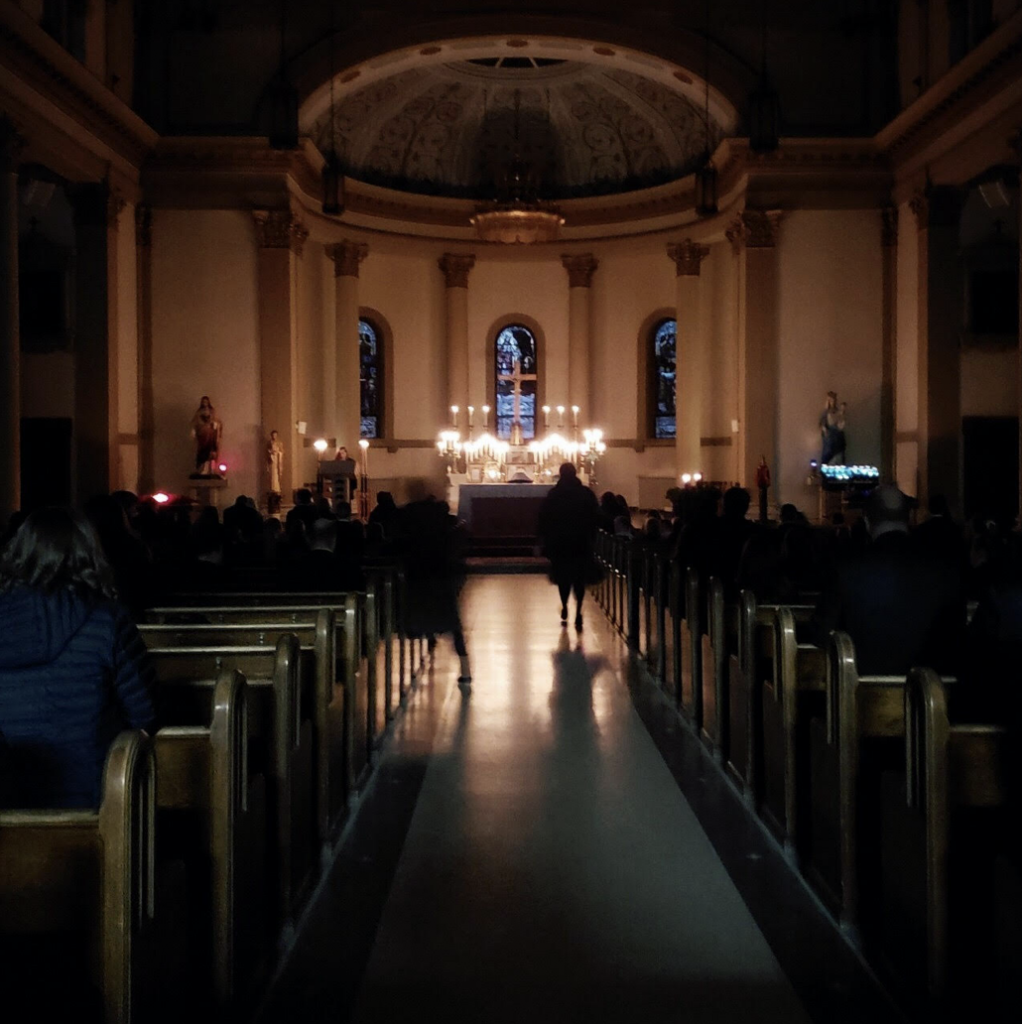
I opened my eyes in the darkness, deep within the quietude of prayer. I was kneeling in a pew near the narthex, thumbing through the wooden beads of my Little Flower chaplet, when students started shuffling in. Their faces were shrouded by the shadows, but you could hear their teeth chattering from the cold in the world beyond the walls, and for a moment the church was abuzz with the sound of students stomping the snow from their shoes. They hustled and bustled to find a seat, but barely had the children settled in before the sacristy bell rang, and the men in the loft began to sing:
“Rorate coeli desuper et nubes pluant justum…”
Everyone stood as the priest and the altar boys entered and made their way to the foot of the altar, then knelt again as they recited the Judica me. Frankincense saturated the sanctuary, and the flickering flames of the candelabras shone like stars in a distant dimension, causing the altar to come aglow with an otherworldly bluish-gray haze. It felt ancient, even primal–like a timeless tragedy, as somber and as sorrowful as the wilderness; and there was a disquieting desolation in the silhouettes of the servers, offset only by the lonely white of their surplices.
“Peccávimus, et fácti súmus tamquam immúndus nos…”
A young man emerged from the darkness, and he brought with him a book, which he placed upon the altar. The reading was rhythmic, telling of a time long ago, when a prophet foretold a sign: for the sake of our sin, a virgin would conceive, and the child’s name would be Emmanuel. Upon completing the reading, the priest processed to the other side of the altar. His movements were gradual, even glacial, like a man marching up a mountainside; and when he reached its peak, we stood to our feet, like gates lifting their lentils. Then, just as he began to read the gospel, I saw a stream of sunlight seep through the stained-glass windows.
“Emítte Agnum dominatórem térræ…”
As the priest prepared the altar, I pondered his homily in my heart. I couldn’t help but be moved by the maiden and her man-child, and I was mesmerized by the gleaming glass of the windows around the church. They told the stories of an angelic annunciation, a virgin birth, and the gracious greeting of a kinswoman. Then, while gazing at the gallery, I realized that I was beholding the totality of a tale, being privy to something predestined before the dawn of time, disclosed to the dead and dreary only upon the dissipation of darkness. I hoped to see it through to the end but was startled by the sudden sound of the Sanctus bells.
“Ut sciátis, et credátis mihi…”
The martyrs were memorialized, the victim was vouchsafed, and upon his breathing the words of consecration over unleavened bread, the priest elevated the Host. It was beautiful to behold, as the sol now sparkled through the stained-glass window of the Sacred Heart of Jesus, and the banging of church bells echoed in the architecture! In like manner, he consecrated the wine, and raising it in ritualistic adoration, the chalice glittered and gleamed with the glorious golden rays of a risen sun!
“Cito véniet sálus túa…”
Row by row, the faithful filled the aisle, forming a line leading to the Sacrament. And with the celestial sound of the chorister singing overhead, I entered the echelon. One by one, the priest gave Communion on the tongue. And as I knelt, readying myself for reception, I glanced again at the windows along the wall. There, right where I left off, was a man, and he was weeping in a garden. Moreover, he was scourged, crucified, and hung on cross, with a crown of thorns on his head! And at the foot of the crucifix knelt the Virgin Mother, gazing up at the Son, her heart shot through with six of seven sorrows.
“Corpus Domini nostri Jesu Christi custodiat animam tuam in vitam aeternum. Amen.”
I gasped, as the priest placed the host on my tongue, and I shuddered when I shut my mouth! We had been in darkness, having sold our sanctity to the deep magic of iniquity, and our salvation could only be secured with sacrifice.
This was the man-child! This was Emmanuel! This was the Lamb of God with us!
Making my way back to my pew, I beheld the baptistry, where I saw a simple stable. And there, smack-dab in the center, was a meager little manger. It was empty, waiting in eager anticipation of angelic hosts, a virgin mother, and her man-child… destined to die and to rise again, so as to rule over a kingdom that shall have no end.
“Ecce Dominus veniet, et omnes sancti ejus cum eo: et erit in die illa lux magna, alleluia.”
After the reading of The Last Gospel, students gathered their things and hurried off to school, re-entering the snowy cold through which they arrived. I followed right behind, but before leaving the sanctuary, I took one last look around, marveling over the mystery of the Rorate Mass; then I descended down the stairs and through the door separating the sacred from the secular, and with the strong smell of incense still on my clothes, I was greeted by the blinding light of day, and the warmth of a fully-risen sun.
***
 Jeremiah Bannister is a writer, YouTuber, and public speaker. After serving in the U.S. Navy, he earned a degree in Journalism & Mass Communication, with a minor in Political Science, from Olivet College (Michigan), where he was awarded the school’s top-honor in three specialties: creative writing, political science, and public speaking. Since then, he has hosted a local TV show, served as a contributing editor for the Distributist Review, and hosted a live AM/FM talk radio program (PaleoRadio). Jeremiah has presented before audiences at Michigan State University, Ferris State University, and Campellsville University, as well as before those attending the 2016 Make-A-Wish Michigan Wish Ballat the MGM Grand Hotel in Detroit, Michigan. He and his family attend the Traditional Latin Mass at Sacred Heart of Jesus in Grand Rapids, Michigan, where his children are also enrolled in the parish’s classical education school,Sacred Heart Academy. He’s currently completing a novel about the “real-life fairy tale” of his daughter Sami’s life and death with childhood brain cancer, and how her “heroic tragedy” led him and his family back to the Catholic Church. To learn more about his testimony, or to schedule an interview/event, visit his website or contact him at TeamTinyDancer@gmail.com. Follow him @paleocrat.
Advent Reflections on the Four Last Things: Heaven
Editor’s Note: this is the third in a series from Mr. Hall. Read his part one and two on death and judgement.
By Kennedy Hall
Less than a week remains until the Nativity of Jesus Christ. In these final moments, the veil between Heaven and Earth becomes very thin. We stand at the precipice of the triumphal Incarnation of the Logos. For twelve months we have toiled and struggled through this Valley of Tears, but from the fiat of one Woman, we now edge closer to that fateful moment when the Lord comes into the world. He wills Himself to be born of a Virgin, in the body of a helpless child. The Lord who formed the Earth by an act of speech, humbles Himself to the point of dependence on his Immaculate Mother. It seems to me most helpful to consider the moment when Heaven met Earth, in order to continue our contemplation of the great mysteries of the Four Last Things.
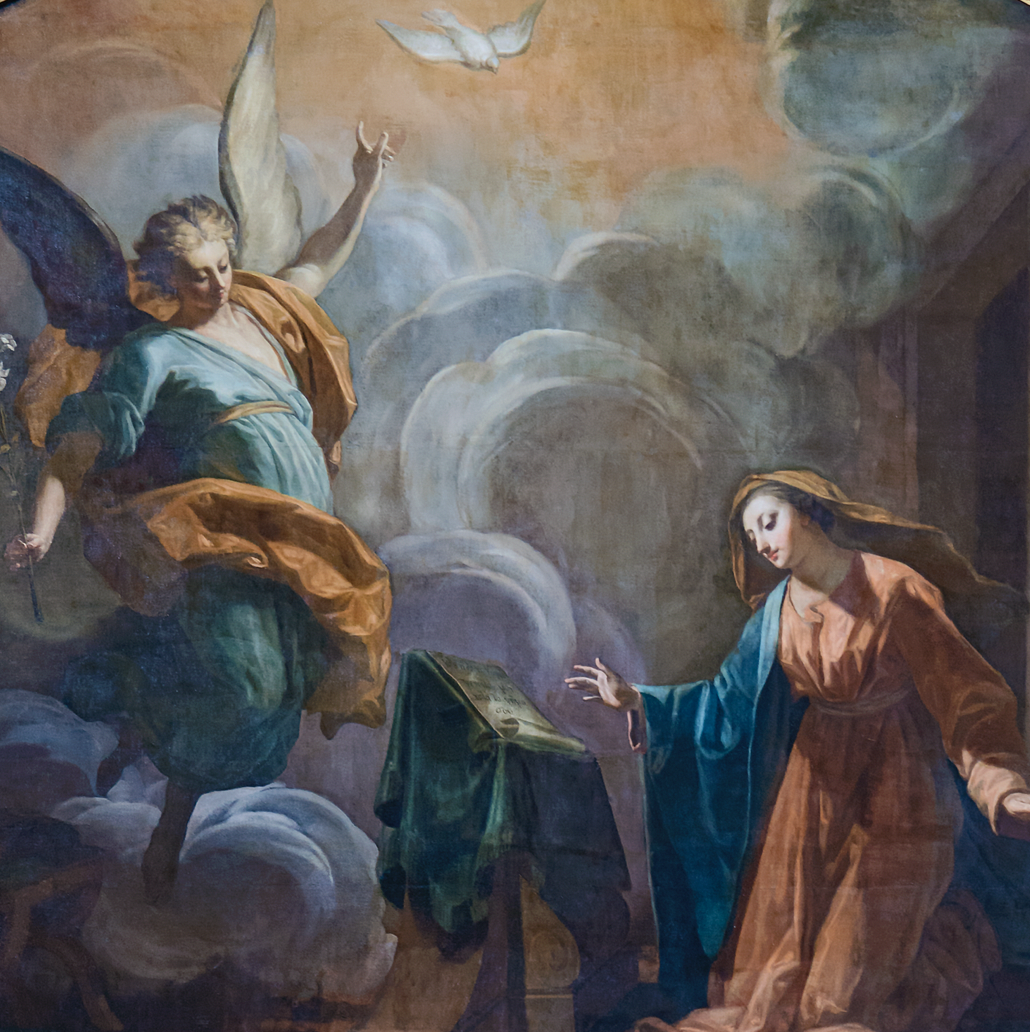
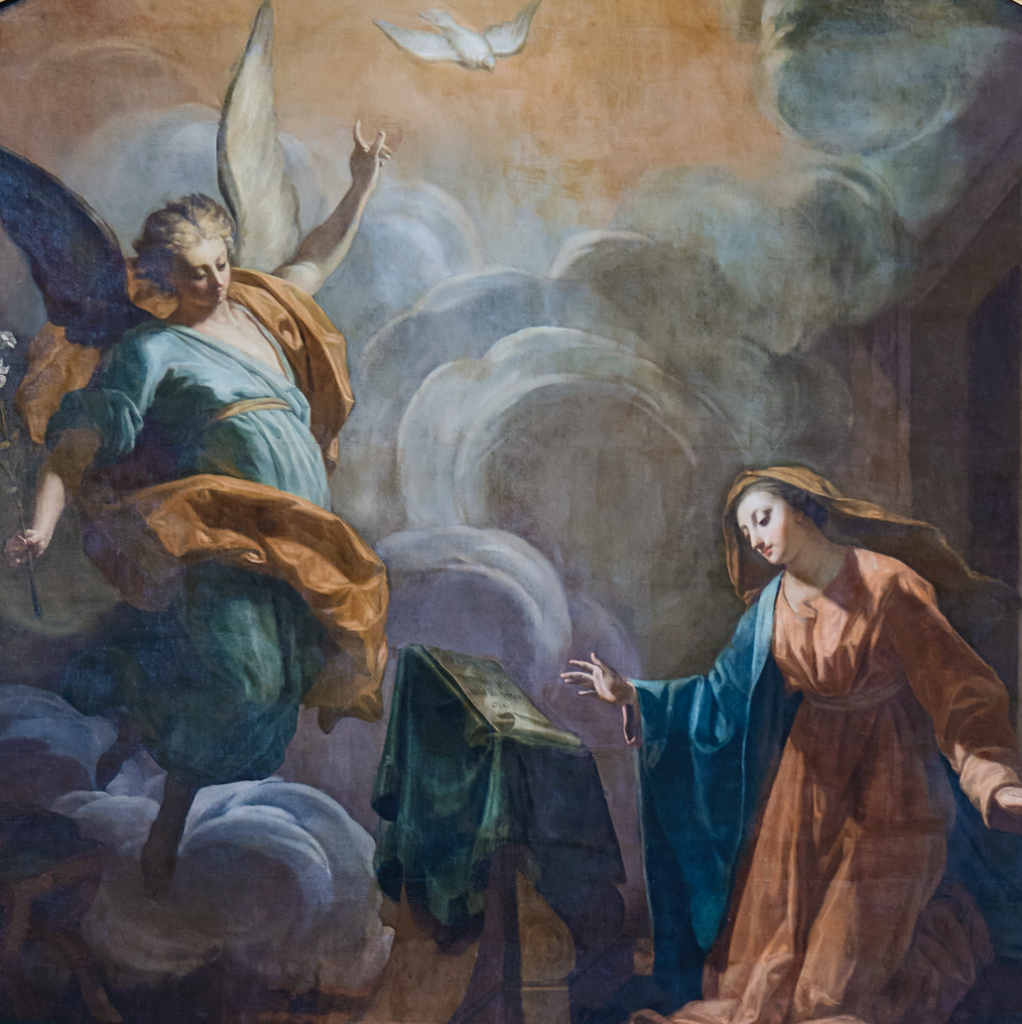
Imagine for a moment the scene. In the sixth month of the unborn life of John the Baptist, Gabriel visits Our Lady at Nazareth. There are no accidents in scripture, and the names and dates situated in the histories are of immense value in understanding the depth of God’s Word. We will use the Biblical Commentary of Cornelius A. Lapide as our guide.
In the Sixth Month
What is the significance of this insistence on the sixth month? Of course, Luke is an eminent, and divinely inspired historian in this context, thus, it is true that mention of the sixth month is a reference to a historical fact. But, as is the case with Holy Writ, there is always “more to the story.” Saint John the Baptist was conceived the 24th of September, hence his feast day of June 24th, which is called the Nativity of Saint John the Baptist. Luke, under the inspiration of the Holy Ghost, implores us to consider the date of Christ’s Incarnation, which after the passage of six months, brings us to March 25th. The 25th of March is the date of the First Easter, which is in keeping with the tradition of the dates of martyrdom lining up with dates of conception. Furthermore, many ancient Fathers are of the opinion that the initial date of Creation, a few thousand years before Christ, was also March 25th. This means that the date of the world’s conception is also the date of the Lord’s Incarnation, and also the date of the Lord’s Crucifixion, through which the world was restored. Nine months after March 25th we find ourselves at December 25th, the Nativity of Our Lord. It is a wonder how the myths of Christ being born in the springtime ever gained ground.
The Angel Gabriel
There are three angel names in Scripture: Gabriel, Michael, and Raphael. Michael of course defeated Lucifer and cleansed Heaven of the demonic scourge of the Ancient Serpent. His name, derived in Hebrew, means “Who is like God,” which was his battle cry as he led the Heavenly Host against the Luciferian Legions. Raphael presides over the healing of men’s bodies, which is seen when he restores sight to Tobias. The name Raphael means, “Healer of God.” Gabriel, who appears in Daniel and Luke, bears a name that means “Strength of God.” He presides over the conflicts and wars of the faithful, thus his presence at the Annunciation signifies the coming war against the Prince of this World.
When Gabriel visits Mary, it is not simply a pious event, but a declaration. The Strength of God delivers the news to the Theotokos that the war waged long ago by Michael and the angels will take place on this earth. The entrance of the Word of God into World will be under the mantle of the Sacred Womb. As if sneaking behind enemy lines, in the disguise of an Infant, the Immaculate Virgin is God’s chosen weapon against the wickedness and snares of the Devil. When Heaven arrives on earth, it comes to fight, ready for battle against the Pit of Perdition.
Mary
In Hebrew the name for Mary is Miriam, which means “bitterness of the sea.” The Hebrews held a tradition that Moses’s sister was called Miriam because at her birth began the drowning of the children by Pharaoh. In a sense, Mary is the New Miriam, as Christ is the New Moses, and this event prefigures the Slaughter of the Holy Innocents ordered by Herod. However, in true biblical fashion, Miriam becomes Mariam, which means “Mistress of the sea.” This is because, just as Moses led the men through the Red Sea, so too Miriam led the women. Moses and Miriam led the Hebrews out of the slavery of Egypt, just as Jesus, through Mary, brings us out of the slavery of sin.
Mary is the Mistress of the Sea, which is helpful in understanding her title as the Star of the Sea. Furthermore, it shows her cooperation with God as Mediatrix of all Graces. She is like a “sea of graces,” which is one reason she was called called Full of Grace. The graces possessed by the angels, patriarchs, apostles, martyrs, confessors, and virgins came together in her. If Christ is like the fountain of Divine Grace, then Mary is like a reservoir, filled to the brim, ready to be bestowed on those who call upon her Son.
The Annunciation of the Angel Gabriel to the Virgin Mary in the sixth month was not an event of inconsequential historical facts. In this moment where the Power of God visited the Star of the Sea, the Son of Man came into our world to bring the fallen world a step closer to Heaven. At this grace-filled encounter, Gabriel put forth the plan of salvation to the Blessed Mother, desiring her cooperation. The Co-Redemptrix heard the news, and, mysteriously, predestination and free-will danced throughout the pregnant pause of Mary’s contemplation of the Incarnation. For just a moment, the hosts of Angels edged themselves towards earth ever so slightly, as if to hear the Divine Fiat in secret. All of creation, groaning in travail since the Fall of Man, held its breath, waiting to exhale with the hope for the renewal of the Breath of Life. Never in history has there been a more deafening silence in the universe than that timeless moment between Gabriel’s words and Our Lady’s assent. Not only did Heaven wait from above, but from the Pit, the multitude of maleficent spirits writhed in anguish at the thundering silence of the Virgin’s peaceful countenance.
Be it done to me according to thy word. Like an angelic amplification of the final movement of Beethoven’s 9th, the Celestial Choirs bellowed forth the Blessing of the Bride of the Holy Ghost. From the paradise of the fallen Patriarchs and Matriarchs, Adam and Eve gazed upon the beauty of the Morning Star as she humbled herself to a place exalted beyond every creature. The Curse of Eve was broken, and the stage was set for Mary’s Magnificat. In this eternally fleeting moment of anticipation, the proud were humbled and the fallen were raised. Heaven and Earth, for the first time since that fateful day of Creation, embraced as Justice and Mercy kissed.
The Reign of the Dragon was coming to an end, and it was the Woman, the Dragon Slayer, who stood with her heel on Hell and her Immaculate Heart in Heaven.
Praise and Glory be to Jesus Christ Our Lord, the King of Kings, the Lord of Lords, for giving us His Blessed Mother as our own. Because of her cooperation, Heaven waits for each soul to also say Fiat mihi secundum verbum tuum.
***
 Kennedy Hall is a Catholic High School teacher, rugby coach, and part time writer on Catholic topics. He has written for the Kolbe Center for the Study of Creation, Serviam Ministries and the Fatima Center. He teaches Catholic Religion courses to French Immersion students and also speaks Spanish and Italian. Kennedy has spoken at various youth events, as well as on the topic of true Catholic masculinity. He has a passion for the Traditional Latin Mass and the restoration of traditional piety. A prodigal son, he was brought back into the Church with the help of Our Lady of Guadalupe, and prays for the day that all men depend on the Blessed Mother. He lives with his wife and 4 children in Stratford, Ontario. Follow him @kennedyhall.

Introduction to the Holy Bible for Traditional Catholics

Whether you are a cradle Catholic learning the Holy Bible or a Protestant convert divesting yourself of your Protestantism, this book on the Scriptures is for you. The only book of its kind from a traditional Catholic perspective, it cuts through the fluff and gets to the heart of the spiritual realities which are fundamental to all discussion on the Holy Bible. It also tells the story of how rejection of these spiritual realities has led directly to the current crisis in the Church. Part spiritual, part historical, part linguistic, this introduction provides the traditional Catholic with the tools to understand and profit from the Holy Scriptures. The book includes an original translation of St. Melito of Sardis, an annual reader based on the traditional office of Matins, as well as the foundational guide to Refute Protestants in Five Minutes.
This book is free for all patrons of the Apostolate in eBook form or print.
$10.00 eBook click here to buy
$15.97 Print click here to order
TABLE OF CONTENTS
PART I: The Things You Need More Than Anything
- Why Read the Holy Bible?
- Guide to the Church’s Prayer Book: The Psalter
- Beware: Fire from Heaven Burns up the Proud
- How to Read with Humility
- “Without Me, You Can Do Nothing”
- Church Doctrines about the Holy Scriptures
PART II: History – How “Theologians” Seized Power with the
Holy Bible
- Oral Tradition and the Early History of the Scripture
- The Rise of the Theologians and the Protestant Revolt
- How They Used Translations to Promote their Heresies
- The Triumph of the Theologians in the Twentieth Century
PART III: Resources – Everything Else You Need
- Linguistic Analysis of English Bible Translations
- Annual Bible Reader According to the Divine Office
- Refute Protestants in Five Minutes: Foundational Guide
- Typology – On Pascha by St. Melito of Sardis
- Overview of the Teilhardian Heresy in Historical Context
- Roman Numerals, Names of Books and Abbreviations
- List of Further Reading and Resources
Advent Reflections on the Four Last Things: Judgement

By Kennedy Hall
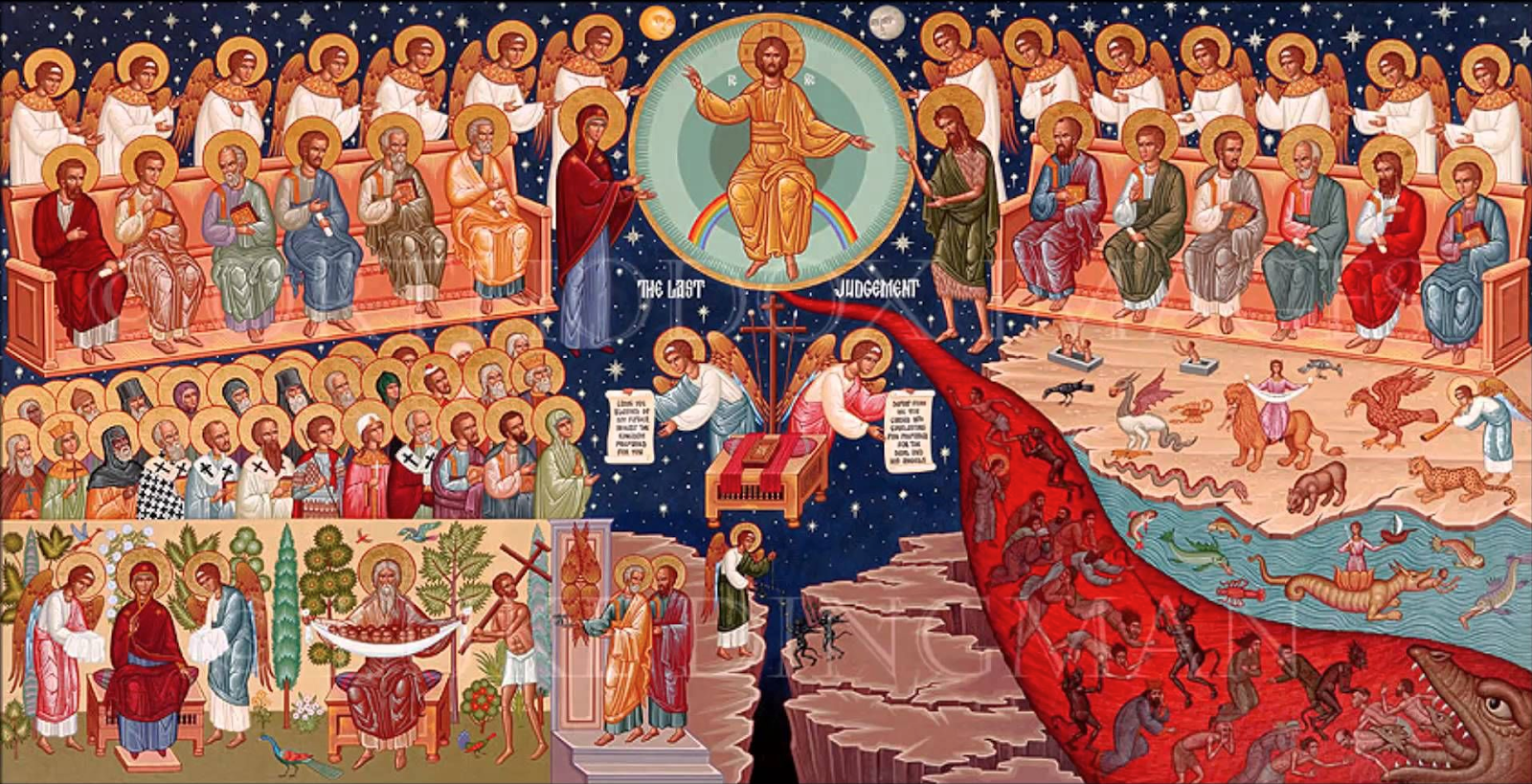
Continuing in our theme of the traditional mediation of the Four Last Things, this week we will consider the reality of Judgement. To begin, we must distinguish between the two forms of judgement that pertain to our eternal life.
First, we will each experience our own Particular Judgement. This means that we will stand before Our Lord and give an account of our lives immediately following our death. God willing, we will die in a State of Grace, and although our particular judgement might be humiliating, we will have the assurance of salvation through a holy death.
The second form of judgement is the General Judgement. At the General Judgement, Our Lord in His Second Coming will judge the entirety of the human race. There will be no secrets and not a single person will be able to hide from the clarity of Heaven’s judgement on the iniquity of the human race.
My goal here is not to expound in great detail on the specific nature of each judgement. Instead, I hope to give sufficient motivation for an adequate reflection on our own lives as we travel with the Holy Family en route to Bethlehem. At the Creche wherein Our Infant Lord will lay His head, we will encounter the Lord who breathed our soul. We need not wait until the end of our lives or the end of time to contemplate judgement. If we are serious about Salvation, then the present coming of Jesus Christ should spark us to seek right judgement of conscience.
Our society overtly rejects the idea of judgement. The thought of “passing judgement” on another person is perhaps the only thing our world still sees as sinful. We can engage in virtually any behaviour, no matter how depraved, but it is the notion of being judged for that behaviour that is untenable in the eyes of most. I am sure we have all witnessed this, whether it be in conversation with our coworkers or family members. Seemingly reasonable people may assent to a truth you share in common throughout private conversation, but when these truths are set in contrast to a popular sentiment, it is almost always the truth that takes the back seat.
The vast majority of people alive on earth today are not living in a State of Grace. Even if we consider Catholics alone, we must take into account the percentage who attend the Sacrament of Confession on a regular basis. There are studies and research that give seemingly accurate numbers as to how low is the percentage of baptized Catholics who repent frequently. But we do not need a Pew Research study to use our common sense. Think how often Confession is offered at your average parish, and how many people you know frequent this sacrament consistently. Whatever the amount may be, the number of Catholics living in a State of Grace is astonishingly low. The vast majority of men, including Catholic men, often consult pornographic material. Most people engage in harmful gossip at one time or another, and mortally sinful practices like contraception are the norm.
Nevertheless, we cannot spend our time concerned in a disordered way about the graceless lives of those we know and love. Instead, if we find ourselves fortunate enough to have responded to God’s grace by way of external or internal conversion, we should contemplate the power of God’s Grace that allowed us to see ourselves for who we truly are.
We are made in the Image and Likeness of God, which means when we see God, we see ourselves. Now, I do not mean this in some milquetoast liberal or modernist manner in which everyone on earth is an elected carrier of some amorphous “divine spark.” What I mean to convey is that our true self is found in Him who is more true to us then we are to ourselves. When we see God, we see ourselves. When we see ourselves, we see that we are nothing like what God created us to be. An honest interior examination of our souls will show innumerable sins. They may be venial, they may be of the flesh, they may be of the mind, and they may be mortal. Whatever they are, they are an aberration and must be atoned for.
Now, we are all aware of the how the story ends. We know that Jesus Christ paid a debt He didn’t owe, because we had a debt that we couldn’t pay. Thus, we need not despair as if Salvation were a pipe-dream. Christ died for all. He died knowing everything you needed dying for. He saw your pornography usage, your unethical business dealings, your pride and resentment. He saw you before you saw yourself, and in the most extreme act of charity He longs for you to see Him, lying in the arms of the Blessed Mother, asleep with the countenance of an angel.
As we edge closer and closer to the Birth of Our Saviour, let us judge ourselves for who we truly are. All of us can find solace in the fact that Jesus Christ was born in a stable, a cave carved out for beasts of burden. It is hard to imagine a place more filthy than a den of animal husbandry. But, it is also hard to imagine a soul that more desperately needs a cleansing than our own. Do we honestly think that Mary simply laid down on the filthy floor and gave birth to Our King in squalor? Of course not! Saint Joseph, the Guarding of the Virgin surely cleaned the stable and made a home for the Queen who was from all time meant to bring for the King. We too can make a way for the coming of Christ in the filthy cavern of our broken hearts.
Make haste and flee towards the Confessional. Push aside the debris, shovel aside the dirt and grime, making room for fresh straw. Allow yourself to be remade by the Craftsman who knit you together in your mother’s womb. In doing so, you too can become an adequate home for the Lord to come into the world. Perhaps, when the world comes to see you this Christmas, they will see in you the Image of God; a purified man who shines forth the Glory of the King of Kings.
***
Kennedy Hall is a Catholic High School teacher, rugby coach, and part time writer on Catholic topics. He has written for the Kolbe Center for the Study of Creation, Serviam Ministries and the Fatima Center. He teaches Catholic Religion courses to French Immersion students and also speaks Spanish and Italian. Kennedy has spoken at various youth events, as well as on the topic of true Catholic masculinity. He has a passion for the Traditional Latin Mass and the restoration of traditional piety. A prodigal son, he was brought back into the Church with the help of Our Lady of Guadalupe, and prays for the day that all men depend on the Blessed Mother. He lives with his wife and 4 children in Stratford, Ontario. Follow him @kennedyhall.
To Live (And Die) Beneath the Waves

By Jeremiah Bannister
“The ocean is the perfect memento mori. Each crested wave a burst of life. Each collapse of whirlpooled water a stark, sudden end. When the surface stills, only a graveyard can match such a foreboding peace.”
— Doonvorcannon, author of “Cerberus Slept”
So much of my life has been consumed by ruminations regarding death and destruction, even despair. The devil on my shoulder chalks this up as my having been born a boy, but he’s a dirty little liar–and I’m greater than the sum of my confirmation biases. After all, Hades hungers for men and women alike, and I’ve known my fair share of freakishly macabre females! He isn’t entirely wrong, though, as my fear (and fascination) of death probably began before I cut my teeth, while sobbing & suckling at my mother’s breasts, well-before even the development of an anal-retentiveness that plopped me diaper-deep in the ER with a herniated belly button. But barring the whole who, what, where, when, and why of how it all began, this much may be said as a matter of fact: that the majority of my days have been devoted to a dialogue (and Dionysian dance) with Death.
Don’t get me wrong, it wasn’t all doom & gloom. There were Kairos moments, transcendent through & through–and curiously enough, most of them took place near beautiful bodies of water. Like Jacob’s return to Beth-El, revisiting that sacred place where angels traversed a ladder spanning the space between heaven and earth, I’ve made pilgrimages of my own, mental and in memoriam, seeking to retrace where I was while being who I’ve been.
I recall standing near a rail at Seattle’s Elliot Bay, where I first observed the power and majesty of the Pacific. The rhythmic back-and-forth of container and supply ships was dreadfully delightful–even hypnotic, as the boats swayed from port to starboard like a mother rocking her baby back to sleep. I remember my stroll on the boardwalk of the Mermaid Quay at Cardiff Bay, where the winds of winter in Wales cut across the crashing waves, conjoining in chorus to create a serendipitous symphony of sound! I re-envision that dreary day in New York Harbor, tearfully saluting Lady Liberty from the deck of a water taxi sailing all too fast and far too slow. And I’ll never forget the Carolinian shores of North Topsail! Whitecaps danced in the distance, reminding me of the snow-covered peaks of Wyoming’s Grand Teton: they were ancient and awe-inspiring! But as with my experience on the Jubilee Bridge overlooking the River Thames–a lifechanging set of circumstances reserved for the book that I’m currently writing–I was hit by an undeniable fact. For there, while honing in on the horizon line, I felt the salty sea splash between my toes… gently reassuring me that, soon enough, everything will come to an end, leaving little more than a high-water mark in the wake of its return from whence it came.
To dread the deep and the dark.
To worry over the winds and the waves.
To lose myself in the lullabies of life and liberty.
That Hades, in time, swallows heathens and heroes alike.
Death was a diabolical dirge, deserving to be despised… defied…
… and, if at all possible, to be defeated!
These were terrible half-truths, taught to me by the sea. But I saw these things through faithless eyes, and like the Atlantic whitecaps, death appeared to be something safely in the distance. St. Cyprian was right, though: “We’re born with the halter around our neck; and every step brings us closer to death.” Belluacensis echoes this in his recalling that the King of France, caught in the throes of death, cried aloud with his final breath: “Behold, [even] with all of my power, I cannot induce death to wait one more hour.” Hence, my decades of dread, drowning in a debilitating death-spiral of despair–a sickness, which, if Kierkegaard is to be believed (and I believe that he is), leads unto death. And given the cyclical movements of my madness, I was doing worse than wasting time… I was paying full-price for a one-way trip down a slippery slide straight to She’ol.
Then something happened! For, alas, in due time, Death made its bed in my home…
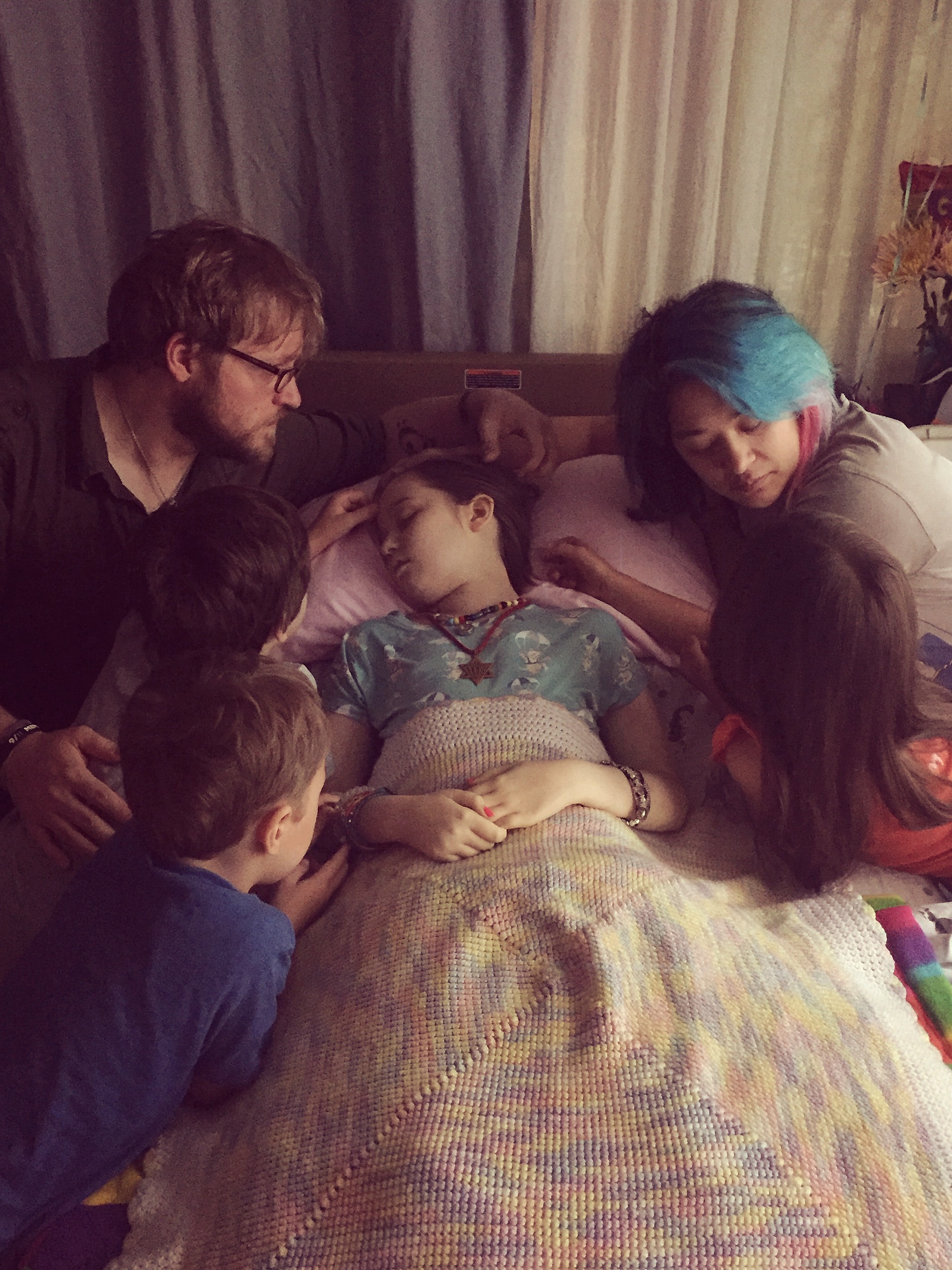
I know because I carried it, stiff as a board in rigor, to the hearse parked ominously outside. In the street, I caressed its ice-cold cheeks, used its hair to wiped my tears from its sunset eyes, and with quivering lips, I kissed it (as any loving father would) on the forehead. She was an ice princess, and with a smile on her face, she was a paradox, being both beautiful & blue. And though I was yet still alive, my spirit was resigned… and both of us were breathless.
Looking back, it seems fitting that, years before, I took at my baptism the Catholic name of St. Alphonsus-Maria de Liguori. His book, “Preparation for Death,” changed my life forever; and like me, he was tormented by tremendous tragedies, enduring immense amounts of intolerable pain and suffering. But (and quite unlike me), Alphonsus was willing, even desirous, to stand and smile, face-to-face with Death. For “memento mori!” was his motto, and he was convinced of the wisdom inscribed upon a skull once possessed by the Venerable Juvenal Ancina, which read, “What you are, I was; and what I am, you shall be.” Most importantly, he knew in his heart of hearts that eternity was in the balance. These convictions led him to a lifetime of mental prayer, pious devotion, and diligent service at the altar of God–an altar whereupon holocausts are offered, both of Lamb and of man… and now, hundreds of years after his death, he’s revered as a saint and doctor of the church!
What he was, I still am; but what (and where) he is, I pray to one day be! And now, as I approach my fourth Christmas Eve following the fate of my 12-year-old daughter to brain cancer, I choose to look at life and death with eyes of faith, convinced that, beneath the depth and the darkness, behind the wind and the waves, and beyond the terrible truths of time and tragedy, there is a Lamb who takes away the sins of the world, a memento mori longing to be lived, and a sacrificial fire, through which mortal men, upon reaching the high-water mark of their final breath, are made fit for heaven, their spirits soaring to that celestial sea from whence they came.
“O LORD my God, I, now, at this moment, readily and willingly accept at Thy hand whatever kind of death it may please Thee to send me, with all its pains, penalties, and sorrows.”
— A prayer from my 1938 Manual of Catholic Devotion
Editor’s Note: this piece originally appeared at ancientthought.com
***
Jeremiah Bannister is a writer, YouTuber, and public speaker. After serving in the U.S. Navy, he earned a degree in Journalism & Mass Communication, with a minor in Political Science, from Olivet College (Michigan), where he was awarded the school’s top-honor in three specialties: creative writing, political science, and public speaking. Since then, he has hosted a local TV show, served as a contributing editor for the Distributist Review, and hosted a live AM/FM talk radio program (PaleoRadio). Jeremiah has presented before audiences at Michigan State University, Ferris State University, and Campellsville University, as well as before those attending the 2016 Make-A-Wish Michigan Wish Ballat the MGM Grand Hotel in Detroit, Michigan. He and his family attend the Traditional Latin Mass at Sacred Heart of Jesus in Grand Rapids, Michigan, where his children are also enrolled in the parish’s classical education school,Sacred Heart Academy. He’s currently completing a novel about the “real-life fairy tale” of his daughter Sami’s life and death with childhood brain cancer, and how her “heroic tragedy” led him and his family back to the Catholic Church. To learn more about his testimony, or to schedule an interview/event, visit his website or contact him at TeamTinyDancer@gmail.com. Follow him @paleocrat.
Advent Reflections on the Four Last Things: Death
By Kennedy Hall
As the Birth of Christ approaches, it is helpful to contemplate the Four Last Things. Traditionally, the Church has taught that Death, Judgement, Heaven and Hell constitute these four final realities. The intention of this article is not to give a detailed theological overview, but instead to give us pause in the hope that we may reflect on these necessary things as we prepare to welcome Our Lord. There are many places one can read or listen to sound theology on the matter; I recommend this series of conferences by Father Ripperger.
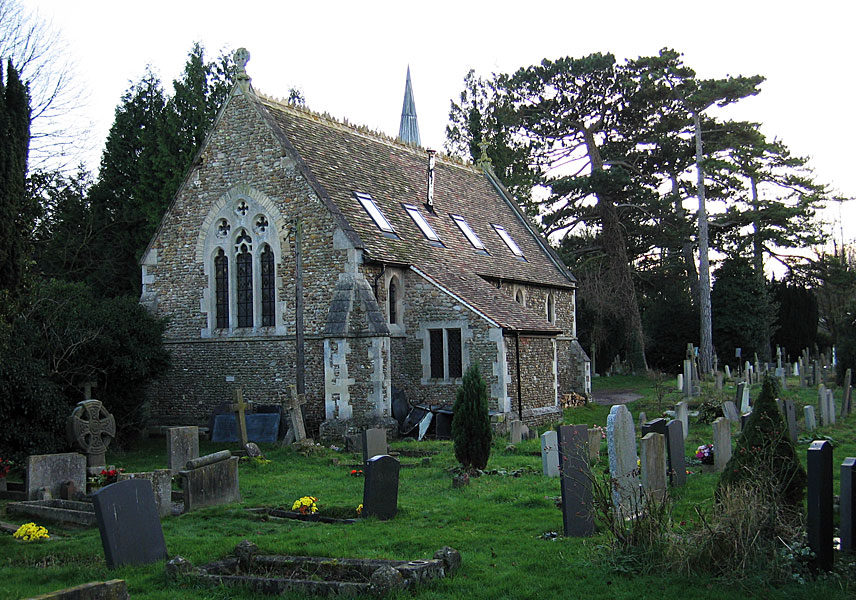
One Christmas Eve, my family and I attended Holy Mass at a nearby rural Church. This particular parish has kept all of its traditional beauty. The statues and high altar remain, and the sanctuary was decorated with the befitting array of poinsettias. In the homily the priest recounted a story that has stuck with me ever since. He recounted that in the early days of his priesthood he lived with an older priest. After his first Christmas season as a priest was finished, it was time to clean up the decorations in the Church. As the young associate pastor, he was tasked with the “grunt” work. The older Pastor told him that he was not to dispose of the tree, but to leave it in the garage. He told him that he never threw away the trees, but instead, each spring he would clean the dry wood of the trees and use it to make crosses. From the material of these symbols of the Nativity, the seasoned Pastor would make a symbol of the instrument of the Crucifixion. The point of the homily was to remind us that the Birth of Christ was not the whole story: It is the Birth of Christ that brought God into the world, but it was the Death of Christ that brings us into the Next World.
When I teach my students about the unacceptable reality of Euthanasia, inevitably a student will ask me, “But, what about in the case of a terminal illness, is it okay then?” As an experienced teacher, I have learned that the best way to approach a difficult moral issue is to inject humour. Thus, I always reply by reminding them that all of us suffer from a terminal illness: Age. In fact, I have yet to find research that suggests anything other than the fact that ten out of ten people will eventually die.
Death will come to us all, and at the moment we were conceived, in a sense, we started to die. It might seem like a morbid concept, but it is true. Denying death does nothing other than distract us from an unavoidable reality. As Catholics, we have no reason to fear death itself. Death properly understood is not an end, but a transition, or a new beginning. Jesus Christ paid a debt that none of us could pay at the Crucifixion. By His resurrection He showed us the way to Eternal Life. We have all been invited to Salvation, we need only cooperate with the graces God bestows on us.
The concept of death is actually quite easy to understand. A day will come when we no longer take breaths on this earth. It may come while we are sleeping, or it may come while we are awake. It could be painless and quick. It could also take years and cause unbearable suffering. As it is stated in the Book of Job, “The days of man are short, and the number of his months is with thee: thou hast appointed his bounds which cannot be passed.” (Job 14:5) Our life is in the hands of God, and we will not escape this reality.
At our death, our souls will separate from our bodies. We will be judged, and our eternal destination will be either Heaven or Hell. We profess in our Creeds that there will be a Resurrection of the Body, which refers to events to take place at the Second Coming of Christ. Until that time, our souls will ascend to Heaven (with the appropriate time in purgatory in most cases) or descend into Hell. At the end of time, if we have responded properly to the offer of Salvation, our Glorified Bodies will be reunited with our physical bodies. Conversely, the opposite may also be true if we have been damned to Hell.
In a paradoxical fashion, it could be said that the best way to accept the reality of death is the take more seriously the way that we live. In correspondence with a spiritual directee, St. Jose Maria once wrote: “Don’t be afraid of death. Accept it from now on, generously… when God wills it, where God wills it, as God wills it. Don’t doubt what I say: it will come in the moment, in the place and in the way that are best: sent by your Father-God. Welcome be our sister death!” (The Way, 739) Only a man who knows where he has been invited to spend eternity can see something the world sees as a tragedy with such hope. If we truly love Our Lord, then we must take Our Lady’s example and say to the annunciation of our death, “Be it done unto me according to thy will.” The finitude of our days is an invitation to live holy lives, filled with peace of conscience. Frequent use of the Sacraments and adherence to God’s commands are guards against unhealthy fear.
It is true that the fear of the Lord is the beginning of wisdom, but this is not a servile fear. We do not fear God like a slave fears his master. Instead, we fear the Lord like a son fears his father. The wrath of a loving father towards his son is a corrective. We should embrace correction from Our Heavenly Father, and not fear suffering if He chooses it for us. Instead, we should fear offending God above all things. Do not fear your death any more than you fear walking through the doors of a Church. It may be daunting to enter into a majestic Cathedral, or hard to climb innumerable stairs. But, it is through hardship and overwhelming mystery that we enter into the Kingdom of Heaven.
The Devil uses an unhealthy fear of death as one of his strongest tools in today’s age. People often seek to live forever, or seek “medical assistance” in their deaths. We are led to believe that a drug-induced execution in a sterile hospital room, stuck with tubes and electronic monitors is somehow “dignified.” This is a grave offense against the Lord who breathed into Adam the Breath of Life. It is the Lord who gives life, and it is the Lord who decides when we must breathe our last. The so-called “doctors” who facilitate this undignified end do not fulfill the noble purpose of a physician. Instead, they act as Grim Reapers disguised in white coats, rather than the black robes commensurate with the Bringer of Death. Our society’s enthusiasm for this devilish practice is further proof that we have forgotten who we are. We treat our elderly and sick loved ones like a wounded or diseased animal. The diabolical disorientation rampant in our world has convinced people that being put-down like a dog is a fitting termination of a human being made in the Image and Likeness of God. In a sick reversal of the Holy Altar, on which Our Lord is laid out for us in the Sacrifice of the Eucharist, the most vulnerable are laid on an Unholy Altar of Death to be ministered to by the Priests of Perdition.
We must reject this depraved misunderstanding of death, and embrace the true Catholic understanding. Live in a way that pleases your Heavenly Father and enrages the Demon. As the Nativity of Our Lord approaches, meditate on the Coming of the Messiah. Remember that Our Lady was struck with great sorrow soon after His birth when Holy Simeon prophesied the Passion of the Christ. Do not forget that you were brought into this life so that you may live like Jesus Christ, and out of love for Him, embrace this entry into a Valley of Tears. Follow the Holy Family to Bethlehem and lay on the stone floor of the Cave. As you contemplate the Birth of Christ, keep in your sights the route from the Cave to the Tomb, a journey that passes through Calvary. Let these four weeks of Advent be a preparation for the day when, God willing, you die unto Eternal Life.
***
Kennedy Hall is a Catholic High School teacher, rugby coach, and part time writer on Catholic topics. He has written for the Kolbe Center for the Study of Creation, Serviam Ministries and the Fatima Center. He teaches Catholic Religion courses to French Immersion students and also speaks Spanish and Italian. Kennedy has spoken at various youth events, as well as on the topic of true Catholic masculinity. He has a passion for the Traditional Latin Mass and the restoration of traditional piety. A prodigal son, he was brought back into the Church with the help of Our Lady of Guadalupe, and prays for the day that all men depend on the Blessed Mother. He lives with his wife and 4 children in Stratford, Ontario. Follow him @kennedyhall.

That Which Abides: The End of All Things and What Lasts

By Nathaniel Richards
Perhaps it is our spiritual default at times to see Advent as a sort of Christmas Day countdown. Of course, Advent is a holy season dedicated to prayer, penance, and preparation of one’s heart for the coming of the Lord Jesus. But we Catholics might go about this season rather commercially if we’re not careful: eating the little chocolates from the cardboard Advent calendars sold at the grocery store, lighting candles in the Advent wreath just for the aesthetic, maybe buying an Advent-themed devotional that we think we’ll read (but ends up collecting dust on our nightstands). But how often do we think about the Second Coming of Christ in the season that inaugurates the Church Year? Further, how often do think about the state of our souls? How often do we think of The Four Last Things: Death, Judgement, Hell, and Heaven?
The answer to those questions could vary. However, I’ll venture that we might write off such thoughts as being gloomy and not in keeping with holiday cheer. Maybe we should think of the Last Judgement during Lent or something. Even during Lententide we probably only think of what we might give up as a penance to advertise as a conversation piece. Indeed, whether in Lent or in Advent, we do not live as if the Lord is coming soon. The empty manger in the crèche we’ve set up in our homes might remind us of Our Lord’s First Advent, but we give little thought to how that was just the beginning. Truly, it is the Final Advent of the Lord that brings to completion salvation history. The Incarnate Son of God, born of a Virgin as a tender babe in Bethlehem is the same Son of God that will separate the sheep from the goats.
What’s Missing? What’s Necessary?
Yet to keep watch for the Son of God and to be found pleasing when He does come? That means being busy doing the Master’s work. For if we are found doing what we are supposed to be doing we shall surely please him. How do we please him? By allowing the theological virtues of faith, hope, and love to transform us. These virtues are supernatural gifts, true, but they also are necessary to merit Heaven.
Sacred Scripture informs us that “without faith it is impossible to please God” (Hebrews 11:6). Holy Writ also says that “faith is the substance of things to be hoped for, a conviction of things not seen” (Hebrews 11:1). But as St. Paul says, “there remain faith, hope, and charity, these three: but the greatest of these is charity” (I Corinthians 13: 13). Charity of course, is the purest kind of love because it is completely selfless and likewise a gift of self. Indeed, as Our Lord says, “Greater love hath no man than this, that a man lay down his life for his friends” (John 15:13). Without faith, hope, and especially love, we cannot be true disciples of Christ.
To prepare for the End of All Things in the Lord’s Final Advent, to be in state of grace, and to exercise all three of the theological graces is a tall order. We can’t mince words, however, because Our Lord did not. He told us simply: “Be you therefore perfect, as also your heavenly Father is perfect” (Matthew 5:48). Perfection is the final goal of a Christian—and we can’t do it on our own. We need God’s Grace to begin the work, move in and with us, and complete our perfection, for without Him we are stuck in the miserable condition of sin. The war of our salvation has been ultimately won on the Cross, but as soldiers of Christ we must still battle under His banner and be crucified with Him. Catholicism is nothing else then dying to self and rising again…practicing for the Final Day of the Resurrection and Judgement. Faith, hope, and love sustain and prepare our souls for that ultimate moment.
An Augustinian Take (Sort of)
As a happy circumstance, St. Augustine wrote about the theological virtues and the End of All Things in a handbook for a spiritual son of his named Laurentius. It mostly concerns the virtue of faith and goes through basic tenets of the Creed, but the last portion of his book touches lightly on the other two virtues as well. If the reader will indulge me, I would like to touch briefly on each of the virtues and how they pertain to the Final Things. Of course, I shall have aid from St. Augustine in this endeavor with a quote here and there.
Firstly, faith is the foundation and the launching point of the spiritual life. Catholics must confess something after all, and not just anything. Augustine says that out of a “confession of faith…is meat for strong men” and it “springs hope of believers…and this is accompanied by a holy love” (Enchiridion, 132). Our Catholic Faith is revealed and given to us through Sacred Scriptures and Tradition. It must be studied, certainly, but it must be confessed. It is not enough to have read the Bible—one must believe what’s in the Bible too.
Without getting too bogged down in Augustine, I would posit to the reader: why do you believe what you believe? Further, what is it that you believe? Do you pray the Apostles Creed daily? Do you know Who Jesus is? Why did He die? Did He rise again from the dead? These sorts of questions are what faith supplies the answers for. They can be answered. If one does not have an answer or understand why the Catholic Faith is unique and greater than other religions, Christianity is probably not going to be practiced. Our religion requires something of you. Not just your assent to facts, but your own personal testimony that these facts have been revealed by God Almighty. We must “contend earnestly for the faith once delivered to the saints” and settle for nothing else (Jude 1:3). What one settles for is what one gets. We must be like St. Paul and say with confidence “I know whom I have believed” (II Timothy 1:12).
Having treated faith, let’s treat on hope. Where are you going, Catholic soul? What are you receiving or need to receive? Who do you go to? Is it to God, Our Father? Or do you run to be nurtured by drugs, or alcohol or a p*rnography addiction? Do you aim at Heaven being your eternal home? Do you actively try to avoid sin because you wish to avoid the perpetual pains of Hell? Is God suppling your daily bread? If not, you should ask Him for it because there is in this life “constant need for as much nourishment as the spirit and flesh demand” (Enchiridion, 133). Frequent the Sacrament of Confession when you fall into sin, and the Sacrament of the Eucharist to flee from sin and preserved from it. Let Jesus and His Grace be your refuge. For these things sanctify us so that we may share in “eternal life, where we hope to live forever” (133). Despair has no place in a soul that rests in the arms of the God. “The souls of the just are in the hand of God, and torment shall not touch them” (Wisdom 3:1).
Now as to love, Augustine says “the greater the measure in which it dwells in a man, the better is the man in whom it dwells” (Enchiridion, 135). God pours Himself into vessels that are receptive and open—Grace perfects nature. All that is good in a man comes from God. We can keep His commandments if we commune and walk with Him by practicing our Holy Faith. “Faith,” notes Augustine, “obtains through prayer what the law commands” (136). The Spiritual and Corporal Works of Mercy are good habits to help excite and imitate the Divine Love that dwells within us but above all, do you love God for God’s own sake? Do you love men in God as God loves them? For that is the end of the law, to love God and to love one’s neighbor as one’s self (Matthew 22:37-39). To imitate that self-giving act of the Triune God and to live in everlasting communion in this relationship of self-gift that He is. He is our first cause and last end.
Final Thoughts
Death, Judgement, Heaven, and Hell are the end of the line. Salvation is the goal. God has provided the victory in the Paschal Mystery of His Son. By living out the Life, Death, and Resurrection of Jesus in the theological virtues, dying to self, and knowing that our end can only be in God—we will be ready to see Him. For “when he shall appear, we shall be like to him: because we shall see him as he is” (I John 3:2). Augustine says also, “We love God now by faith, then we shall love Him through sight” (Enchiridion, 140).
We must use Advent—and our entire lives—to allow the gifts of faith, hope, and love to turn us into Christ Jesus. It is a journey unlike any other and it is excruciating at times—a Via Crucis. But it is the only journey truly worth making because it ends in Resurrection. Eternal Life with or without God is what is certain, we do not know what tomorrow holds. Light candles, maybe eat some chocolate, read that new Advent devotional you purchased—but don’t stay in a superficial realm as a Catholic. Practice the traditions of piety, but also “be zealous for the better gifts…I will shew unto you a more excellent way” (I Corinthians 12:31). Seek after that way which abides, for the Lord is coming.
***
References
Augustine, and Thomas S. Hibbs. The Enchiridion on Faith, Hope and Love. Regnery, 1996.
The Holy Bible Douay-Rheims Version: Translated from the Latin Vulgate. Baronius Press, 2003.
 Nathaniel Richards is a Catholic husband and father who lives in the Ozarks. He enjoys collecting Catholic books and promises that one day he will read most of them—eventually, maybe. Starting a Catholic bookstore that sells books rather than gifts is a dream of his. He converted from Oneness Pentecostalism to Anglicanism and eventually made his way to Catholicism in 2015.

Oral Tradition is the Foundation of the Holy Bible

Homer by Mattia Preti
Excerpt from the book Introduction to the Holy Bible for Traditional Catholics.
Become a Patron of this apostolate for any amount and receive this book for FREE.
But People Couldn’t Read the Bible for Centuries
We need to discuss what life was like before literacy and even before Christianity. Literacy only became widespread after the 1500s. Thus it is reasonable to ask the question: besides the doctors of the faith, what did our fathers do with the Holy Bible if they couldn’t read? The truth is, Catholics have always benefitted from the Scriptures, even when they couldn’t read. This is due to the fact that before literacy, oral culture existed.
What is oral culture? An oral culture is one that transmits information primarily through speaking, hearing, and remembering. Because of false modern biases, people think that illiterate people are less intelligent. This is false. Illiterate people have the same intelligence as people who can read, they simply express it in different ways. Mostly notably, illiterate people have a much stronger capacity to memorize and remember. As Rubin puts it,
Songs, stories, and poems are kept safe in stable form for centuries without the use of writing, whereas the literate observer has trouble remembering what happened yesterday without notes.[1]
Consider the epic poems of Homer, which fill hundreds of pages. These were recited for memory by bards and much of them remembered by people. Epic poetry and such things was not uncommon in oral cultures.
In recent times, oral culture has begun to receive vindication after decades of historical skepticism (which we will cover in chapter 10). In 1999, John Foley wrote:
We are becoming ever more aware of how indebted many of our most cherished literary works…are to preliterate [i.e. oral tradition] media. The Judeo-Christian Bible reveals its oral traditional roots; medieval European manuscripts are penned by performing scribes; geometric vases from archaic Greece mirror Homer’s oral style…Indeed, if these final decades of the millennium have taught us anything, it must be that oral tradition never was the “other” we accused it of being; it never was the primitive, preliminary technology of communication we thought it to be. Rather, if the whole truth is told, oral tradition stands out as the single most dominant communicative technology of our species as both a historical fact and, in many areas still, a contemporary reality.[2]
Concerning oral culture Walter Ong writes: “In such a society, knowledge is a tribal possession, not a matter of individual speculation.”[3] Oral culture meant that the community all knew the traditions and stories by heart creating a common understanding of history, morals, and religion. In this context, oral culture can accurately remember and pass down vast amounts of information across centuries.[4] To those who were bards and story tellers of their culture, thousands and thousands of songs, histories and stories were memorized and passed down with accuracy. The elders and storytellers served as guardians of the oral tradition.
Given how ordinary was oral culture before 1500, the phenomenon of our modern world, where everyone reads and very few remember, is actually an odd thing indeed. It is critical for understanding the Holy Bible that we remove ourselves from our strange, modern frame of reference and consider the oral culture. Before they were written, the Scriptures existed only in oral form. Once they were written, they were delivered to an oral culture to be retained. We will return to this below.
[1] David C. Rubin, The Cognitive Psychology of Epic, Ballads, and Counting-out Rhymes (Oxford University Press, 1997), 3
[2] John Miles Foley, “What’s in a sign,” Signs of Orality, MacKay ed. (Brill, 1999), 1
[3] Walter J. Ong, The Presence of the Word: Some Prolegomena for Cultural and Religious History (Yale University Press, 1967), 231
[4] For a modern example, see Duane W. Hamacher, “Finding meteorite impacts in Aboriginal oral tradition,” The Conversation <https://theconversation.com/finding-meteorite-impacts-in-aboriginal-oral-tradition-38052>. Accessed November 23, 2019
Introduction to the Holy Bible for Traditional Catholics Book Info
Whether you are a cradle Catholic learning the Holy Bible or a Protestant convert divesting yourself of your Protestantism, this book on the Scriptures is for you. The only book of its kind from a traditional Catholic perspective, it cuts through the fluff and gets to the heart of the spiritual realities which are fundamental to all discussion on the Holy Bible. It also tells the story of how rejection of these spiritual realities has led directly to the current crisis in the Church. Part spiritual, part historical, part linguistic, this introduction provides the traditional Catholic with the tools to understand and profit from the Holy Scriptures. The book includes an original translation of St. Melito of Sardis, an annual reader based on the traditional office of Matins, as well as the foundational guide to Refute Protestants in Five Minutes.
This book is free for all patrons of the Apostolate in eBook form, and you can buy the print version on Amazon.
If you would like to purchase the eBook for $10 USD, please contact me.
-T.S. Flanders
@meaningofcath
TABLE OF CONTENTS
PART I: The Things You Need More Than Anything
- Why Read the Holy Bible?
- Guide to the Church’s Prayer Book: The Psalter
- Beware: Fire from Heaven Burns up the Proud
- How to Read with Humility
- “Without Me, You Can Do Nothing”
- Church Doctrines about the Holy Scriptures
PART II: History – How “Theologians” Seized Power with the
Holy Bible
- Oral Tradition and the Early History of the Scripture
- The Rise of the Theologians and the Protestant Revolt
- How They Used Translations to Promote their Heresies
- The Triumph of the Theologians in the Twentieth Century
PART III: Resources – Everything Else You Need
- Linguistic Analysis of English Bible Translations
- Annual Bible Reader According to the Divine Office
- Refute Protestants in Five Minutes: Foundational Guide
- Typology – On Pascha by St. Melito of Sardis
- Overview of the Teilhardian Heresy in Historical Context
- Roman Numerals, Names of Books and Abbreviations
- List of Further Reading and Resources
Prayers for the Poor Souls Every Day
From the Blessed Be God prayer book, pages 481-483.
For Sunday
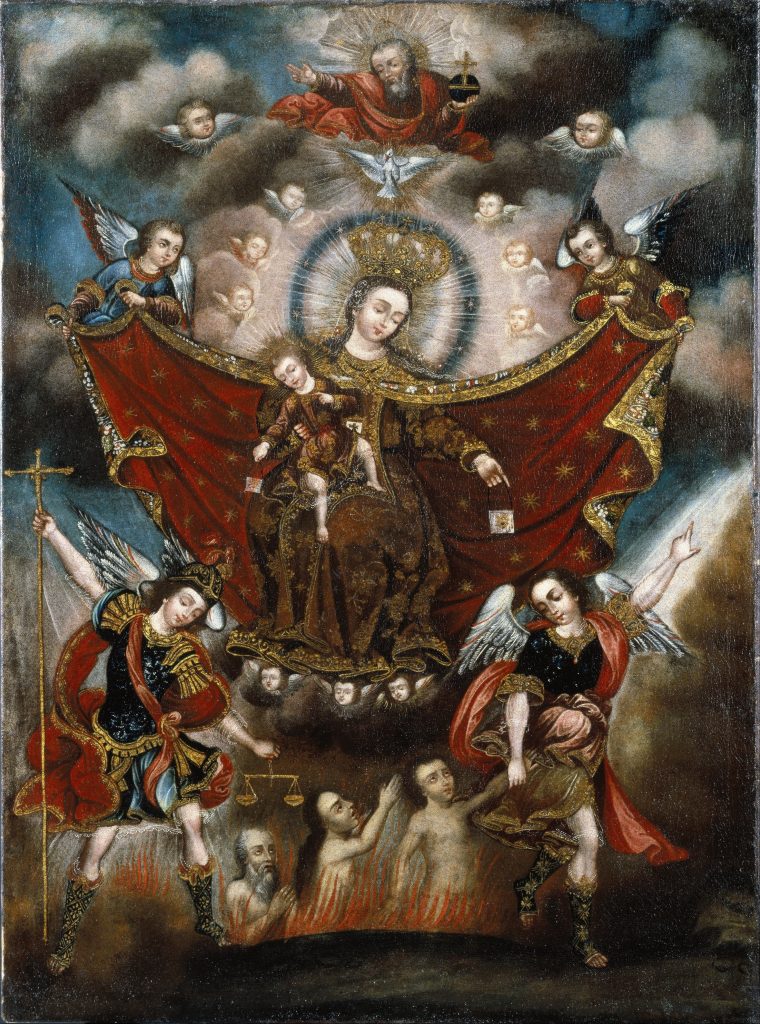
O Lord God Almighty, I pray Thee by the Precious Blood which Thy divine Son Jesus shed in the garden, deliver the souls in purgatory, and especially that soul among them all which is most destitute of spiritual aid; and vouchshafe to bring it to Thy glory, there to praise and bless Thee forever. Amen. Our Father. Hail Mary. De Profundis, etc.
For Monday
O Lord God Almighty, I pray Thee by the Precious Blood which Thy divine Son Jesus shed in His cruel scourging, delivery the souls in purgatory, and that soul especially among them all which is nearest to its entrance into Thy glory: that so it may forthwith begin to praise and bless Thee forever. Amen. Our Father. Hail Mary. De Profundis, etc.
For Tuesday
O Lord God Almighty, I pray Thee by the Precious Blood which Thy divine Son Jesus shed in His bitter crowning with thorns, delivery the souls in purgatory, and in particular that one among them all which would be the last to depart out of those pains, that it may not tarry so long a time before it comes to praise Thee in Thy glory and bless Thee forever. Amen. Our Father. Hail Mary. De Profundis, etc.
For Wednesday
O Lord God Almighty, I pray Thee by the Precious Blood which Thy divine Son Jesus shed in the streets of Jerusalem, when He carried the cross upon His sacred shoulders, deliver the souls in purgatory, and especially that soul which is richest in merit before Thee: that so in that throne of glory which awaits it, it may magnify Thee and bless Thee forever. Amen. Our Father. Hail Mary. De Profundis, etc.
For Thursday
O Lord God Almighty, I pray Thee by the Precious Body and Blood of Thy divine Son Jesus, which He gave with His own hands on the even of His Passion to His beloved apostles to be their meat and drink, and which He left to His whole Church to be a perpetual sacrifice and the life giving food of His own faithful people, delivery the souls in purgatory, and especially that one which was most devoted to this mystery of infinite love, that it may with Thy divine Son, and Thy Holy Spirit, ever praise Thee for Thy love therein in eternal glory. Amen. Our Father. Hail Mary. De Profundis, etc.
For Friday
O Lord God Almighty, I pray Thee by the Precious Blood which Thy divine Son Jesus shed on this day upon the wood of the cross, especially from His most sacred hands and feet, deliver the souls in purgatory, and in particular that soul for which I am most bound to pray: that no neglect of mine may hinder it from praising Thee in Thy glory and blessing Thee forever. Amen. Our Father. Hail Mary. De Profundis, etc.
For Saturday
O Lord God Almighty, I pray Thee by the Precious Blood which gushed forth from the side of Thy divine Son Jesus in the sight of, and to the extreme pain of His moth holy Mother, delivery the souls in purgatory, and especially that one among them all which was the most devout to her: that it may soon attain to Thy glory, there to praise Thee in her and her in Thee, world without end. Amen. Our Father. Hail Mary. De Profundis, etc.
De Profundis (Ps. cxxix)
Out of the depths I have cried to thee, O Lord: Lord, hear my voice. Let thy ears be attentive to the voice of my supplication. If thou, O Lord, wilt mark iniquities: Lord, who shall stand it. For with thee there is merciful forgiveness: and by reason of thy law, I have waited for thee, O Lord. My soul hath relied on his word: My soul hath hoped in the Lord. From the morning watch even until night, let Israel hope in the Lord. Because with the Lord there is mercy: and with him plentiful redemption. And he shall redeem Israel from all his iniquities.
Rest eternal grant unto them, O Lord, and let perpetual light shine upon them.
May they rest in peace. Amen.